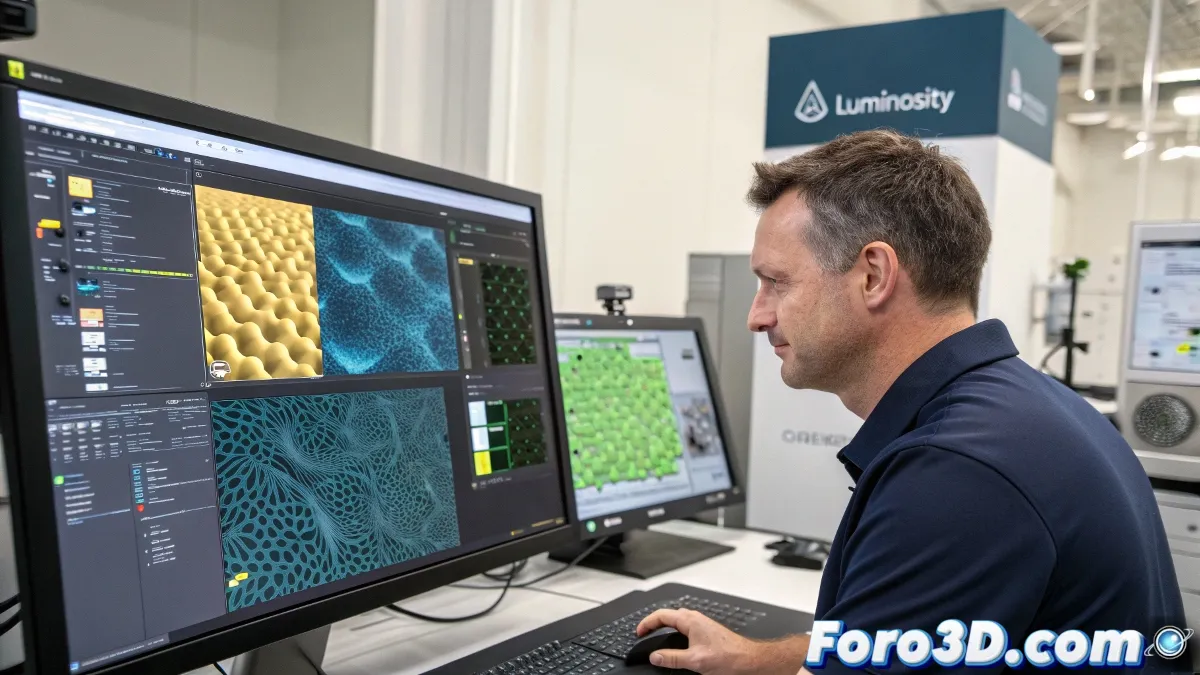
Evolution in Texturing Tools
The recent release introduces significant advances in the handling of digital surfaces. Among the improvements are systems that allow for distributing visual elements with organic patterns, overcoming traditional placement limitations. Artists can now alter these distributions using custom maps or mathematical generators, opening up unprecedented creative possibilities.
"The flexibility in texture application marks a turning point in the creation of digital materials"
New Visual Compositing Options
Eleven additional methods for blending graphic elements have been implemented. These include:
- Tonal Modulation (Hue)
- Chromatic Intensity Adjustment (Saturation)
- Selective Brightness Control (Luminosity)
These tools allow for achieving everything from subtle harmonizations to dramatic contrasts, expanding the available expressive range.
Acceleration on Apple Platforms
Equipment with M-series architecture shows notable improvements in efficiency. Optimization for the Metal engine allows handling:
- Complex hair systems
- Particle simulations
- Advanced light sources
Tests indicate time reductions exceeding 30% in demanding projects.
Features in Development
Some anticipated functionalities remain in the experimental phase. Among them are intelligent processing systems and universal material formats, whose release is planned for subsequent development cycles.
Compatibility and Access Models
The solution supports the main operating systems, with specific requirements:
- Windows/Linux: Modern NVIDIA graphics cards
- macOS: Apple Silicon chips
It is offered through a scalable subscription, including free variants with basic capabilities for learning and testing.