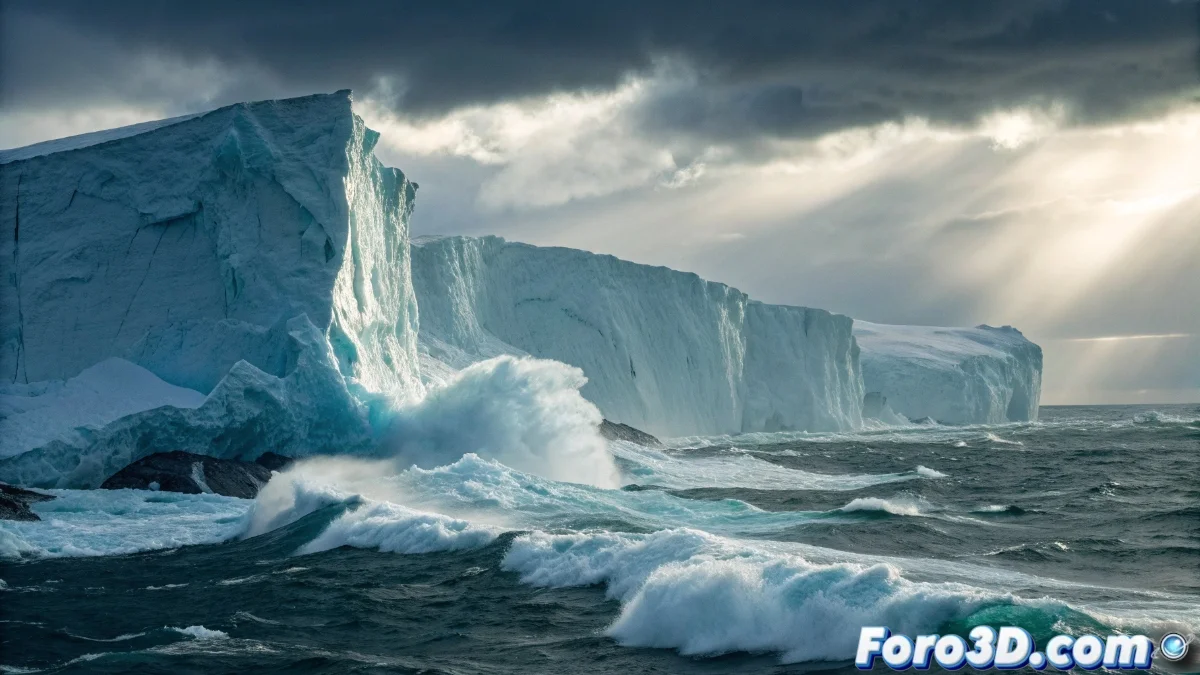
Oceanic Storms Accelerate the Collapse of the Thwaites Glacier
Submarine storms are having a devastating impact on the Thwaites Glacier's ice shelf, nicknamed the Doomsday Glacier. These warm currents systematically erode the base of the ice, causing extensive cracks and structural destabilization. The phenomenon intensifies due to climate change, increasing both the frequency and intensity of these oceanic events. 🌊
Submarine Erosion Mechanism
The process begins when masses of warm water from the ocean depths impact the base of the glacier. This persistent contact melts the ice from its base, creating subglacial cavities that progressively weaken the bond between the ice shelf and the rocky bed. As these cavities expand, the ice loses its natural anchorage and accelerates its slide into the sea. 🔥
Stages of the Melting Process:- Penetration of warm currents into the glacial base
- Progressive melting of the ice from below
- Formation of subglacial cavities and tunnels
Water, which normally extinguishes fire, has become the fuel for this slow-motion glacial catastrophe
Impact on Global Sea Level
The accelerated ice loss from the Thwaites Glacier could raise the global sea level by several centimeters in the coming decades. This glacier acts as a critical natural plug for other ice masses in West Antarctica, so its total collapse would trigger an irreversible chain reaction. 🌍
Consequences for Coastal Communities:- More frequent and severe flooding
- Loss of coastal territories
- Displacement of vulnerable populations
Future Perspectives and Climate Urgency
The situation of the Thwaites Glacier represents a climate tipping point with global implications. The acceleration of submarine melting demonstrates how warmer oceans are radically transforming polar ecosystems. The irony that seawater, traditionally associated with life, becomes the destructive agent of these millennial glacial formations underscores the complexity of current climate processes. ⚠️