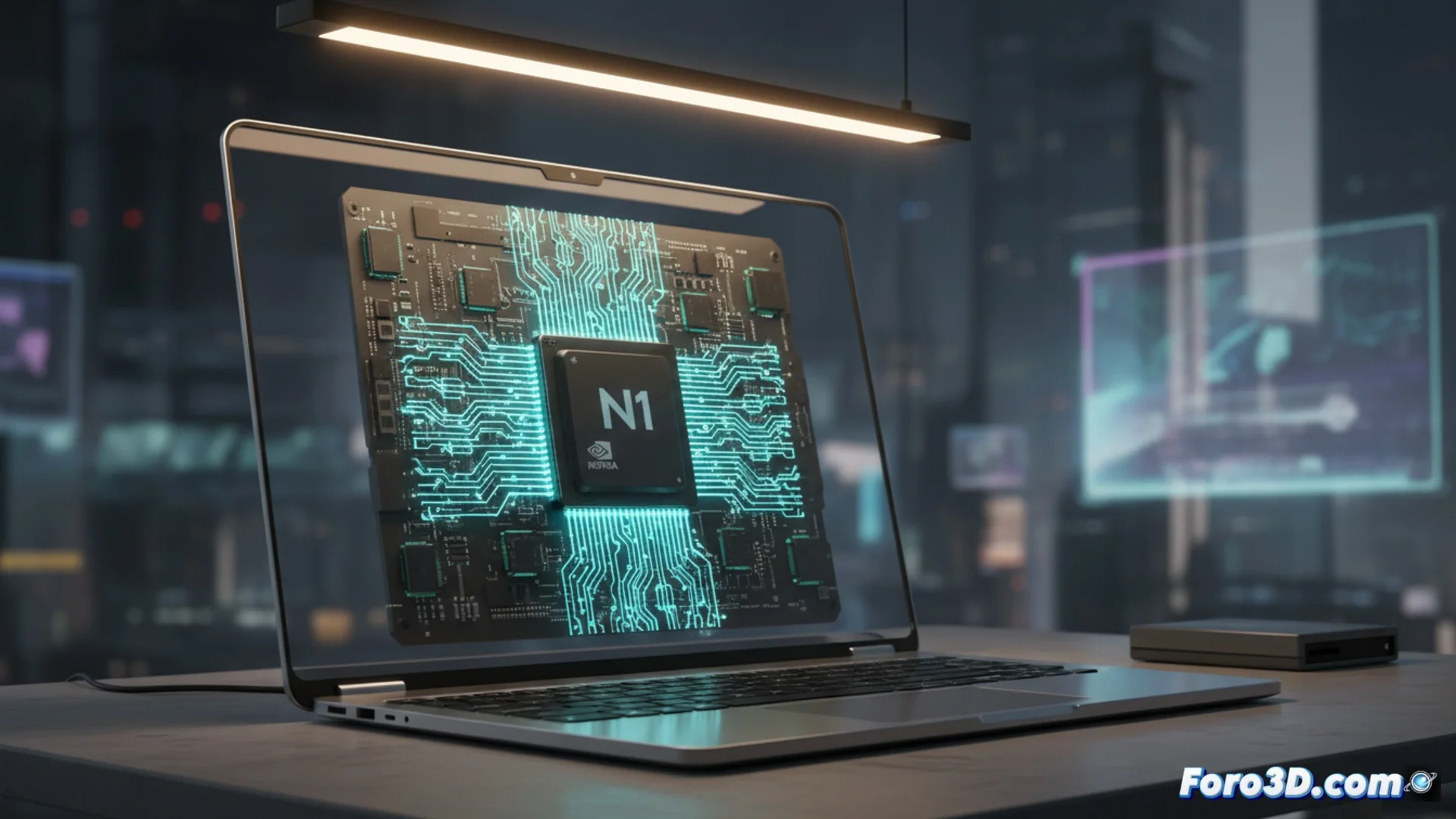
Nvidia Prepares Its N1 and N1X SoCs to Compete in Windows Laptops
The company Nvidia is taking a decisive step to fully enter the laptop sector with Windows. Its strategy is based on creating its own systems on chip (SoCs), with the code names N1 and N1X, which aim to be a real option against Intel, AMD, and Qualcomm products. This approach seeks to unify the central processor and the graphics unit in a single component, which promises to optimize both power and energy consumption. 🚀
Features and Objectives of the N1 and N1X Platforms
According to the information that has come to light, the N1 SoC will be designed for lightweight devices that prioritize efficiency. On the other hand, the N1X will be aimed at high-performance laptops. Both will integrate CPU cores with the Arm architecture and Nvidia's latest-generation GPUs. The main goal is to achieve an optimal balance between processing capacity and battery life, a crucial aspect for those who use mobile devices.
Key Differences Between the Two Chips:- N1: Oriented to maximize autonomy and efficiency in thin and lightweight devices.
- N1X: Focused on delivering the maximum possible power for demanding tasks in premium laptops.
- Common Architecture: Both will use Arm CPU technology and next-generation Nvidia graphics.
The integration of CPU and GPU in a single package is the trend that marks the future of mobile computing, seeking to do more with less energy.
Potential Impact on the Competitive Landscape
Nvidia launching its own SoCs for Windows represents a notable change in the rules of the game. This could intensify the rivalry among semiconductor manufacturers, accelerating innovation in energy efficiency. Additionally, it offers hardware creators a wider range of components to design their devices, consolidating the trend toward more integrated systems.
Expected Consequences of This Move:- Greater Competition: Pressure on Intel, AMD, and Qualcomm to innovate and improve their offerings.
- More Options for OEMs: Laptop manufacturers will have new solutions to differentiate their products.
- Advancement in Integration: Reinforces the path toward unifying all main components in a single chip.
What This Could Mean for the End User
If Nvidia's project succeeds, consumers could access laptops capable of running video games and professional applications more smoothly and for longer without depending on a power outlet. However, this potential largely depends on the software and drivers being perfectly adapted, an area where theoretical plans and practical reality can sometimes diverge. The market is watching closely how this bet develops. 💻