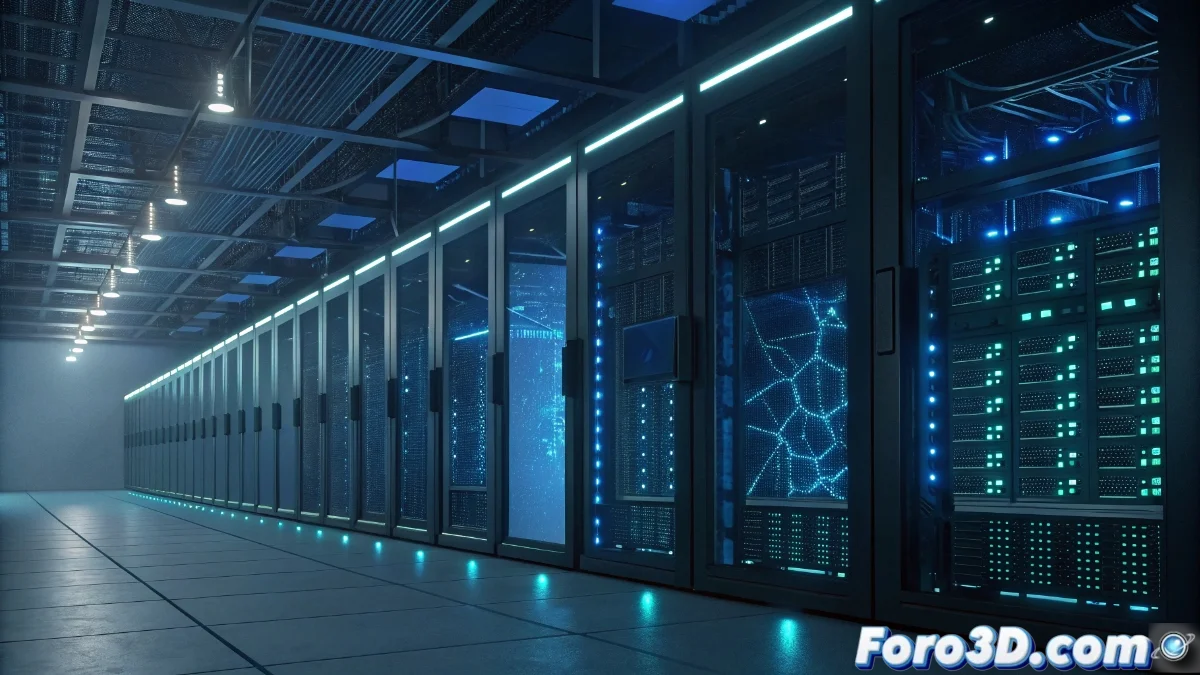
NVIDIA H100 Tensor Core: The Hardware Revolution for Artificial Intelligence
Contemporary artificial intelligence demands specialized hardware solutions capable of managing massive computational loads with maximum efficiency. NVIDIA responds to this challenge with its H100 Tensor Core GPU, specifically designed for data center environments and industrial-scale AI applications. This evolution of the previous A100 model implements the innovative Hopper architecture, introducing revolutionary improvements in performance for training large language models. 🚀
Hopper Architecture and Technical Advances
The Hopper architecture incorporates fourth-generation Tensor Cores that exponentially accelerate matrix operations, fundamental for training complex neural networks. These specialized processors handle mixed precision formats, including FP8, which doubles performance compared to previous generations. The H100 also features a new data transmission engine that optimizes communication between multiple GPUs, eliminating bottlenecks in scaled configurations. 💡
Main features of the Hopper architecture:- 4th generation Tensor Cores for massive matrix operation acceleration
- Support for mixed precision FP8 formats with doubled performance
- Advanced data transmission engine for optimized multi-GPU communication
"The Hopper architecture represents the biggest generational leap in accelerated computing for AI, setting new standards for efficiency and performance" - NVIDIA Hardware Specialist
Applications in Training Large Language Models
For LLM training (Large Language Models), the H100 establishes a new performance paradigm by offering up to 9 times faster speed than its predecessor in specific inference tasks. Its high-bandwidth HBM3 memory enables working with extremely large models without compromising processing speed. The NVLink interconnection technology connects up to 256 GPUs as a unified system, facilitating distributed training of models that would require months of computation in conventional setups. 🤖
Key advantages for model training:- Up to 9x faster inference speed compared to previous generations
- High-bandwidth HBM3 memory for extremely large models
- NVLink interconnection for scaled configurations up to 256 GPUs
Final Reflection on Technological Impact
Contemporary technological irony manifests in the need for hardware that surpasses the cost of real estate to train models that later solve seemingly simple queries. This paradox underscores the underlying complexity in modern AI systems and the monumental investment required to advance in this field. The H100 Tensor Core represents not only a technical breakthrough but also a testament to the resources needed to drive the next generation of artificial intelligence. 💭