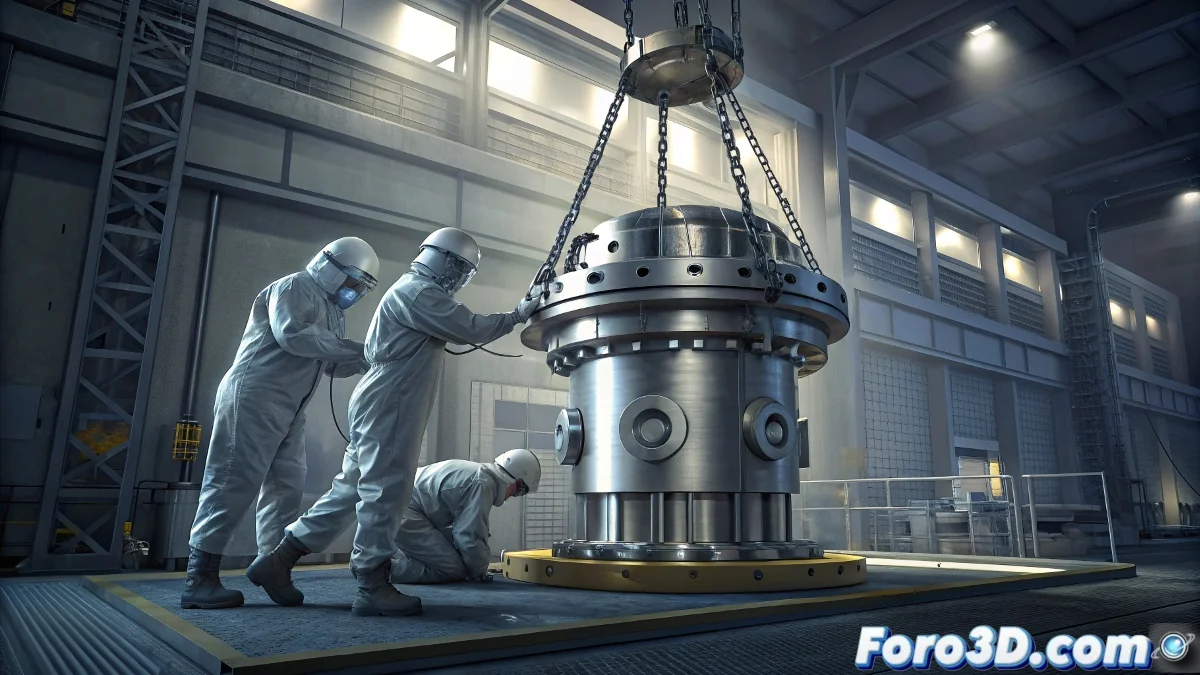
Nuclear revolution with metal 3D printing: certified critical repairs
The nuclear energy sector is experiencing a paradigm shift with the successful implementation of metal additive manufacturing to restore essential components in reactors. This technological innovation demonstrates a significant reduction in intervention timelines and operational costs, marking a milestone in the evolution of nuclear industrial maintenance 🚀.
Technical validation in the most demanding environments
Certification procedures for nuclear components require exhaustive evaluations and meticulous documentation, originally designed for conventional manufacturing techniques with decades of history. Additive manufacturing introduces new complex variables such as structural anisotropy and specific 3D printing parameters that require urgent standardization.
Main challenges in certification:- Reconciling conservative safety protocols with agile manufacturing methodologies
- Microstructural characterization of printed materials in radioactive environments
- Harmonization between technological innovation and established regulations
The technological paradox: components manufactured in hours require years of validation, demonstrating that bureaucracy can be slower than radioactive decay
Strategies to accelerate implementation
Regulatory bodies and specialized corporations are developing specific frameworks to validate parts manufactured via 3D printing, incorporating advanced non-destructive inspection technologies and real-time monitoring systems during production processes.
Measures implemented for streamlining:- Creation of certified material databases for additive manufacturing
- Establishment of standardized quality control procedures
- Implementation of accelerated validation tests for critical components
Future of nuclear repairs
The crucial balance between disruptive innovation and nuclear safety requirements is generating new methodologies that promise to radically transform maintenance protocols in power plants. The progressive adaptation of traditional validation systems will enable the routine implementation of these technical solutions, ensuring both operational efficiency and absolute radiological protection 💡.