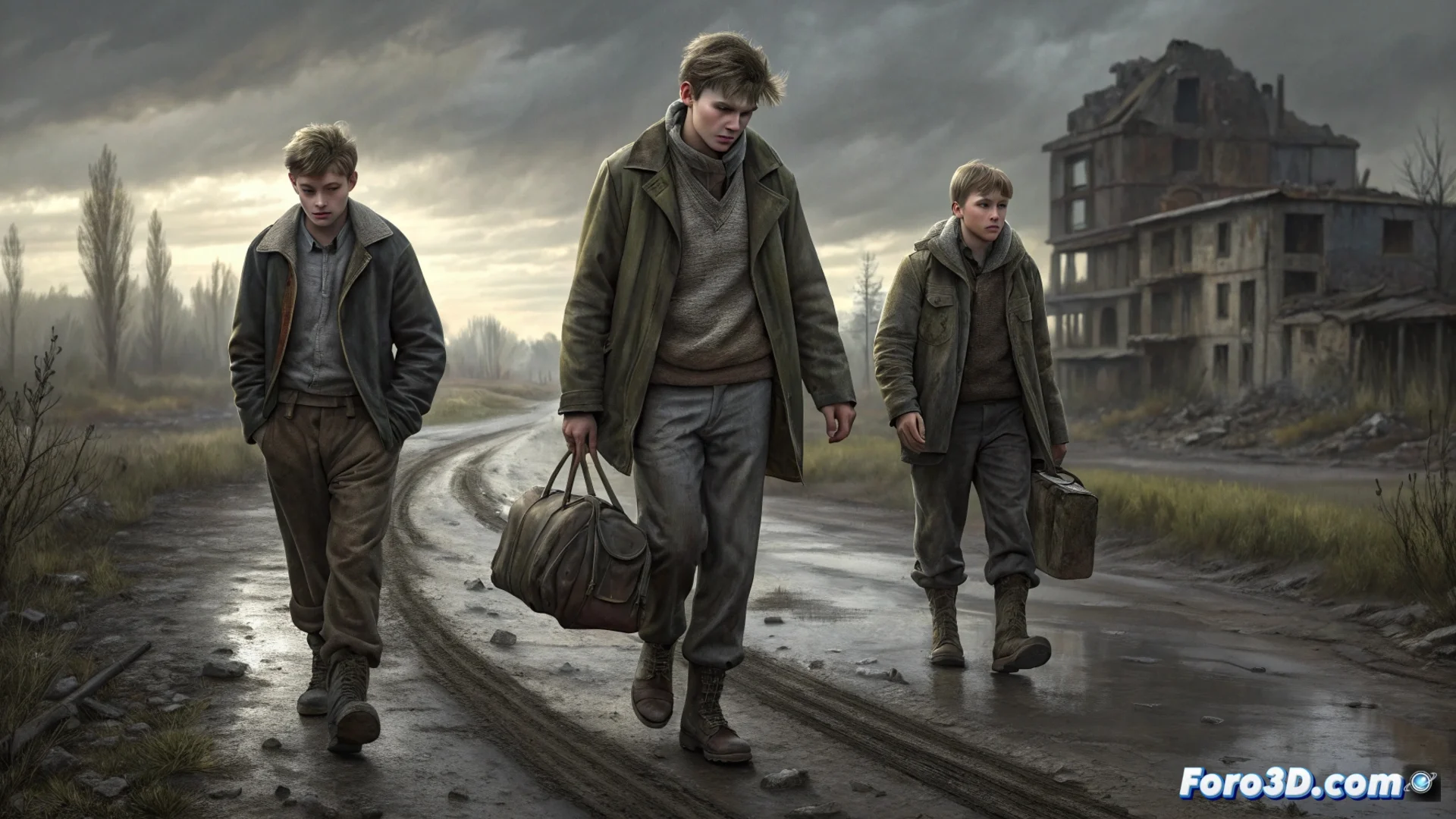
Notes for a War Story: Gipi Narrates a Civil War in Eastern Europe
The Italian author Gipi presents in Notes for a War Story an intense graphic narrative. The story follows three teenage friends in an unidentified region of Eastern Europe, where an armed conflict erupts abruptly. The narrative does not dwell on military strategies, but delves into how chaos fractures everyday life and human bonds. 🎨
A Visual Style that Conveys Fragility
Gipi chooses traditional techniques like watercolor and pencil to build his world. His stroke is loose and expressive, dominated by a palette of muted colors: earthy browns, grays, and faded blues. This choice is not decorative; it generates a poetics of the fragile. The figures sometimes appear as sketches, the backgrounds blur, conveying the precariousness and uncertainty of the environment. The art does not just show, but makes one perceive the war.
Key Features of the Art:- Mixed Technique: Predominant use of watercolor and pencil for an organic and emotional stroke.
- Limited Palette: Muted tones that reinforce the atmosphere of melancholy and desolation.
- Dynamic Composition: Pages that flow between detail and abstraction, communicating urgency.
The art does not illustrate, but feels the war.
The Transformation of the Characters and Their World
The core of the book is the loss of innocence. What begins as a youthful adventure turns into a constant struggle to obtain food, shelter, and a minimum of security. Under this extreme pressure, the friendship that unites the protagonists strains and is tested with impossible decisions. Gipi deliberately avoids political discourses to focus on the raw human experience and how conflict reconfigures the most basic values.
Central Plot Elements:- Confusion and Fear: The young people are dragged into a conflict they neither understand nor chose.
- Broken Bonds: War acts as a force that distorts and fractures friendships.
- Everyday Survival: The narrative centers on small acts of resistance and maintaining humanity.
The Irony of the Medium and the Message
There is a powerful irony in the choice of medium. To narrate a story about losing everything, Gipi opts for watercolor, an ephemeral and uncontrollable material, where one extra stroke can ruin a page. This technical fragility reflects that of life in war, where a misstep has irreversible consequences. The graphic novel thus becomes an object as precarious and moving as the reality it describes, closing a perfect circle between form and content. 📖