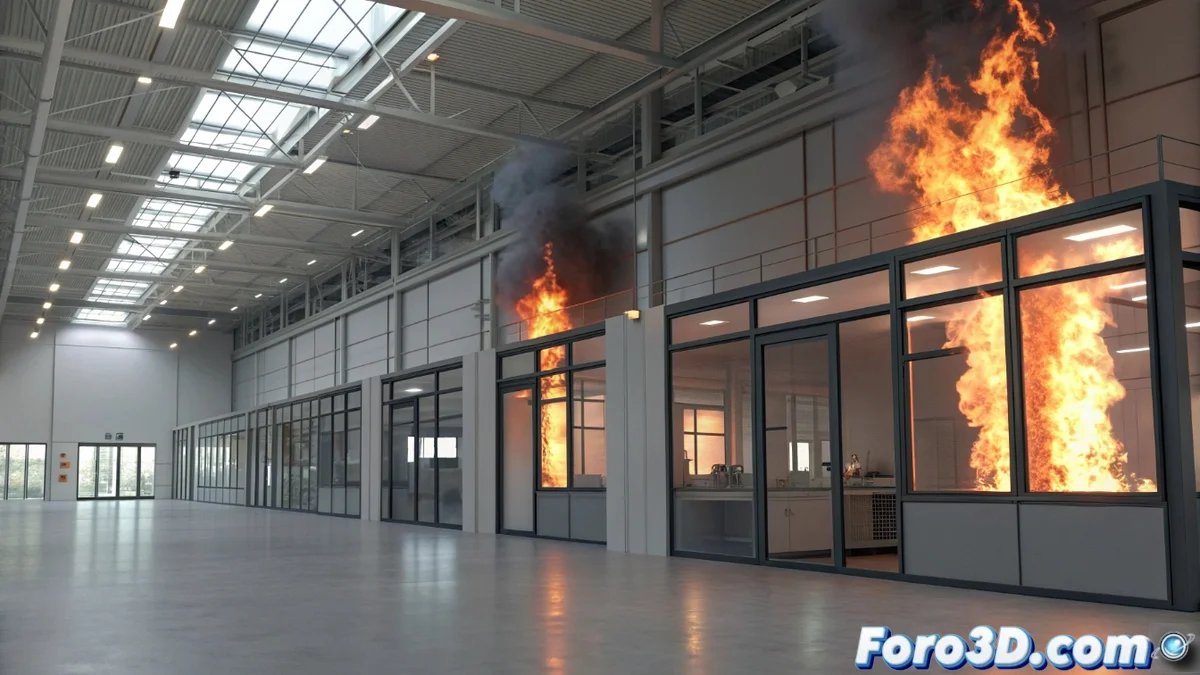
NIST CFAST: Fire Simulation Software for Building Modeling
NIST CFAST represents an advanced computational tool created by the prestigious National Institute of Standards and Technology of the United States, specifically designed to reproduce fire behavior in architectural structures. This specialized platform accurately calculates thermal evolution, toxic gas concentrations, and smoke dynamics in multi-compartment environments, providing fundamental predictions for fire safety professionals and scientific researchers. 🔥
Practical Applications in Safety and Design
Specialists use CFAST to verify compliance with safety codes, develop early detection systems, and plan efficient evacuation routes. The tool proves especially useful in analyzing smoke and heat dynamics in complex constructions such as hospitals, shopping centers, and skyscrapers, where fire phenomena can reach extraordinary levels of complexity.
Main Professional Applications:- Assessment of regulatory compliance in fire protection
- Design and optimization of detection and alarm systems
- Study and planning of safe evacuation strategies
"Computational simulation allows identifying critical points before real incidents occur, saving lives and property"
Calculation Methodology and Technical Features
CFAST implements a zone model that segments spaces into volumes with homogeneous properties, calculating parameters such as temperature and smoke density for each defined sector. The program integrates mass and energy conservation equations, considering heat transfers by radiation and convection, along with the generation of chemical species during combustion processes.
Customization Capabilities:- Configuration of custom architectural geometries
- Specification of construction materials with defined thermal properties
- Adjustment of environmental conditions and ventilation parameters
Limitations and Practical Considerations
Although simulations provide valuable approximations, it is crucial to recognize that real fires present unpredictable variables that may diverge from computational models. Professionals must consider that fire in reality does not necessarily follow the predefined patterns of the software, highlighting the importance of complementing simulations with expert judgment and redundant safety protocols. 🏢