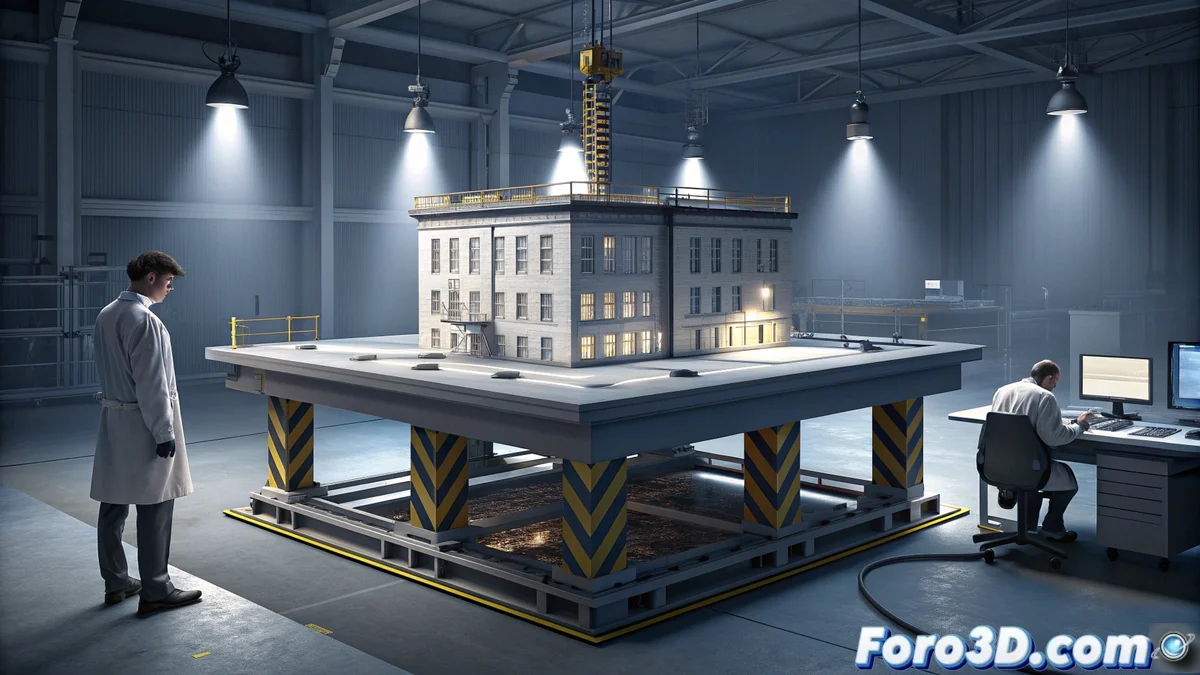
A new method simulates earthquakes in the laboratory
A team from ETH Zurich has developed an innovative technique that allows recreating earthquakes precisely and repeatably within a laboratory environment. This advance facilitates analyzing how materials and structures behave under extreme seismic forces, a crucial step for building more resilient infrastructure. 🏗️⚡
Replicating historical earthquakes with precision
The core of the system is a vibration table equipped with high-power hydraulic actuators. These devices can generate ground movements in the three spatial dimensions, faithfully reproducing records of real earthquakes that have occurred in the past. Engineers place scaled-down models of foundations, bridges, or complete buildings on this platform to subject them to controlled destructive tests.
Key features of the experimental system:- Generates the horizontal and vertical components of seismic movement simultaneously.
- Allows real-time observation of how structures crack, deform, or collapse under different intensities.
- Provides a safe environment to test earthquake scenarios that are possible but have not yet occurred.
Perhaps the only earthquake that an engineer likes to see in his office is the one he provokes himself on a test table, far from any real damage.
From laboratory data to safer buildings
The information gathered in these tests is fundamental for validating and refining the complex computer simulation models used in seismic engineering. This empirical data helps researchers understand the limits of materials and flaws in current designs.
Applications and benefits of the research:- The results are used to improve and update international anti-seismic building codes and standards.
- Complements field studies conducted after a natural disaster, allowing for deeper and more controlled analysis.
- Aims to make bridges, hospitals, and homes able to withstand better future tectonic movements.
A future with more resilient infrastructure
This experimental approach marks a before and after in the way of assessing seismic risk. By being able to test and repeat extreme conditions in the laboratory, the scientific and engineering community accelerates the development of design and material solutions that save lives. The ultimate goal is clear: translate the knowledge acquired on the vibration table into cities better prepared and safer for their inhabitants. 🌍🔬