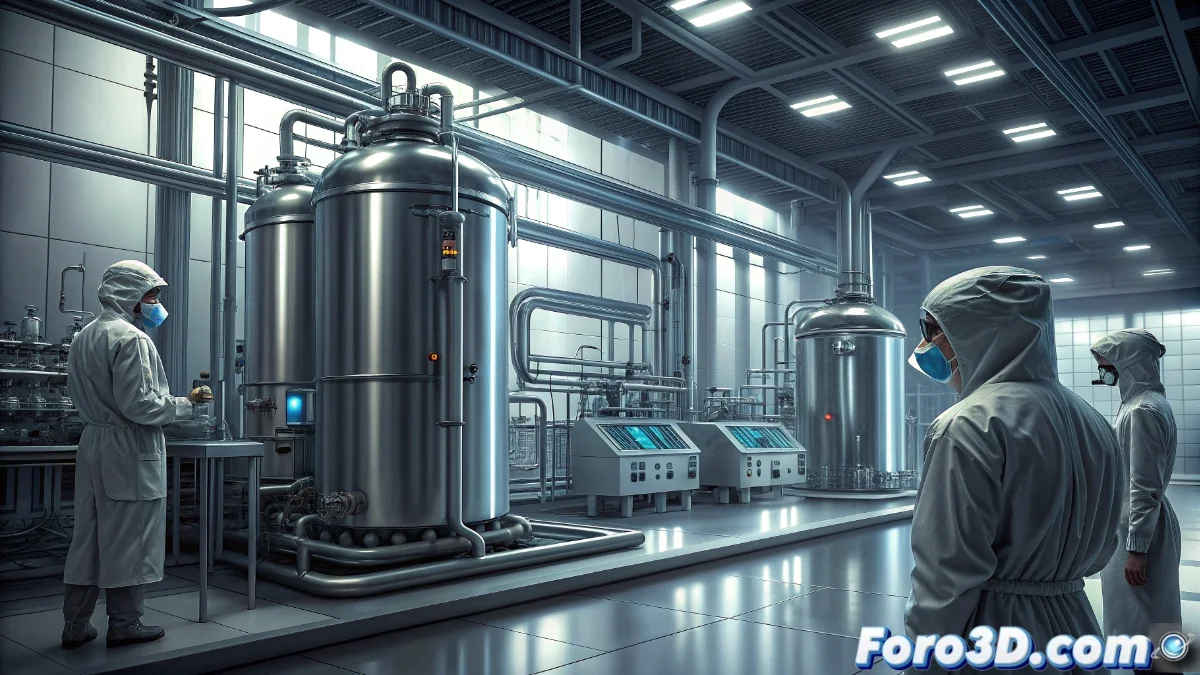
New ITQ Technology for Generating Hydrogen from Ammonia
The Institute of Chemical Technology, a collaborative center between the Spanish National Research Council and the Universitat Politècnica de València, has unveiled a revolutionary system that transforms ammonia into hydrogen, overcoming the barriers of conventional approaches. This innovation boosts the value chain of green hydrogen, providing a more efficient and safe alternative for its large-scale manufacturing and distribution. The method enables controlled decomposition of ammonia, generating high-purity hydrogen with lower energy consumption and a substantial reduction in greenhouse gas emissions. 🌱
Key Advantages of the Innovative Technology
The system is characterized by its modular and scalable design, allowing easy adaptation to various industrial and geographical environments. It integrates state-of-the-art catalytic materials that optimize ammonia breakdown, achieving energy efficiency above 90% and reducing operational costs. Additionally, it operates at reduced temperatures and pressures compared to traditional techniques, mitigating risks associated with hydrogen storage and handling. This advantage is essential for its use in sustainable mobility and renewable energy storage systems. 💡
Main Benefits:- High energy efficiency exceeding 90%, reducing resource consumption
- Modular design facilitating implementation in different locations and sectors
- Operation at low temperatures and pressures, minimizing safety risks
This technology can accelerate the adoption of green hydrogen in regions with limited access to renewable sources, creating economic opportunities and improving energy security.
Impact on the Transition to Clean Energies
This advancement consolidates hydrogen as a fundamental energy vector in the decarbonization of industries such as heavy transport and chemicals. The ability to produce hydrogen in situ from ammonia simplifies distribution logistics and eliminates the need for costly cryogenic infrastructures. Experts emphasize that this solution can drive the integration of green hydrogen in areas with scarce renewable resources, fostering economic development and strengthening energy autonomy. 🔄
Highlighted Applications:- Heavy transport and logistics, reducing the sector's carbon footprint
- Renewable energy storage, facilitating the management of intermittent sources
- Chemical industry, offering a clean alternative for production processes
Future Perspectives and Conclusions
The technology presented by the ITQ marks a milestone in the evolution of green hydrogen, enabling its transport and use without relying on complex cryogenic systems. This not only optimizes efficiency but also opens doors to broader applications in mobility and energy storage. With its implementation, a positive impact on emission reduction and significant progress toward a decarbonized economy is expected. 🌍