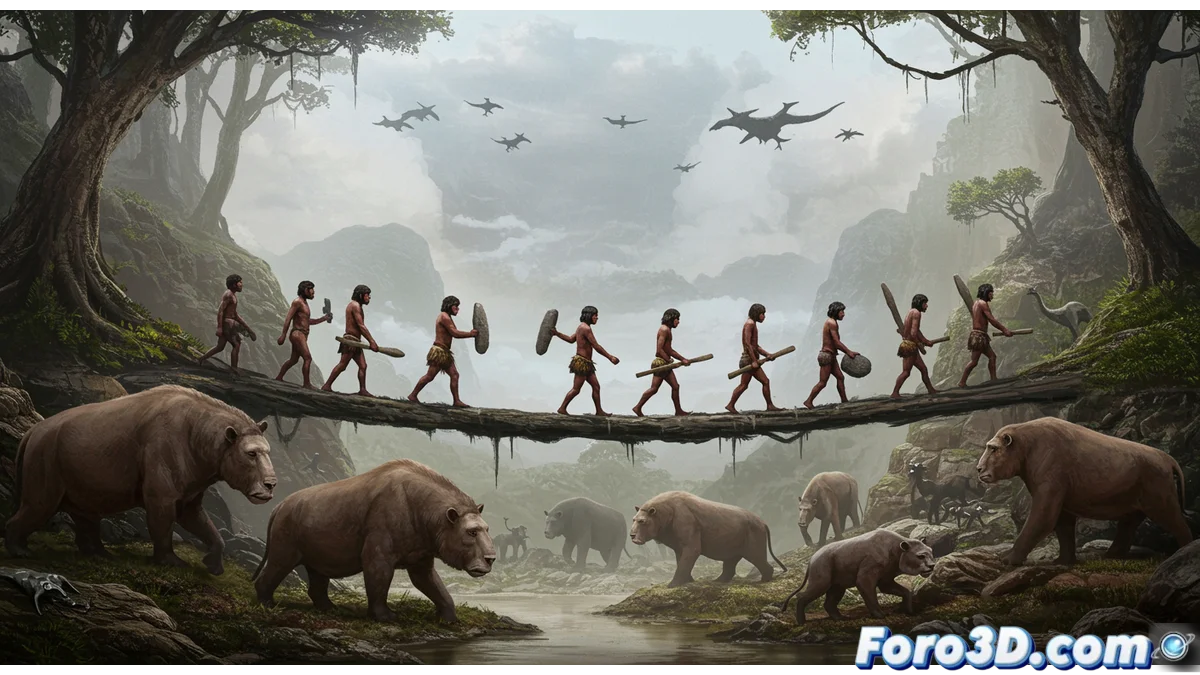
New Evidence Reveals Multiple Routes in Human Migration to Australia
The initial settlement of the Australian continent represents one of the most fascinating chapters of human expansion, where new scientific findings are radically transforming our understanding of this epic process that occurred sixty millennia ago 🌏.
Double Migratory Route Through Southeast Asia
Contrary to the traditional view of a single migration, multidisciplinary research confirms that human groups followed separate trajectories adapting to different ecosystems during their continental journey. This migratory complexity completely redefines previous models about the colonization of Australia.
Converging Evidence:- Analysis of ancient DNA that reveals differentiated genetic lineages according to the route followed
- Archaeological sites strategically distributed along both migratory trajectories
- Lithic tools with distinctive technical characteristics in each route
The coexistence of multiple migratory routes explains the remarkable genetic and cultural diversity that characterizes Australian Aboriginal populations from ancestral times.
Characteristics of the Identified Routes
Studies detail a northern coastal route through the Indonesian archipelago and another southern continental route that took advantage of land bridges exposed during glacial periods. Each path presented specific ecological challenges that shaped particular adaptations in the migrant groups.
Adaptations Developed:- Open-water navigation techniques for the coastal route
- Survival strategies in variable land environments for the continental route
- Specialized knowledge to face drastic climate changes
Genetic Legacy and Contemporary Reflections
This dual migratory origin constitutes the basis of the rich genetic diversity observable in current Aboriginal communities, where each route contributed unique adaptations that facilitated the successful colonization of diverse Australian ecosystems. It is ironic to contemplate that these pioneers faced oceans, prehistoric megafauna, and extreme climates, without the modern bureaucratic barriers that today characterize human mobility 🗺️.