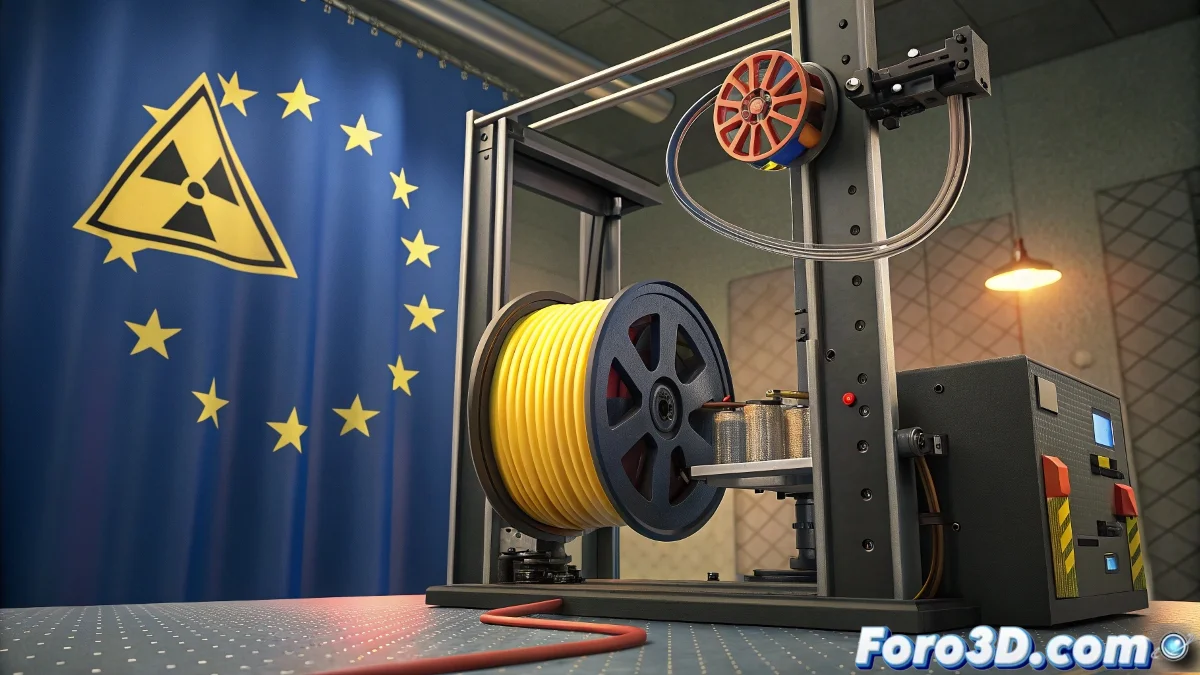
New European regulation on phthalates in 3D printing filaments
The European Union has recently implemented a regulation that drastically limits the use of certain phthalates in materials intended for 3D printing using FDM technology. This measure primarily impacts flexible PVC filaments that have dominated the budget segment of the market, creating immediate uncertainty about the future availability of these products. 🚫
Transformation of the flexible filaments market
Phthalates are chemical compounds added to PVC to give it flexibility and malleability, but recent studies have confirmed their potential adverse effects on human health and the ecosystem. Budget flexible PVC filaments are the most affected by this regulation, as their formulation relies heavily on these additives to achieve the desired mechanical properties.
Alternatives recommended by manufacturers:- TPU (Thermoplastic Polyurethane): Offers excellent elasticity and wear resistance
- TPE (Thermoplastic Elastomer): Provides high flexibility and durability
- PETG (Modified Polyester): Combines ease of printing with good chemical resistance
Just when flexible PVC had become accessible for prototyping, the regulation reminds us that 3D printing is not just about creating models, but also about complying with regulations that evolve faster than the print speed of a Voron.
Immediate consequences for the 3D community
This European regulation requires distributors and producers to conduct a thorough review of the composition of their materials, withdrawing those that exceed the new limits established for phthalates. For users, this manifests in two main aspects: possible temporary shortage of certain budget materials and a increase in costs for filaments that comply with the regulation.
Practical recommendations for users:- Always request the composition certificate before purchasing new filaments
- Avoid white-label or generic brands that do not provide detailed information about their components
- Consider a gradual migration to alternative materials that guarantee regulatory compliance
Necessary adaptation in the 3D printing ecosystem
The 3D printing industry faces a crucial moment where regulatory compliance becomes as important a factor as technical quality and price. This transition, although complex initially, will drive the development of safer and more sustainable materials, benefiting users and the environment in the long term. 🌱