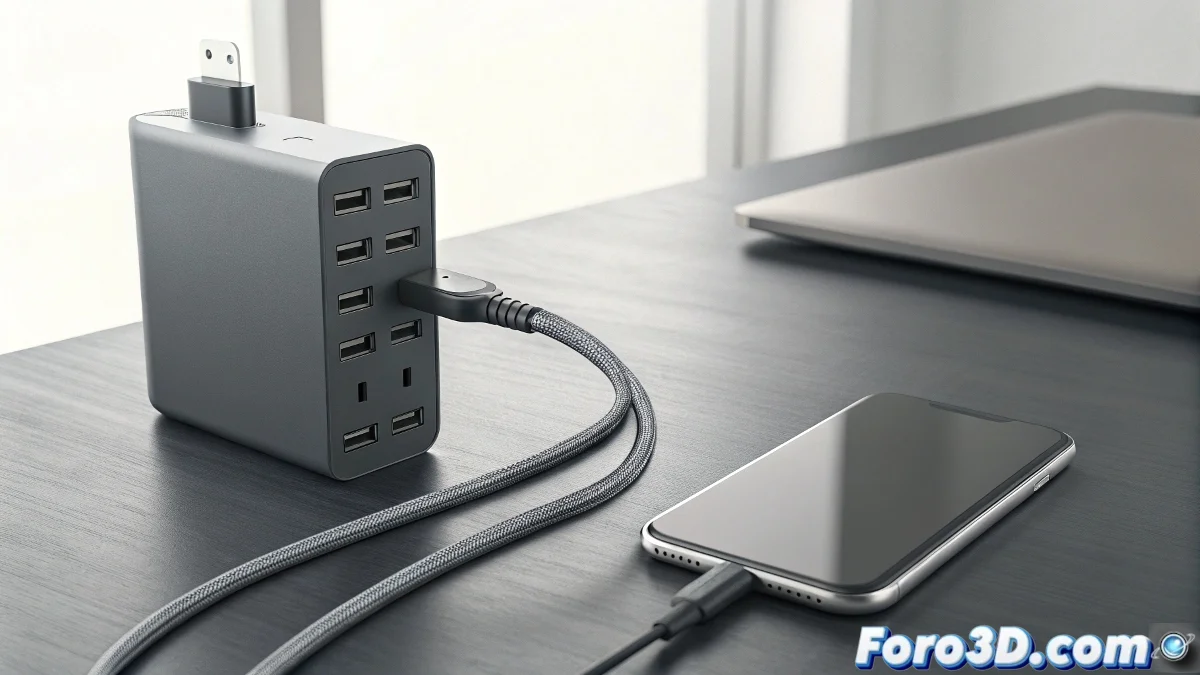
New EU Legislation: Chargers with Detachable USB-C Cables Mandatory by 2028
The European Union has taken a significant step toward standardization and sustainability with new legislation that will require all chargers (power bricks and wall warts) marketed in the European market to include detachable USB-C cables starting in 2028. This measure, which adds to the already mandatory USB-C port on electronic devices, also introduces mandatory power labels for cables, allowing consumers to easily identify each cable's charging capabilities. The legislation represents a crucial advance in reducing electronic waste and fighting planned obsolescence. 🔌
The Scope of the New European Regulation
The legislation will affect all chargers sold in the EU, from small wall adapters to higher-capacity power bricks. The requirement for detachable USB-C cables means the end of chargers with permanently integrated cables, one of the main sources of electronic waste when the cable is damaged but the charger still works. Additionally, the clearly visible power labels on the cables will allow users to select the appropriate cable for each device, avoiding slow charging issues and optimizing energy performance. This measure perfectly complements the EU's circular economy strategy for electronic products.
Devices Affected by the New Regulation:- Smartphones and tablets from all manufacturers
- Chargers for laptops and portable devices
- Wall adapters for IoT devices
- Power banks and external batteries
- Chargers for wearables and medical devices
- Portable audio and video equipment
Environmental and Consumer Benefits
The transition to chargers with detachable cables will generate significant environmental benefits. It is estimated to reduce electronic waste by approximately 11,000 tons annually in the EU, as consumers will be able to reuse functional chargers by simply replacing damaged cables. Users will also benefit from greater flexibility and cost savings, being able to use the same charger for multiple devices and only needing to purchase the specific failing component. The power labels will eliminate current confusion about cable capabilities, reducing user frustration and improving the overall charging experience.
This legislation turns what was a waste problem into an opportunity for sustainability and convenience for European consumers.
Implications for Manufacturers and the Industry
Electronics manufacturers will have until the end of 2027 to adapt their designs and production chains. The regulation will require significant redesigns of many current products, particularly those using proprietary chargers or integrated cables. However, it also presents innovation opportunities in the design of secure and efficient detachable connectors. Standardization around USB-C will simplify inventories and reduce long-term production costs, while power labels will create a more transparent market for cables and accessories.
The Power Labeling System for Cables
One of the most innovative aspects of the legislation is the mandatory labeling system that will clearly indicate the maximum power capacity of each USB-C cable. This system will likely include color codes, standardized icons, and numerical specifications that will allow even non-technical users to select the appropriate cable. The labeling is expected to cover parameters such as maximum current, voltage, and power in watts, as well as compatibility with standards like Power Delivery and Quick Charge. This transparency will help prevent device underperformance caused by inadequate cables.
Information Included on the Labels:- Maximum power in watts (e.g., 60W, 100W, 240W)
- Maximum current in amperes (3A, 5A, etc.)
- Compatibility with fast charging standards
- Supported data transfer speeds
- Safety and quality certifications
- Manufacturer and model information
Impact on the Circular Economy and Waste Reduction
The legislation aligns directly with the objectives of the European Green Deal and the Circular Economy Action Plan. By allowing components to be replaced individually, it significantly extends the lifespan of chargers, which represent a considerable portion of global electronic waste. It is projected that this measure, combined with other standardization initiatives, could reduce the carbon footprint of the charger sector in the EU by up to 30% by 2030. Consumers will also benefit from lower long-term costs by not having to replace entire chargers due to minor cable failures.
The Future of Standardization in Consumer Electronics
This legislation represents the most recent step in an ongoing effort by the EU to standardize consumer electronics and make it more sustainable. It is likely to inspire similar measures in other regions and drive innovation toward even more universal and environmentally friendly solutions. The success of this implementation could pave the way for standardization in other product categories, creating a more coherent, efficient, and circular global electronics ecosystem.
The new European legislation on chargers marks a turning point in consumer electronics sustainability. By requiring detachable USB-C cables and clear power labels, the EU is not only significantly reducing electronic waste but also empowering consumers with more options, transparency, and control over their devices. This measure demonstrates how smart regulation can drive innovation toward more sustainable solutions, benefiting consumers, the environment, and the industry in the long term. By 2028, the charger landscape in Europe will be notably simpler, more sustainable, and user-friendly.