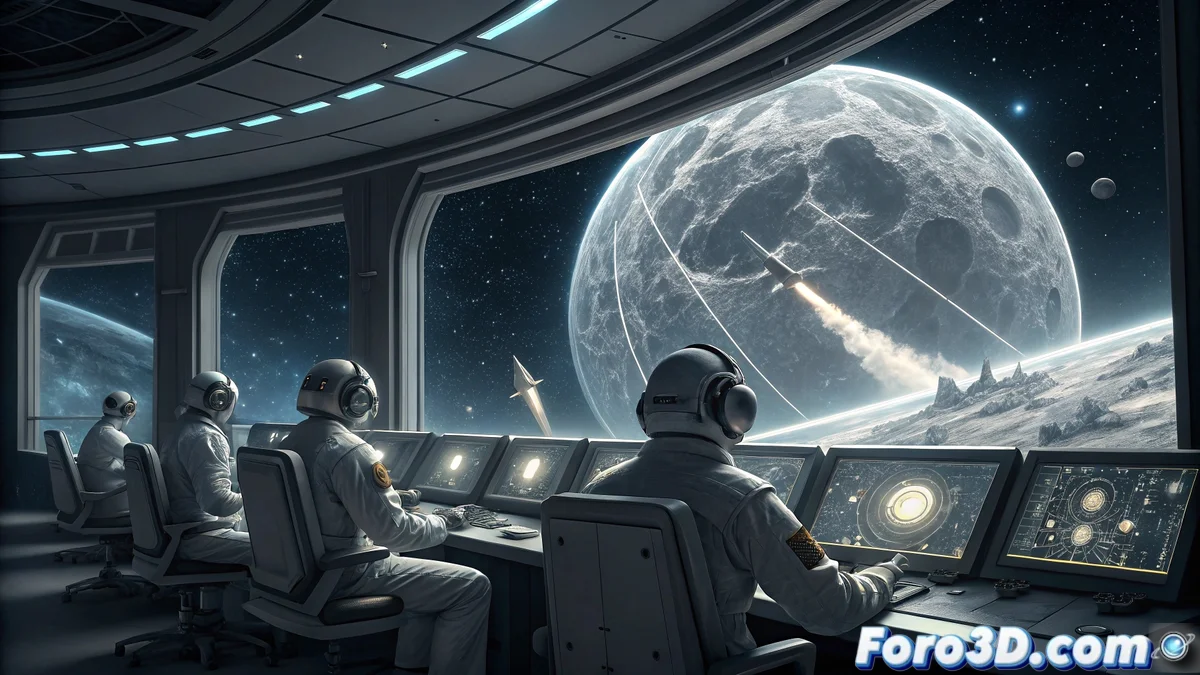
New Era in Lunar Space Traffic Management: Challenges and Professional Opportunities
The exponential increase of missions to our natural satellite has turned space traffic management into an absolute priority for space agencies and private companies. 🚀
Evolution of Air Traffic Control to Space Domains
Traditional air traffic controllers are expanding their competencies to cover lunar orbits and Lagrange points, using cutting-edge technologies that enable real-time monitoring at extraordinary distances.
New Training Requirements:- Advanced mastery of orbital dynamics and celestial mechanics
- Emergency protocols specific to the lunar space environment
- Interplanetary communication systems with controlled delays
"Coordination between multiple space actors requires a common language and standardized procedures to avoid catastrophic incidents" - Orbital Navigation Expert
Technological Challenges on the Lunar Frontier
The absence of conventional radar infrastructure on the Moon forces the development of alternative systems based on laser and radio frequency for precise positioning, while communication delays add complexity to decision-making.
Main Operational Obstacles:- Diversity of actors with incompatible protocols
- Urgent need for international standardization
- Limitations in immediate response capability
Future of Lunar Space Logistics
Experts anticipate orbital coordination meetings where everything from "traffic jams" in parking orbits to the management of the growing number of vehicles will be discussed, keeping the humor about the eternal logistical problems that will accompany us even in space. 🌕