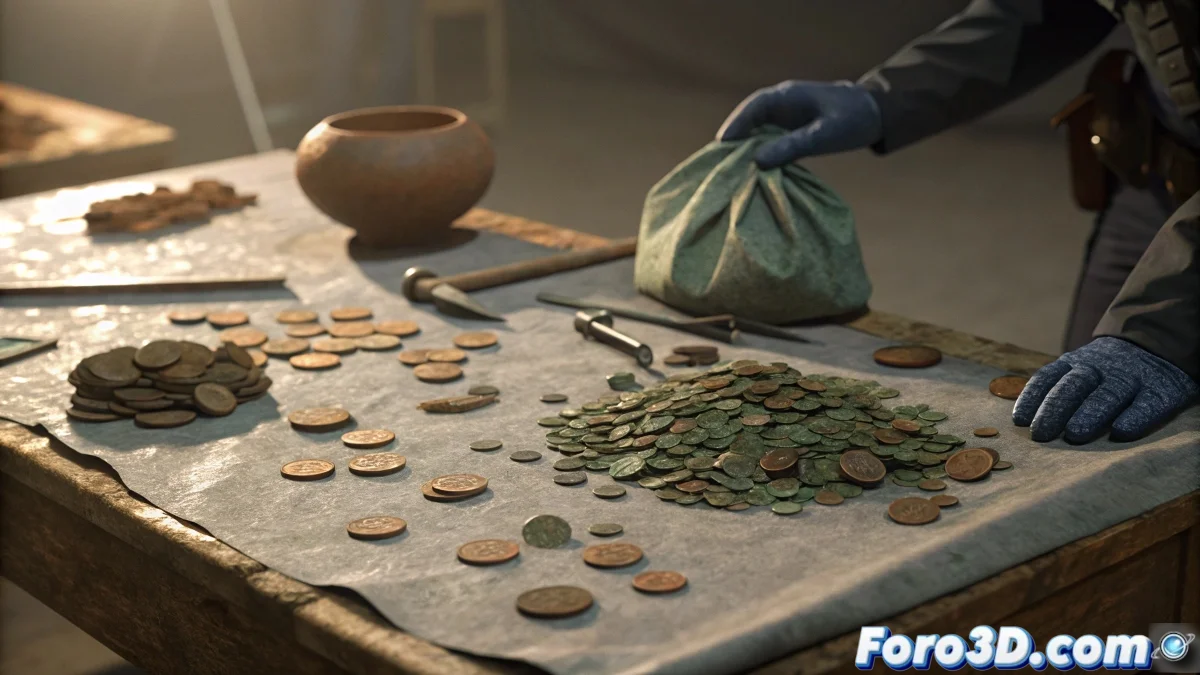
The Archaeological Treasure That Ended Up on the Dark Web
The Civil Guard has dismantled a sophisticated network of looters operating nationwide that sold approximately 3,000 Copper Age coins through the internet, considered historical heritage of incalculable value. The operation took place in several Spanish provinces where investigators located and recovered the archaeological pieces that were being illegally traded on digital platforms and clandestine markets.
The coins date from between 3,000 and 2,500 B.C., a crucial period in the development of the first Peninsular civilizations, and showed different states of preservation. Some showed clear signs of having been violently extracted from archaeological sites, while others appeared to have undergone aggressive cleaning processes that compromised their historical integrity. The value on the black market amounted to hundreds of thousands of euros.
The past should not have a price, but some put a tag on it
Preparing the Archaeological-Police Composition
Creating an image that captures the essence of this news requires balancing historical elements with forensic components. Photoshop allows integrating multiple layers of meaning into a single visually striking composition. The process begins with gathering visual references of Copper Age coins and police elements related to archaeological investigations.
The color palette is established around earth tones, coppery, and ochre shades that evoke antiquity, contrasted with institutional blue and yellow police intervention elements. The dark background helps highlight the main elements while creating an atmosphere of mystery and clandestinity appropriate for the narrative.
- Research on references of Iberian Copper Age coins
- Gathering images of police and forensic elements
- Creation of thematic color palette
- Preparation of basic compositional sketch
Building the Atmospheric Background
The background is developed using digital painting techniques that suggest ancient earth and archaeological strata. Using texture brushes with rock and clay patterns, an organic base is created that evokes a recently excavated site. Adjustment layers Curves and Levels allow controlling contrast and creating areas of visual interest.
Subtle digital network elements are added using luminous line patterns in Overlay blend mode with reduced opacity. These elements represent the online dimension of the crime without dominating the composition. The overall effect should suggest the connection between the ancient past and modern illegal trading technologies.
- Creation of textured background with earth and rock brushes
- Application of subtle gradients for depth
- Inclusion of semi-transparent digital network elements
- Global tone and saturation adjustment for cohesion
Treatment of the Main Coins
The coins are processed individually to enhance their unique characteristics. Each one is isolated on a black background and dodge and burn techniques are applied to accentuate reliefs and wear. Local Brightness/Contrast adjustments help define edges and inscriptions, while selectively applied Sharpen filters improve details without creating unsightly halos.
The arrangement of the coins follows a visual flow that guides the viewer's gaze through the composition. Some appear complete and well-preserved, while others show breaks and wear that testify to their antiquity and the damage from looting. This variation adds authenticity and narrative to the image.
Integrated Police and Forensic Elements
The investigation-related components are incorporated in a subtle but significant way. Police evidence numbers, forensic evidence bags, and inventory tags are strategically placed around the coins. These elements are treated with Multiply and Pattern Overlay blend modes to integrate them naturally into the composition.
The cast shadows are carefully calculated to maintain global lighting coherence. The use of layer masks allows some elements to appear partially hidden behind coins or textures, creating a sense of three-dimensional depth and realism in the stacking of objects.
- Inclusion of evidence numbers with institutional typography
- Integration of semi-transparent forensic evidence bags
- Placement of archaeological inventory tags
- Application of coherent shadows with single light source
Dramatic Lighting and Atmospheric Effects
The lighting system is designed to create drama and direct attention. A main light from the upper left illuminates the most important coins, creating believable metallic reflections. Dimmer secondary lights fill the shadows without eliminating the essential contrast for visual impact.
Atmospheric effects are added using dust and particle suspension layers in Overlay mode. These elements reinforce the idea of a recent excavation and create cohesion among all image components. The final global Brightness adjustment unifies the scene.
Texts and Informative Graphic Elements
Contextual information is integrated through discreet texts that appear to be part of police documentation. Dates, locations, and case numbers are strategically placed using typefaces that evoke official documents. These elements are treated with selective blur and opacity reduction to inform without competing with the main visual elements.
Guide lines and connectors suggest relationships between different groups of coins and evidence, creating a visual narrative that the viewer can intuitively follow. These elements are created with pen tools and stylized to maintain aesthetic coherence.
- Inclusion of informative texts with appropriate typography
- Creation of guide lines and connectors between elements
- Application of wear and aging effects to texts
- Integration of official stamps and institutional logos
Final Adjustments and Preparation for Output
The final phase involves global color and contrast adjustments to ensure the image works in both print and digital media. Light vignettes are applied to center attention, and visualization tests are performed at different sizes to ensure legibility in all formats.
Export is done in multiple resolutions according to the intended use, always keeping original PSD files with layers for possible future modifications. Metadata includes information about the educational purpose of the image and appropriate credits.
Sometimes the best composition is the one that reminds us that historical value doesn't fit in an online auction 🏺