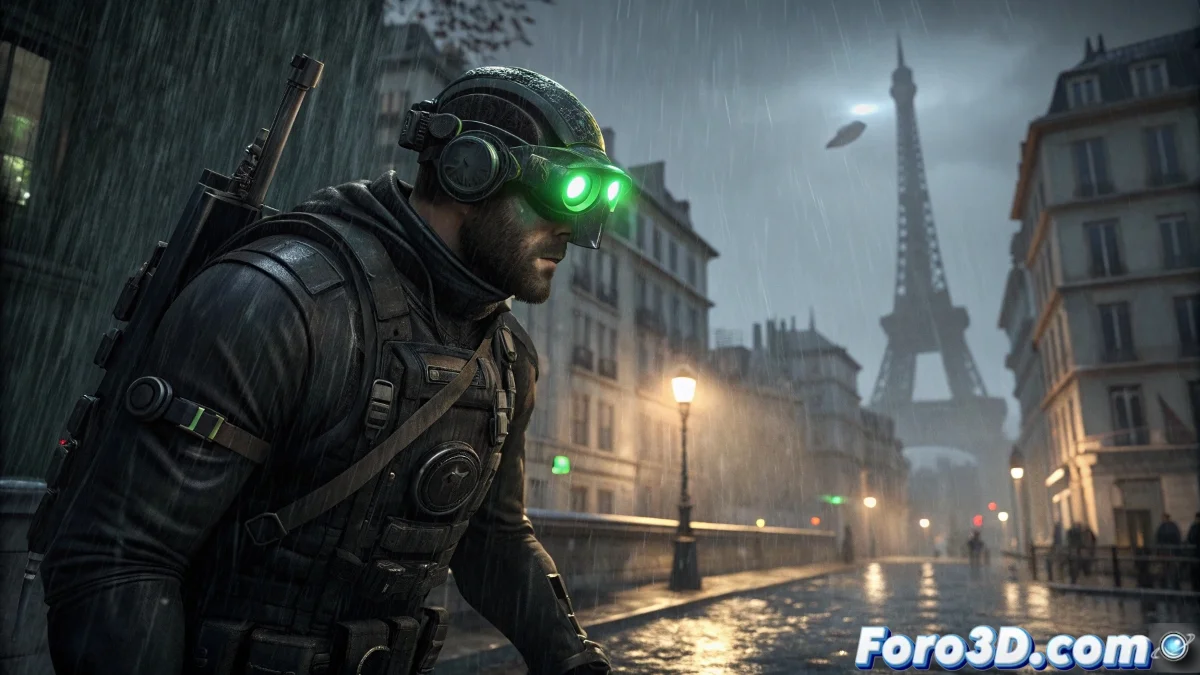
Splinter Cell: Deathwatch Brings Animated Stealth to Netflix with Cutting-Edge Technique
Netflix has shown a new trailer for Splinter Cell: Deathwatch, the upcoming animated series based on Ubisoft's stealth and tactical espionage saga 🎬. The technical showcase is remarkable, thanks to Ubisoft's proprietary engine that implements dynamic global illumination systems, volumetric shadows, and high-density urban environments with photogrammetric level of detail. Additionally, a special event in Paris on September 24 has been confirmed, where exclusive footage will be screened and production details will be revealed. Because in the world of animated espionage, every shadow counts 🕶️.
Technical and Visual Innovations that Define the Series
The trailer reflects a significant leap in graphics, highlighting the use of PBR materials that enhance the credibility of surfaces like metal, concrete, and fabrics—essential for a title based on stealth and environmental interaction 🏙️. Dynamic global illumination and volumetric shadows create immersive environments where light and darkness are gameplay tools, not just aesthetic elements. This technical approach not only elevates visual quality but also serves the narrative, making every scenario as functional as it is beautiful.
The trailer reflects a significant leap in graphics thanks to Ubisoft's proprietary engine with dynamic global illumination and volumetric shadows.
Animation and VFX: Naturalness and Realism
Splinter Cell: Deathwatch introduces an advanced facial motion capture system that brings greater naturalness to Sam Fisher's expressions and other key characters 🎭. The visual effects implement physical particles to simulate rain, dust, and smoke, while night vision goggles generate realistic luminous halos with volumetric scattering. These details are not just decorative; they directly affect gameplay, as visibility and dynamic environments influence stealth mechanics. An example of how art and technology intertwine to serve gameplay.
Enhanced Stealth Gameplay with Multichannel AI
The artificial intelligence uses a multichannel detection system (vision, sound, and movement), allowing enemies to react organically to the player's presence 🎮. Gadgets, updated with detailed animations, leverage custom shaders that integrate real-time visible holographic interfaces in the environment. This not only adds tactical depth but also immerses the player in the role of an elite spy where every decision counts. Because in Splinter Cell, even silence has its own sound.
Launch Event in Paris and Expectations
On September 24, Ubisoft will celebrate a premiere in Paris with extended game projections, technical talks on animation, VFX, and AI, plus the presence of part of the creative team 🇫🇷. The event will serve as a showcase for both players and industry professionals, offering a behind-the-scenes glimpse of how a series is built that promises to redefine the standard for animated video game adaptations. Tickets are limited, but the expectation is global.
The Irony of Extreme Realism
With so much realism in shadows and reflections, soon Sam Fisher will need his own RTX to go unnoticed... though he'll probably still prefer to stay in the shadows, where FPS aren't measured in frames per second, but in silences per second 😅.