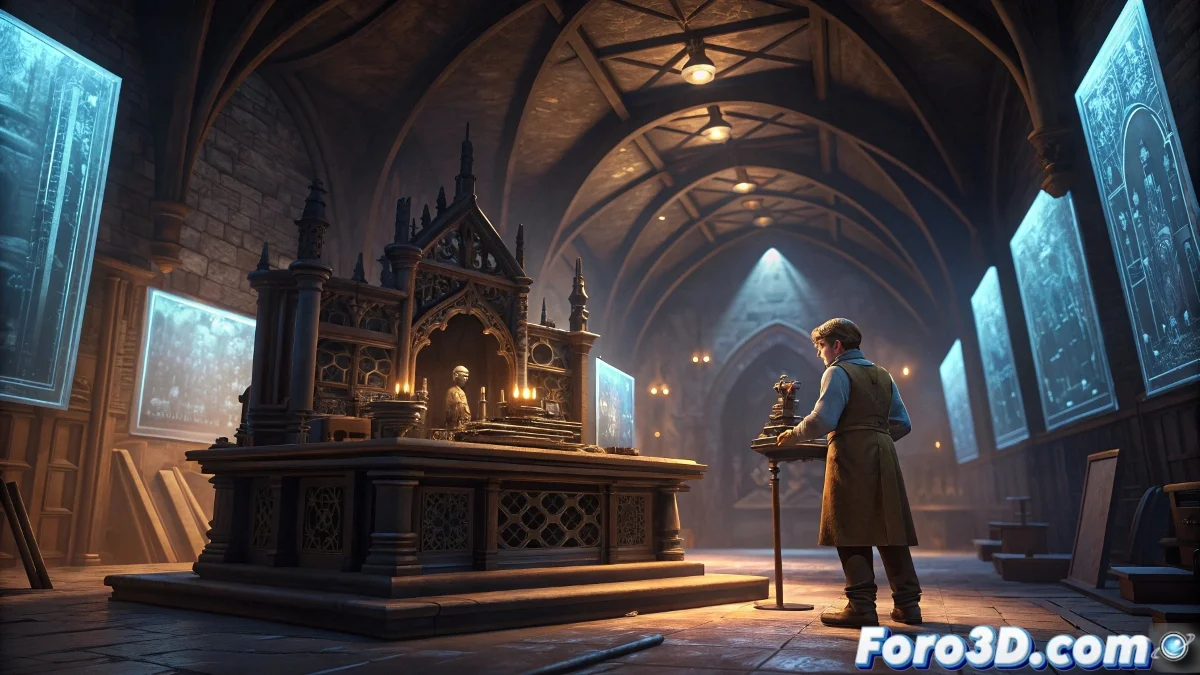
The Renaissance of the Millenary Art with del Toro's Seal
In a move that will redefine the future of stop-motion animation, Netflix, visionary director Guillermo del Toro, and the prestigious animation school Gobelins Paris have announced the launch of a specialized production and training studio in this artisanal technique. This tripartite alliance not only seeks to produce high-quality original content for the streaming platform but also to ensure the survival and evolution of an art form that has faced significant challenges in the digital era. The studio will function as a hybrid production and education center, where Gobelins students will work alongside experienced professionals.
What makes this initiative particularly notable is its focus on the medium's sustainability. While many studios have abandoned stop-motion considering it too slow and costly, this alliance recognizes its unique and irreproducible artistic value through digital techniques. Del Toro, whose love for stop-motion is well documented in films like Pan's Labyrinth and Pinocchio, argues that this technique offers a tactile and emotional quality that no CGI animation can fully replicate.
In the era of instant digital, meticulous analog becomes the greatest creative luxury
The Revolutionary Educational Model
The studio will implement a unique learning model that combines the French academic tradition of Gobelins with Netflix's practical real production approach. Students will not only learn traditional stop-motion techniques but will actively participate in professional productions from their first day. This "learn by doing" approach is designed to accelerate skill development and prepare graduates to transition immediately to professional roles.
The curriculum will cover all specialties of stop-motion: puppet design and fabrication, miniature set construction, frame-by-frame animation, cinematographic lighting at scale, and digital visual effects integration. Each student will have the opportunity to rotate through different departments before specializing, creating versatile animators who understand the complete production process.
- Comprehensive training in all stop-motion specialties
- Direct participation in Netflix productions
- Department rotation for holistic vision
- Direct mentorship from experienced professionals
State-of-the-Art Facilities and Technology
The studio will feature facilities specifically designed for stop-motion art. This includes climate-controlled animation studios to preserve delicate puppets, sculpture and mold-making workshops equipped with traditional tools and modern technology, and R&D laboratories to develop new materials and techniques. Motion capture technology will be integrated for previsualization and reference, but the final process will remain completely manual.
One of the most innovative aspects is the virtual camera system that allows directors to previsualize complex shots before committing weeks of animation. Motion control technology will also be implemented for precise camera movement shots, and advanced facial tracking systems for performance reference that will inform puppet expression animation.
The future of stop-motion is not in replacing the artisanal, but in using technology to enhance the artisanal
- Climate-controlled studios for preservation
- Hybrid workshops traditional-digital
- Advanced virtual previsualization systems
- Motion control technology for cinematic precision
Inaugural Productions and Creative Vision
The studio already has its first wave of original productions in development, which will reflect del Toro's distinctive visual style while exploring a wide range of genres and themes. The productions are expected to combine the characteristic poetic darkness of the Mexican director with narratives accessible to a global audience. Del Toro has mentioned his interest in adapting folkloric legends from different cultures using the stop-motion medium.
The studio's creative philosophy will emphasize diversity of styles and voices, with plans to develop projects from different directors and creators who share a passion for practical animation. Netflix will provide the global distribution platform while ensuring substantial creative freedom to the artists—a balance that has characterized its approach to adult animation.

Impact on the Animation Industry
This initiative represents a significant vote of confidence in the future of stop-motion as a commercially viable medium. By substantially investing in infrastructure and training, Netflix and its partners are sending a clear message: stop-motion is not a relic of the past but a medium with a bright future. This could inspire other studios and platforms to reconsider their approach to practical animation techniques.
For the French and European animation industry, the studio represents an opportunity to retain local talent that traditionally emigrated to North American studios. Gobelins graduates will now have attractive options close to home, potentially reversing the brain drain that has affected the sector in recent decades.
- Commercial validation of stop-motion
- Talent retention in Europe
- Inspiration for other studios to invest in practical techniques
- Strengthening of the European animation ecosystem
Guillermo del Toro's Vision
For Guillermo del Toro, this project represents the fulfillment of a lifelong dream. The director has been a vocal advocate for stop-motion throughout his career, considering it the . His vision for the studio goes beyond producing content—it seeks to create a sanctuary for the art where animators can experiment and perfect their craft without the extreme commercial pressures that have led to the decline of many traditional studios.
Del Toro emphasizes the importance of human imperfection in stop-motion—that almost imperceptible "pulse" that gives life to the puppets and that no algorithm can authentically replicate. His philosophy is that these imperfections are where the soul of animation resides, creating a unique emotional connection with the audience.
In a world of digital perfection, the human beauty of the imperfect becomes our most precious asset
The Legacy and Future of Stop-Motion
This studio could mark the beginning of a new renaissance for stop-motion, similar to the one 2D animation experienced in the past decade thanks to studios like Cartoon Saloon and films like Spider-Man: Into the Spider-Verse. By combining tradition with innovation and education with professional production, the model could become the standard for how to preserve and evolve threatened art forms.
The long-term impact could extend beyond stop-motion, influencing how we approach the preservation of artisanal skills in the digital era. If successful, this hybrid model could be replicated for other specialized techniques like sand animation, painting on glass, or even traditional shadow theater forms.
A Bet on the Soul of Animation
The alliance between Netflix, Guillermo del Toro, and Gobelins Paris represents much more than the creation of another animation studio—it is a statement of principles about the value of manual work in an increasingly digital world. By investing in stop-motion, these institutions are betting on the persistence of the human desire for visual experiences with texture, character, and that magical touch that only human hands can impart.
For audiences around the world, this means we will continue to enjoy the unique magic of stop-motion for decades to come—not as a nostalgic relic, but as a vibrant and evolved medium that continues to surprise and move with every meticulously crafted frame.
It seems that in the battle between digital and analog, the puppets still have much to say—one frame at a time 🎭