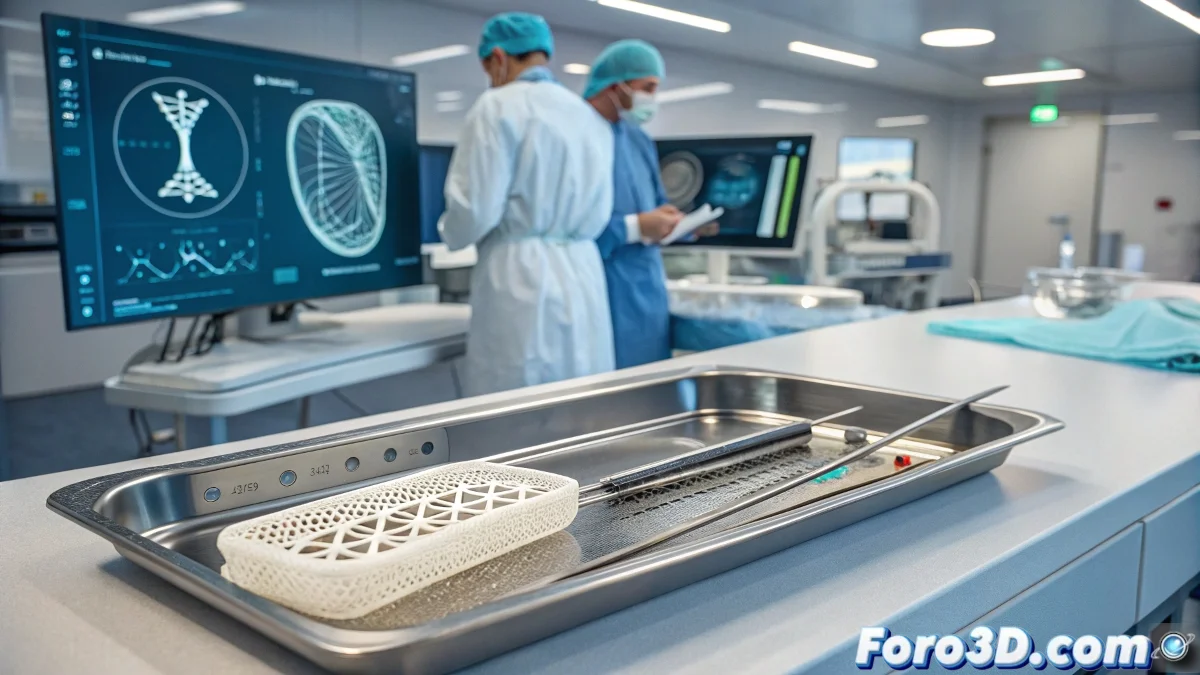
When the 3D Printer Becomes a Surgeon
The FDA has just given the green light to what seems like science fiction: a 3D-printed implant that guides damaged nerves to regenerate on their own 🏥. While some are still debating whether PLA is biocompatible, 3D Systems and TISSIUM are already printing solutions that the body absorbs as if they were its own.
Anatomy of a Technological Miracle
This revolutionary device works thanks to:
- Biomimetic geometry: Microchannels printed with micron precision that mimic the natural structure of nerves
- Smart materials: Bioabsorbable polymers that disappear once the nerve regenerates
- Parametric design: 3D modeling adapted to each patient using MRI data
- Nano-structured surface: Printed textures that stimulate cell growth
"We're not printing an implant, we're printing a path for the body to heal itself" - explains Dr. Laurent Castillo, medical director of the project.
The Process Behind the Breakthrough
From the scanner to the operating room:
- High-resolution medical imaging acquisition
- 3D reconstruction with specialized software
- Topological optimization for microchannels
- Bioprinting with certified materials
- Final sterilization and sterile packaging
Key Technologies That Make It Possible
| Technology | Application | Precision Achieved |
|---|---|---|
| DLP Bioprinting | Main structure | 25 microns |
| Microfluidics | Internal channels | 50 microns |
| Laser post-processing | Surface finishing | 10 microns |
Real Clinical Impact
Trials show:
- 85% complete nerve regeneration in minor injuries
- 60% success in severe damage (vs 30% with traditional methods)
- 0% rejection thanks to bioabsorbable materials
- 70% reduction in recovery time
The Irony of Modern Medicine
While some hospitals are still struggling with 2D printers that jam paper, the medical vanguard is already printing nerves, blood vessels, and even corneas. Perhaps soon the medical prescription will include: "Take paracetamol and go to the 3D printing department". 🖨️
The truth is that we are at a turning point: the same technology we use to print custom keychains now repairs human bodies. And if this is what we've achieved in 2025, what will the next decade bring?