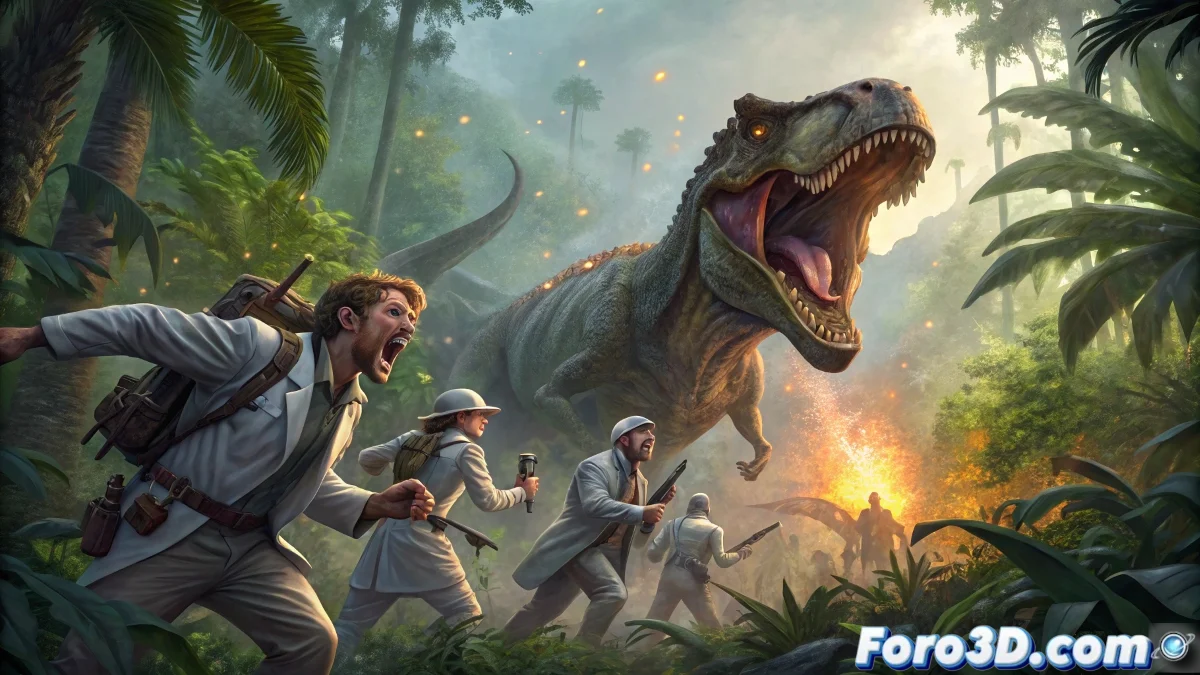
Necretaceous: when zombie dinosaurs ruled the Earth... again
Vertigo DC has revolutionized the comic landscape with Necretaceous, a series that combines paleontology, horror, and science fiction in a mixture as explosive as a meteorite impacting the Earth. Created by writer Simon Roy and artist Dani Strikes, the premise presents a world where a genetic resurrection experiment goes catastrophically wrong, bringing dinosaurs back to life but as necrotic creatures hungry for fresh meat. Humanity, already facing its own challenges in a dystopian future, now must deal with the ancient owners of the planet who have returned as walking nightmares. 🦖
The science of prehistoric horror
What makes Necretaceous unique is not just the novelty of zombie dinosaurs, but the scientific rigor behind its conception. The creators worked with paleontologists to design dinosaurs that were anatomically accurate before applying their necrotic transformation. The T-Rex is not simply a giant zombie, but a creature whose senses sharpened by necrosis make it the perfect predator. The Velociraptors retain their pack intelligence, but now coordinated by a collective consciousness of eternal hunger. This attention to detail elevates the concept from mere curiosity to credible horror.
Analysis of the world and mythology
Necretaceous builds its mythology on three pillars: the failed science that caused the disaster, the human society that survives in its ruins, and the necrotic ecology that has reclaimed the planet. Each aspect is developed with an internal coherence that makes the world as fascinating as it is terrifying.
The ecology of prehistoric death
The necrotic dinosaurs are not random monsters, but form a complete ecosystem with their own hierarchy and behaviors. At the top are the large theropods as apex scavengers, while the zombie herbivores form nomadic herds that devour all vegetation and meat in their path. The most terrifying are the necrotic pterosaurs, which can spread the infection through the air, and the marine creatures that turn the oceans into permanent quarantine zones.
Necrotic hierarchy:- apex necro-predators (T-Rex, Spinosaurus)
- necro-raptor packs
- mass displacement necro-herbivores
- necro-flyers and aquatics
Post-necrotic human society
Humanity survives in fortified citadels that blend advanced technology with medieval defenses. Society has divided between the Purists who seek to eradicate all necrotic life, the Adaptationists who believe in finding a balance with the new ecosystem, and the Bone Cultists who worship the zombie dinosaurs as reborn gods. This philosophical division creates conflicts as dangerous as the beasts prowling outside the walls.
In Necretaceous, the past is not only alive, but dead and hungry.
Art that resurrects prehistoric nightmares
Dani Strikes creates a visual tour de force where anatomical precision meets visceral horror. Her zombie dinosaur designs avoid clichés of putrefying flesh in favor of more credible decomposition, with exposed bones showing prehistoric combat marks and necrotic muscles that still retain their power. The action pages are choreographies of chaos where the scale of the dinosaurs feels genuinely overwhelming. The use of color clearly differentiates flashbacks to the original Cretaceous (warm and vibrant tones) from the necrotic present (putrid greens, earthy browns, and bloody reds).
Visual innovations:- precise anatomical dinosaur design
- monumental scale that conveys threat
- color palettes that differentiate eras
- fusion of technology and prehistoric elements
Themes of extinction and survival
Beyond the horror and action, Necretaceous explores deep themes about extinction, scientific responsibility, and the nature of life itself. The series asks: if we can bring back extinct species, should we? What obligations do we have toward creatures we create? And what happens when our scientific arrogance exceeds our ability to control? In an ironic twist, humans now face the same extinction they caused the dinosaurs millions of years ago. 🌋
Philosophical questions:- limits of scientific responsibility
- nature of life and death
- ecological balance versus progress
- second chances in evolution
In the end, Necretaceous proves that some genies are better kept in their bottles, especially when they contain dinosaur DNA mixed with zombie viruses, though it certainly makes for thrilling reading. 💀