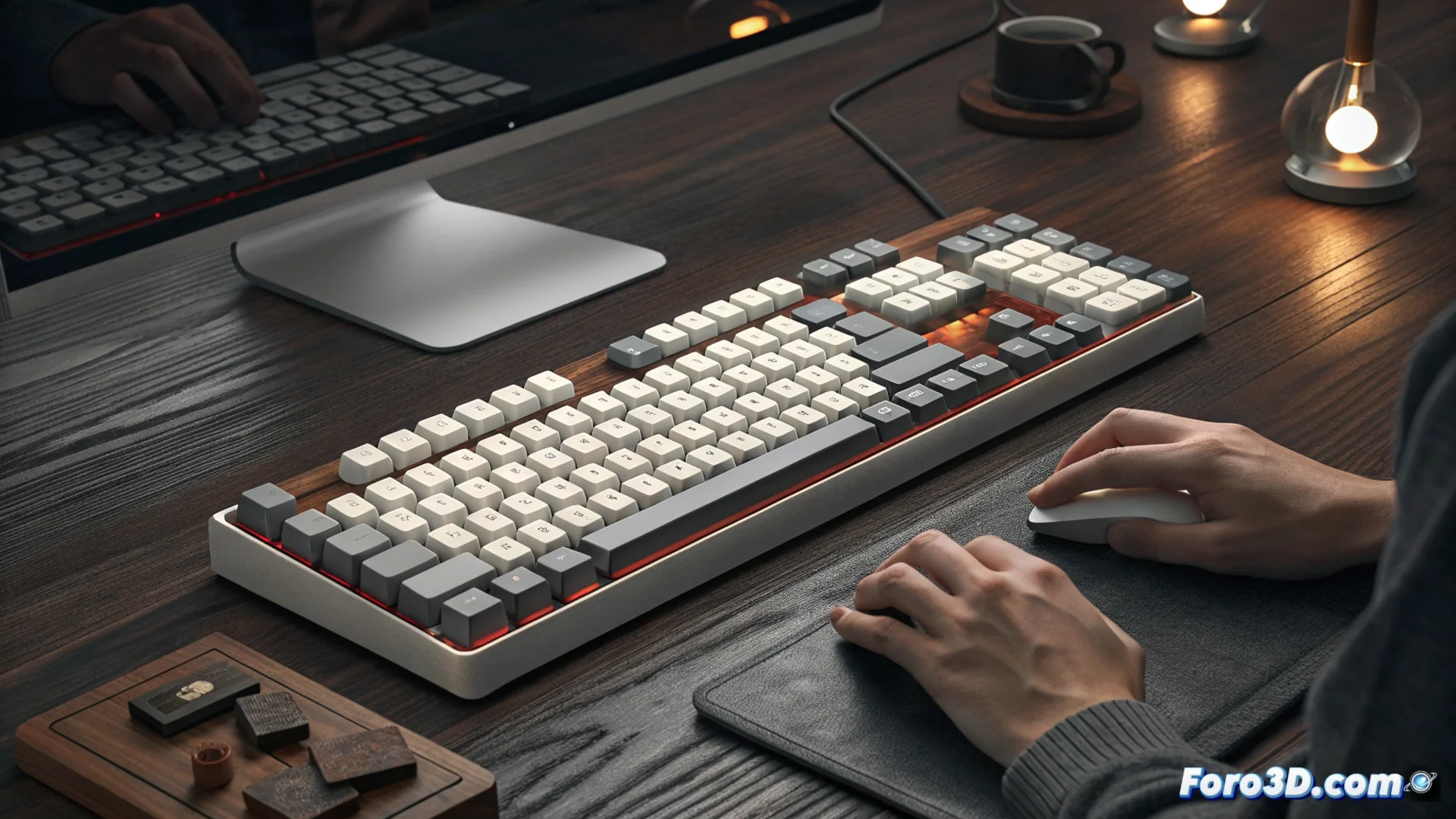
Naya Connect: a modular mechanical keyboard you can reconfigure
The idea of a keyboard that physically adapts to your workflow takes a leap with Naya Connect. This project proposes a mechanical and wireless peripheral whose design is not set in stone, but rather you can organize like a high-precision puzzle on your desk. 🧩
A central core to which functional blocks can be added
The system is based on a main module that contains the alphanumeric keys. On its sides, the user can magnetically attach other independent modules. These additional blocks can carry a numeric keypad, specific function keys, or even an integrated trackpad. Communication between all the pieces is done via 2.4 GHz radiofrequency, eliminating cables between them.
Key technical features:- Flexible connection: The set connects to your devices via Bluetooth 5.3 (multi-device) or via USB-C cable.
- Interchangeable switches: The mechanical switches are hot-swappable, allowing them to be changed without soldering.
- Independent autonomy: Each module has its own battery, charging separately.
For those who have always wanted to reorganize their keyboard keys, but physically, by moving entire blocks around the desk.
A future subject to crowdfunding
This modular keyboard seeks to become a reality through a Kickstarter campaign. Its production and shipment to backers depend entirely on the project reaching its funding goal. The creators offer promotional prices during this phase, with the aim of shipping the units by the end of the year if production deadlines are met.
Aspects to consider about the launch:- Common launch model for innovative hardware, but which carries inherent risks.
- Possibility of delivery delays or adjustments in the final design compared to the prototype.
- The campaign is the gateway to get the product at a reduced cost.
Reinventing ergonomics and workspace
Naya Connect not only proposes to change how you type, but also how you organize your desk. The freedom to separate the numeric block or bring a trackpad closer depending on the task can optimize ergonomics and space. It represents a step toward peripherals