Nature Solves an Ancient Mathematical Problem by Tiling
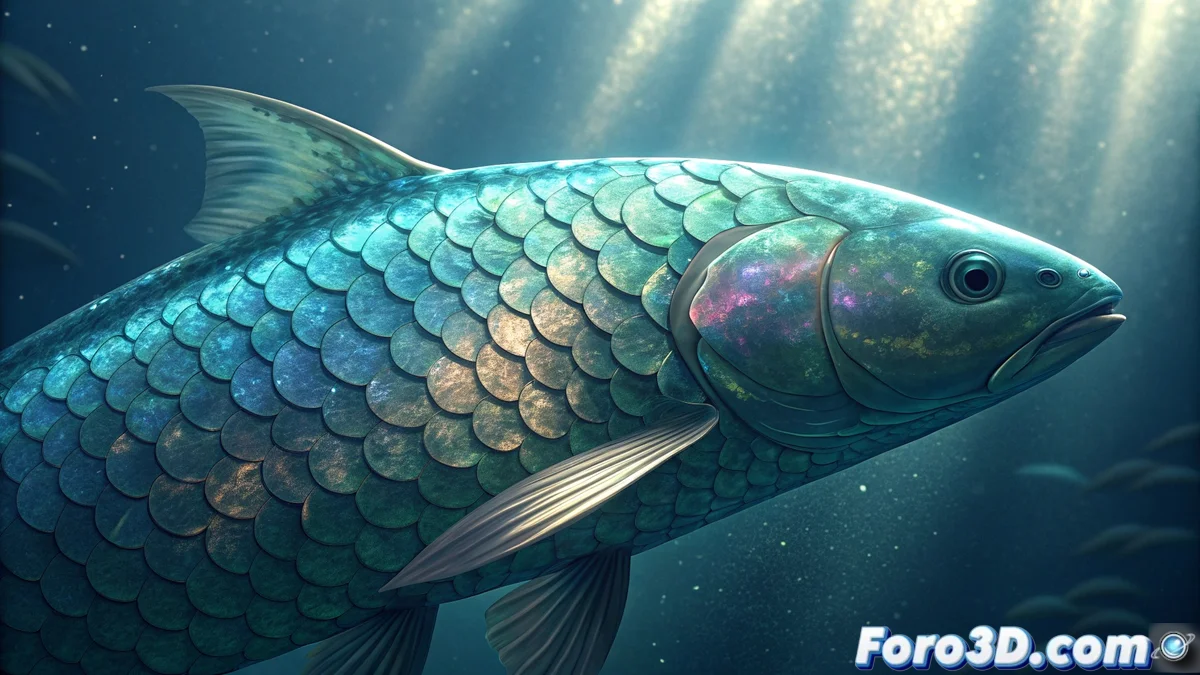
A recent study reveals that living systems, such as fish scales or algal cells, generate patterns that solve a classic geometric enigma. These organisms cover curved surfaces using only one type of shape, an achievement that was considered mathematically impossible. The research, published in Nature Communications, analyzes how evolution allows these structures to adapt to the curvature of their body. 🐠
The Challenge of Tiling Curved Surfaces
Tiling a plane with a single shape, like hexagons in a honeycomb, is simple. However, doing it on a curved surface like a sphere presents a greater obstacle. Traditional geometry held that at least two types of tiles were needed to cover it without distorting them. The observed biological structures employ a practical solution with a single type of cell or scale, allowing the organism to grow efficiently and maintain its integrity.
Key Features of the Phenomenon:- Identical Shapes: They use a single type of unit (cell or scale) to cover the surface.
- No Gaps: They achieve perfect packing that leaves no empty spaces.
- Adaptation to Curvature: The shapes are slightly modified to fit the body's geometry, challenging established principles.
It seems that nature has been applying elegant solutions to problems that humans have only recently formalized with equations for centuries.
Impact on Biology and Engineering
This discovery not only changes how we understand organizing living matter but also inspires new directions for designing materials and in architecture. Understanding the principles these organisms use to pack cells can help create flexible surfaces or materials that adapt to complex shapes.
Potential Applications:- Bionic Design: Create materials and structures inspired by these natural patterns for greater efficiency.
- Computational Modeling: Researchers use simulations to replicate how these patterns emerge during organism development.
- Linking Geometry and Genetics: Connect shape with the processes that direct morphogenesis, i.e., how a living being's form develops.
A Lesson from Evolution
The finding underscores that nature often possesses answers to complex problems long before we formulate them. Perhaps we should consult our biological neighbors more often before declaring something impossible. This crossroads between biology, mathematics, and design opens a fascinating path for innovation, borrowing solutions proven by millions of years of evolution. 🌿