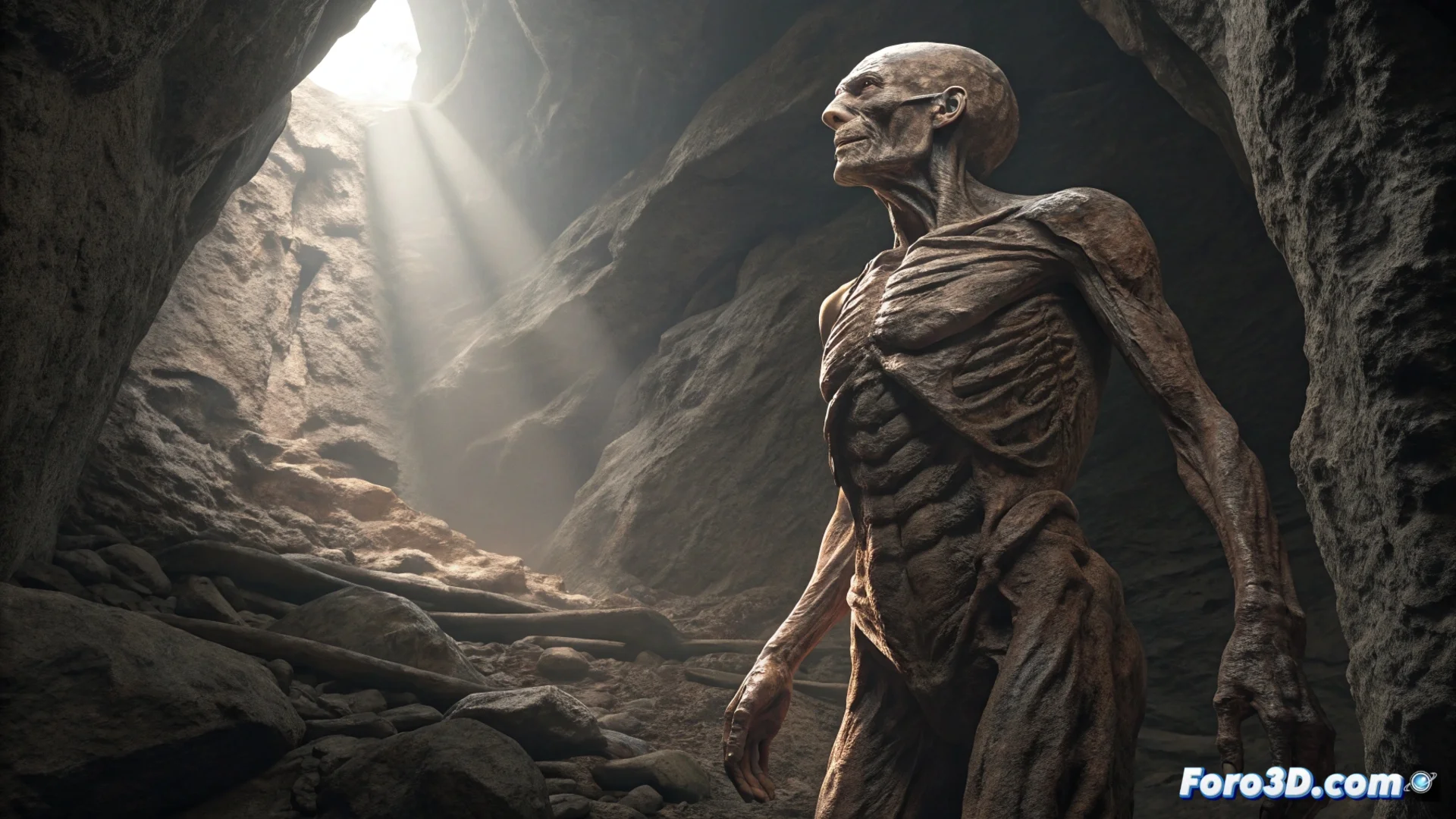
Natural Mummification Competes Against Time to Preserve Bodies
Preserving a body without it disintegrating is a biological race against time. To achieve this, the environment must stop the advance of bacteria, fungi, and insects, in addition to preventing scavengers from accessing the remains. Only sites with a very specific balance achieve this effect. 🕰️
The Environment Acts as a Passive Preservative
Glaciers, acidic bogs, or deserts with extremely dry sand can offer the perfect cocktail. In certain caves, for example, constant dryness, total absence of light, and a temperature that does not vary much are combined. This set operates as a natural refrigerator that does not freeze, but rather extracts moisture from the tissues progressively. 🧊
Key Conditions for It to Work:- Constant Dryness: Extracts internal moisture from the skin and organs.
- Total Darkness: Prevents light from degrading organic materials and helps maintain a stable temperature.
- Thermal Stability: The absence of sudden temperature changes is fundamental for the process not to be interrupted.
It works like a kind of electricity-free refrigerator that does not freeze, but does dry out.
A Mechanism Similar to Drying Fruit
The final result resembles what happens when a grape turns into a raisin. The body loses water, shrinks in size, and hardens step by step. Despite this radical change, it maintains identifiable features for centuries. This slow desiccation is the main mechanism that halts putrefaction, as the tissues dry out so much that microorganisms cannot act on them. 🍇
Factors That Must Coincide:- An environment with permanently very low ambient humidity.
- Protection against direct sunlight and the elements.
- A temperature that does not undergo significant fluctuations over time.
The Most Patient Preservation Method
It is not a phenomenon that can occur anywhere. It requires a series of environmental factors to align precisely. This combination acts as a natural preservative that is highly effective, although completely passive. There is no need to embalm; nature just needs to meticulously carry out its work of drying everything over hundreds of years. It is, without a doubt, the slowest and most patient way of preserving that exists. 🌵