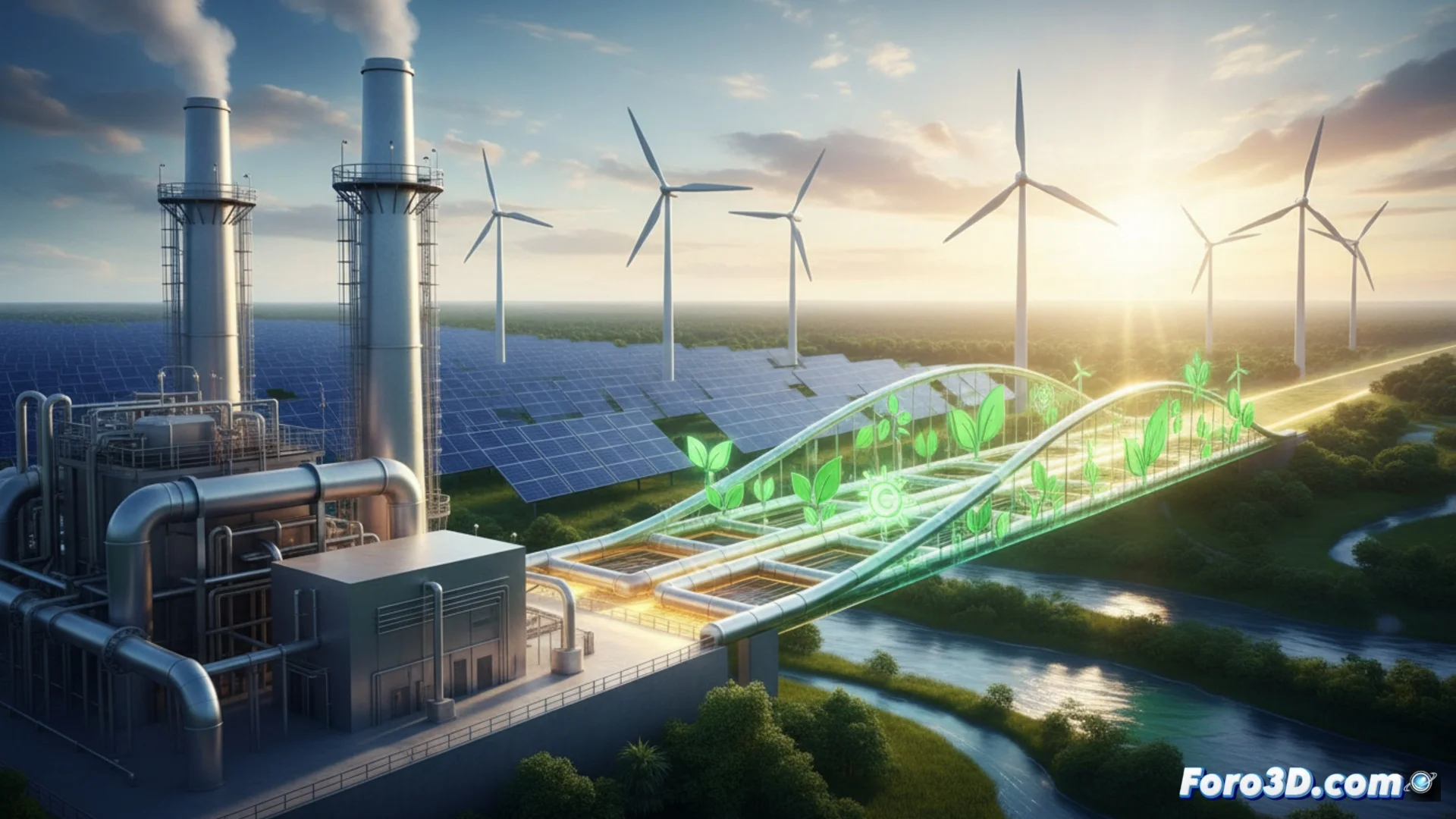
Natural Gas as a Bridge to a Zero-Emissions Future
To achieve a net-zero emissions economy by 2050, experts identify natural gas as a fundamental temporary resource. Its ability to generate electricity with less carbon than other fossil fuels positions it as a strategic ally in global decarbonization. ⚡
The Infrastructure Needed for the Energy Transition
For this energy bridge role to work, it is vital to build advanced infrastructure. This includes more efficient power plants and technologies for carbon capture and storage. Additionally, the industry must prevent methane leaks throughout its supply chain. Integrating this resource with green hydrogen in the future could expand its utility within a clean system.
Key Actions for an Effective Bridge:- Invest in high-efficiency combined cycle power plants to optimize gas use.
- Develop and scale carbon capture, utilization, and storage (CCUS) technologies.
- Minimize methane emissions through improved monitoring and maintenance of infrastructure.
While some debate the bridge, others are already swimming in the river of transition, hoping the structure is completed before they reach the other shore by sheer effort.
Challenges on the Path to Sustainability
Achieving the net-zero goal does not depend on a single solution. Although natural gas offers a cleaner alternative now, its consumption must be progressively reduced as the capacity of solar, wind, and other renewables grows. The global plan demands clear policies, strong investments in innovation, and solid international collaboration.
Critical Factors for Success:- Expand renewable energy generation and storage capacity.
- Establish policy and regulatory frameworks that incentivize decarbonization.
- Foster global cooperation to not exceed established warming limits.
Conclusion: A Temporary Resource with a Defined Role
Natural gas serves as a necessary bridge, allowing immediate emissions cuts while clean technologies are perfected. Its long-term utility will be tied to how it integrates with renewable sources and how the industry manages its environmental impact. The journey to 2050 requires pragmatism and a clear roadmap. 🌍