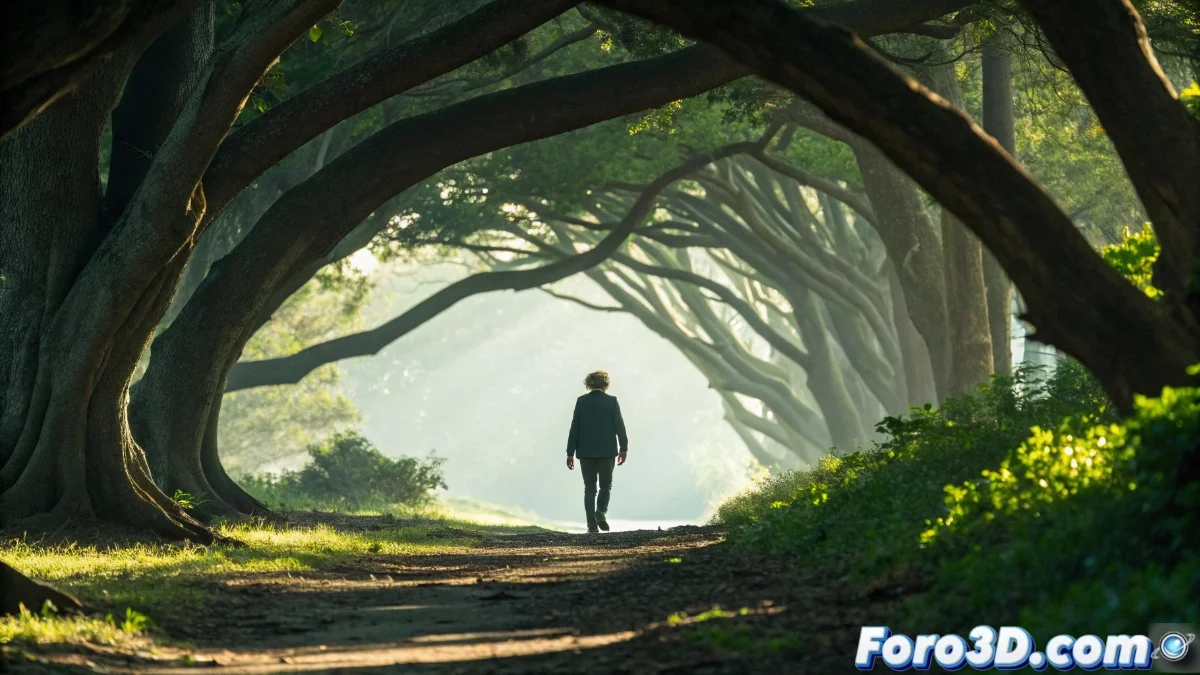
Natural Framing Technique in Photography
The natural framing represents a fundamental compositional strategy that transforms everyday images into visual narratives loaded with meaning and depth. By incorporating environmental structures as framing elements, we direct the observer's gaze toward the focal point while building contextual layers that enrich the visual story. This methodology is particularly valuable in mobile device photography, as it leverages accessible resources without requiring additional specialized equipment 📸.
Architectural Elements as Composition Resources
Human constructions offer endless opportunities to create natural frames with defined structural character. An open window not only perfectly delimits a portrait but also incorporates ambient lighting and architectural references into the context. Historical arches, half-open doors, and corridors generate natural leading lines that progressively guide attention toward the image's main element. Even contemporary urban components like spiral staircases or ornamental lattices can be transformed into innovative frames that add complex textures and distinctive geometric patterns.
Practical Applications with Built Structures:- Windows as natural delimiters that incorporate side lighting and spatial context
- Arches and doors creating visual transitions that emphasize the main subject
- Contemporary urban elements adding modern textures and geometric patterns
The true art of natural framing lies in seeing compositional potential where others only see functional structures
Organic Resources in Natural Environments
Natural spaces provide framing materials with organic and varied character that emotionally connect with the viewer. Curved tree branches create fluid frames that harmoniously integrate subjects into landscapes, while rock formations impose a sense of monumentality and scalar awe. Foliage and flowers in the foreground allow framing portraits with seasonal color palettes and soft textures, and water reflections open possibilities for specular symmetrical compositions of extraordinary visual impact. These natural components not only channel visual attention but also establish emotional atmospheres and specific temporal references.
Natural Elements for Advanced Composition:- Branches and trunks creating organic structures that integrate subject and environment
- Geological formations adding dramatic scale and sense of permanence
- Water reflections allowing perfect symmetries and visual duplications
Creative Challenges and Social Perceptions
The social dimension of this technique emerges when we must explain to curious passersby why we are intensely photographing an empty frame instead of the spectacular landscape it contains, momentarily transforming us into that incomprehensible artist who prioritizes structure over evident content. This visual paradox represents one of the most intriguing aspects of natural framing: the ability to find compositional beauty in elements that conventionally go unnoticed, challenging established visual expectations 🎨.