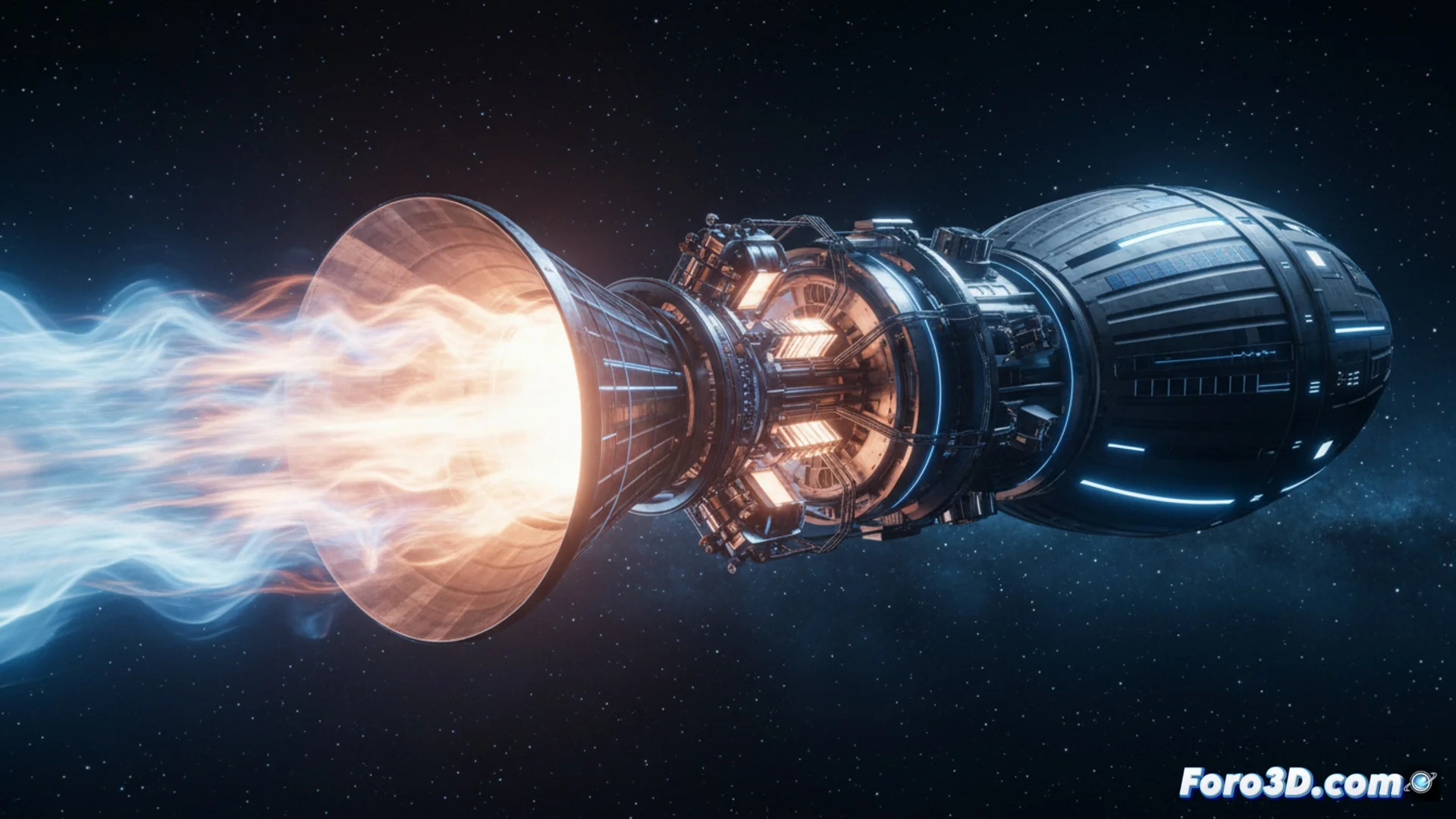
NASA Resumes Testing of Nuclear Thermal Rocket Engines
The U.S. space agency is preparing to restart testing of nuclear thermal propulsion engines in 2025, marking the return of a program that was halted for over sixty years. This initiative, explored between the 1950s and 1970s, has the potential to radically alter the way humanity travels through the cosmos. Current engineers aim to overcome the technical obstacles that stalled the project, now using novel materials and powerful computer simulations. The ultimate goal is to create a more efficient propulsion system for sending astronauts beyond low Earth orbit. 🚀
Key Advantages of Nuclear Propulsion in Space
A nuclear thermal engine operates by heating a propellant fluid, such as liquid hydrogen, using a small nuclear reactor. This method produces significantly greater thrust compared to conventional chemical engines, while consuming the same mass of fuel. As a result, a spacecraft with this technology could halve the duration of a trip to Mars. Additionally, requiring less propellant allows the spacecraft to carry more payload, such as high-power scientific instrumentation or advanced telecommunications systems.
Main benefits of this technology:- Higher specific impulse: Achieves more thrust with less fuel, optimizing launch mass.
- Reduced travel time: Enables reaching distant destinations, like Mars, in much shorter timeframes.
- Increased payload: Frees up space and weight to transport more resources and scientific equipment.
Overcoming these milestones is essential for planning sustainable crewed missions to distant destinations.
Focus of the New Experiments and Validations
Contemporary tests focus on testing critical components and specialized fuels that can withstand extreme operating conditions. NASA teams and their collaborators, including DARPA, have already conducted ground demonstrations of essential technology. The next goal is to organize an in-space flight test to verify the performance of the complete system. Validating these aspects is crucial to making human missions to remote locations in the solar system a reality.
Key areas of current research:- Advanced materials: Develop alloys and fuels that withstand intense temperatures and radiation.
- Computational simulations: Use digital models to predict reactor behavior and propellant flow.
- Integration tests: Prepare a demonstration in the real space environment to validate the full design.
From Science Fiction to Technical Reality
Although this concept evokes 1960s science fiction stories, current work seeks to ensure it does not remain archived but finally takes off. The challenge is no longer just making the reactor work, but ensuring interstellar travel does not rely on a design that stayed on paper. The path is open to transform space exploration with unprecedented power. 🌌