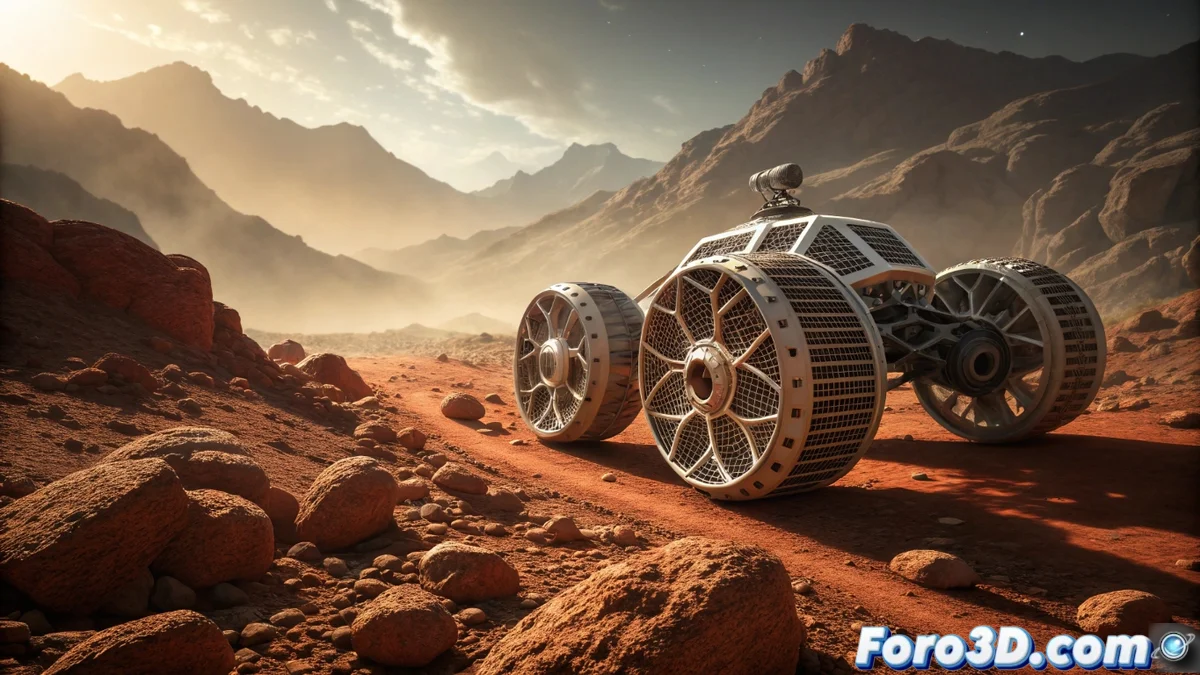
NASA Innovates in Wheels for Mars Rovers
Imagine exploring Mars' craters and hills with technology that seems straight out of a dystopian future: NASA is revolutionizing space exploration by creating rover wheel prototypes, using 3D printers to shape a resilient mesh of nickel-titanium alloy. This innovation not only promises to overcome Martian terrain challenges but also opens doors to everyday applications, all while keeping the spirit of interstellar adventure alive 🚀.
Key Features of These Advanced Wheels
These wheels, completely airless and manufactured with the precision of 3D printing, have the ability to adapt to any irregularity on Mars' surface. When hitting rocks or dust, they deform intelligently thanks to the elastic properties of the alloy, then recover their original shape without losing efficiency. This is not just a technical trick; it means greater mobility for rovers and a significant reduction in breakdown risks during missions lasting months or years.
Descriptive List of Features:- Exceptional Flexibility: The alloy mesh allows the wheels to bend and stretch without breaking, ideal for irregular surfaces like those on Mars, preventing jams and maintaining mission progress.
- Impact Resistance: Unlike rigid materials, this technology withstands wear from dust and rocks, extending the lifespan of rovers in hostile environments.
- Efficient Production: Using 3D printers accelerates development and reduces costs, enabling rapid iterations to test and improve designs on Earth before launching them into space.
These 3D-printed wheels seem like something from a science fiction movie, and it's tempting to think that if they succeed on Mars, they could transform everyday cars into vehicles that dodge potholes with the grace of an explorer spacecraft.
Advantages Over Traditional Designs
When comparing these wheels to the aluminum ones used on the Curiosity rover, the differences are striking: the new versions offer superior durability, better resisting the constant bombardment of Martian rocks and dust. This allows rovers to venture into more dangerous areas without frequent repair stops, which optimizes missions and maximizes scientific discoveries.
Another Descriptive List of Advantages:- Damage Reduction: By deforming and recovering, they avoid common fractures in rigid wheels, meaning fewer interruptions in prolonged explorations.
- Expanded Exploration: With greater wear resistance, rovers can access previously inaccessible areas, opening new opportunities to study the red planet.
- Potential for Earthly Uses: It's not far-fetched to imagine these wheels on everyday vehicles, making trips on rough roads feel like an interplanetary odyssey, with game-changing reliability.
Final Reflections on This Innovation
In summary, NASA's bet on these 3D-printed wheels is not just a technical advance; it's a step toward a future where space exploration intertwines with practical solutions for daily life. With their ability to tackle hostile terrains and their promise of durability, these creations could inspire designers and technology enthusiasts to rethink how we move, both on Mars and on our own planet, leaving a lasting footprint in the history of engineering 🚀.