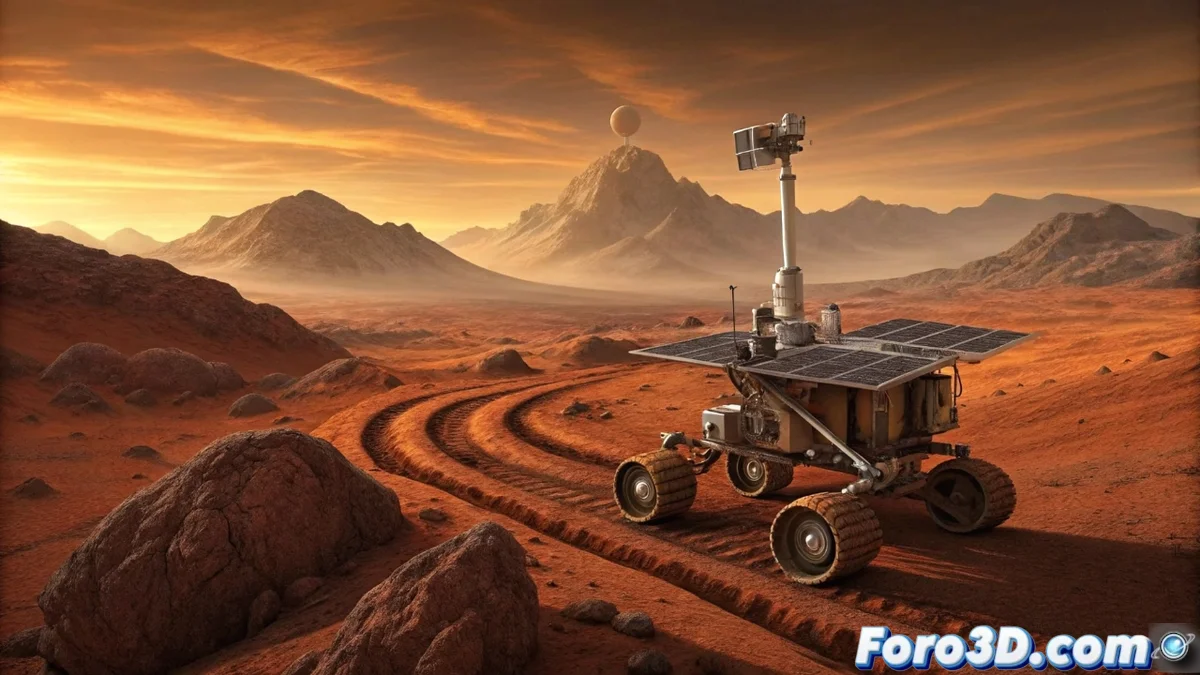
NASA Ensures Continuity of ExoMars After Breakup with Roscosmos
The NASA has officially confirmed its commitment to keep the European Space Agency's ExoMars program operational, after the geopolitical situation forced the end of collaboration with the Russian agency Roscosmos. This decisive move ensures the survival of a mission specifically designed to find traces of past life on Mars, saving the Rosalind Franklin rover that had been left in uncertainty after the breakdown of international cooperation 🚀.
Reconfiguration of the Space Alliance
The U.S. agency now takes on a fundamental leadership role by supplying essential components such as the launch vehicle and critical elements of the descent module, while the ESA completely restructures the mission by eliminating all contributions of Russian origin. This reorganization involves inevitable but essential delays, postponing the launch originally scheduled for 2022 until at least 2028, though it ensures the scientific continuity of the project that symbolizes one of the most ambitious endeavors in European exploration of the red planet.
Main Technical Changes:- Complete replacement of the Russian Kazachok lander with a descent platform developed in ESA-NASA collaboration
- Adaptation of all interface systems to ensure compatibility with U.S. rockets
- Preservation of the unique drilling capability to two meters depth
"While nations clash on Earth, space cooperation reorganizes to search for life on another planet" - Reflection on the geopolitical situation
Scientific and Technological Impact
The comprehensive redesign maintains the rover's exceptional capability to drill up to two meters below the Martian surface, a critical depth where cosmic radiation has not destroyed possible biomarkers, thus preserving the mission's fundamental scientific value despite earthly political obstacles. This drilling depth represents a unique advantage in current Martian exploration 🔍.
Preserved Advances:- Deep drilling technology to access radiation-protected zones
- In situ analysis of Martian subsurface samples
- Detection of possible organic biomarkers
Cooperation Beyond Earthly Borders
The historical paradox manifests in that while geopolitical tensions intensify on Earth, in the space domain international collaboration reinvents itself to pursue one of humanity's greatest enigmas: the existence of extraterrestrial life. This episode demonstrates that scientific curiosity can transcend even the deepest earthly conflicts, keeping the flame of exploration and discovery alive 🌌.