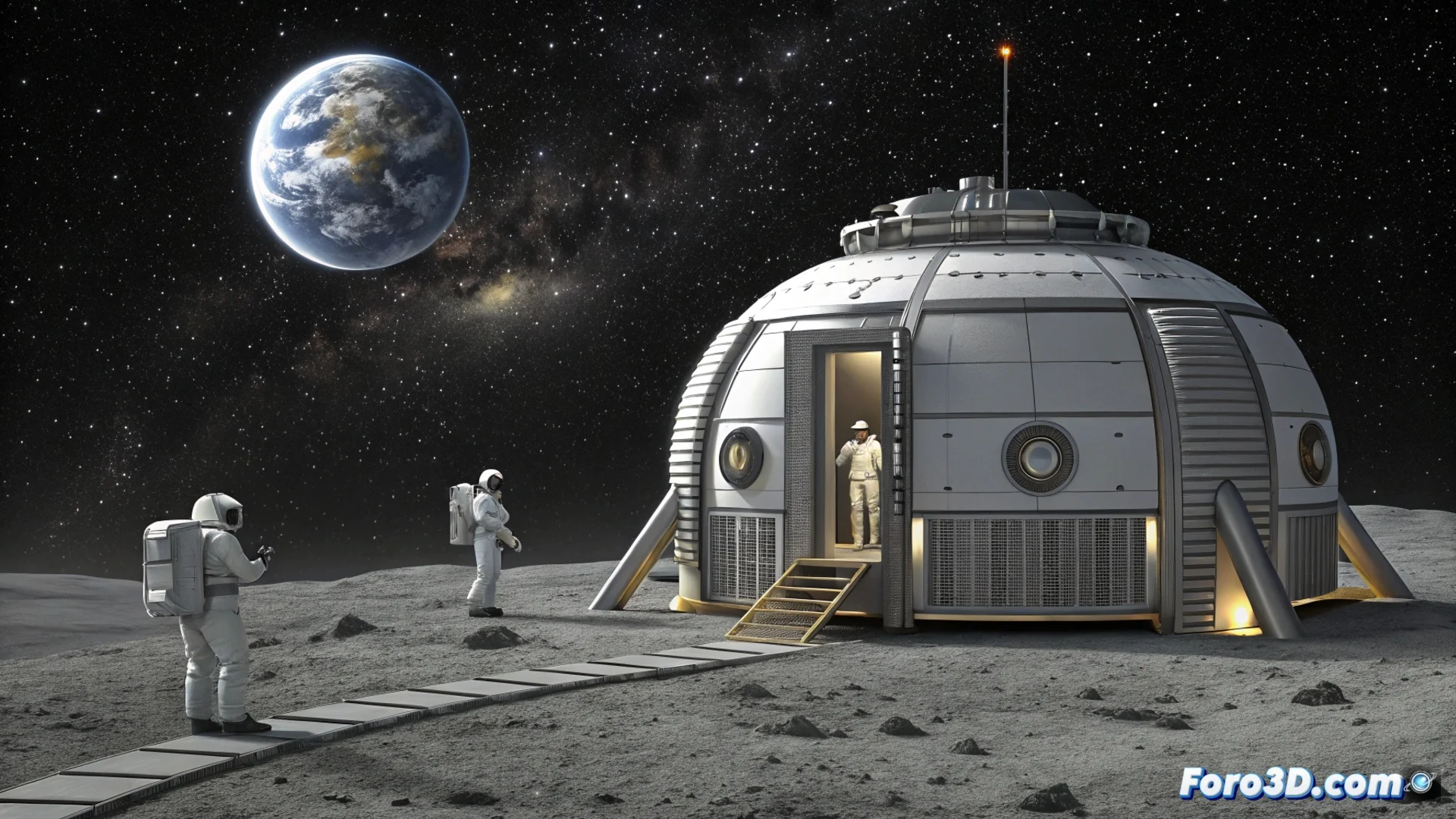
NASA and the Department of Energy Plan a Nuclear Power Plant on the Moon
United States space and energy agencies have confirmed a joint project to build a nuclear fission plant on the lunar surface. This initiative seeks to solve the critical challenge of providing constant energy supply to future human colonies established there. The feasibility study is already complete, and design documentation is now underway, with the goal of finishing it by 2030. 🚀
A Solution for the Long Lunar Nights
Nuclear energy emerges as the most viable option for operating in an environment where night can last nearly 14 Earth days. A powerful and continuous source is needed to keep habitats, life support systems, and all scientific instrumentation running without interruption. Unlike solar panels, a reactor would enable prolonged human presence autonomously, regardless of sunlight.
Key Advantages of Lunar Nuclear Energy:- Provides constant energy during the long lunar nights, which last approximately two Earth weeks.
- Offers significantly greater power than other alternatives, necessary for operating complex bases.
- Allows greater independence and flexibility by not depending on geographic location for sunlight.
While on Earth the energy debate leans toward renewables, on the Moon the most practical option seems to be splitting the atom to avoid being left in the dark.
The Space Race for Energy
Although the exact timing to execute the project on the Moon is not yet defined, analysts suggest its timeline could align with the plans of other powers. Both Russia and China have publicly declared their intention to establish their own lunar bases, configuring a parallel race to dominate this critical technology. This scenario highlights the strategic importance of securing autonomous energy sources in outer space.
Competitors in the Lunar Landscape:- Russia: Has repeatedly expressed its ambitions to build permanent infrastructure on the Moon.
- China: Advances with its Chang'e program and plans an international lunar research station.
- U.S. (NASA/DOE): Leads the fission reactor project to power the Artemis program and subsequent bases.
An Essential Step for Permanent Exploration
This project is not just an engineering exercise, but a fundamental pillar for the next phase of space exploration.