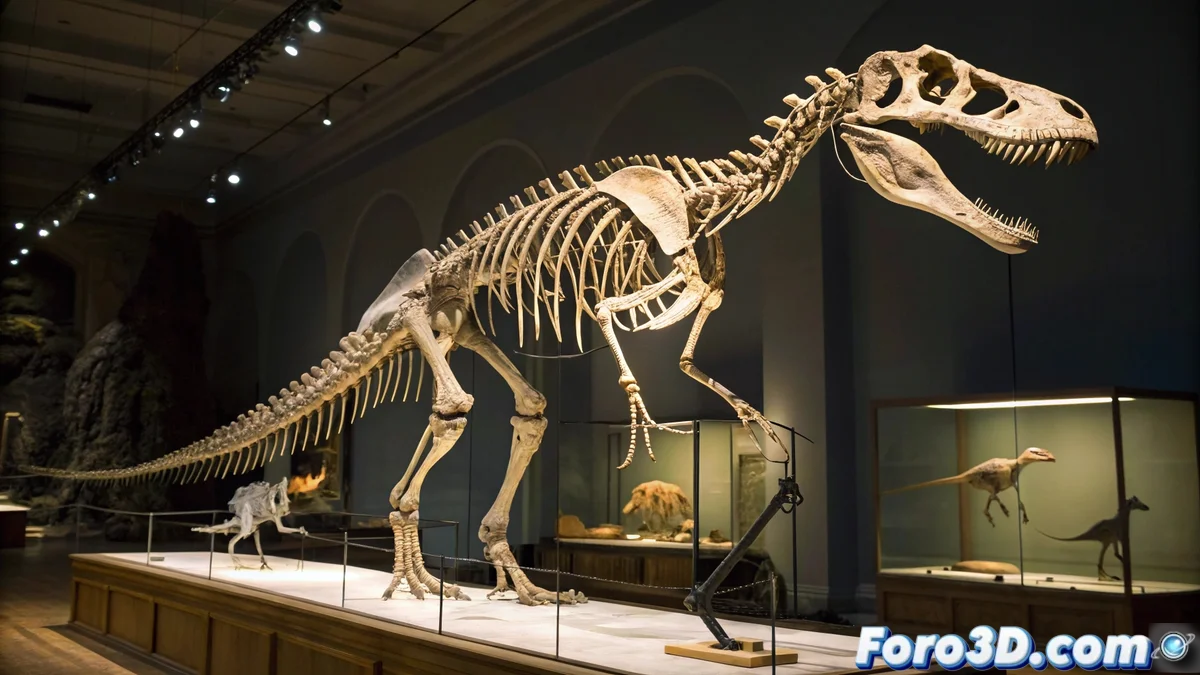
Nanotyrannus mystery solved: new evidence confirms separate species from Tyrannosaurus rex
For over half a century, the paleontological community has maintained an intense scientific debate about the true nature of certain reduced-size fossils, questioning whether they represented juvenile specimens of Tyrannosaurus rex or constituted a completely distinct species. This historical enigma has finally been unraveled through the discovery of an extraordinarily well-preserved skeleton that provides definitive proof about the real identity of these dinosaurs 🦖.
Conclusive anatomical evidence
The meticulous analysis of the new specimen reveals exclusive morphological characteristics that do not fit the developmental stages of Tyrannosaurus rex, but instead exhibit sufficiently differentiated traits to classify it as Nanotyrannus, an independent species with its own place in theropod phylogeny. Researchers have detected fundamental discrepancies in multiple structural aspects that validate this taxonomic separation.
Key anatomical differences identified:- Cranial structure with distinct proportions and wider nasal fenestrae
- Pelvic configuration with differentiated ilium and ischium morphology
- Dental development pattern with more numerous and specialized dentition
The confirmation of Nanotyrannus as a valid species represents one of the most significant advances in theropod paleontology of the last decade, redefining our understanding of tyrannosauroid diversity - Dr. Elena Martínez, Lead Paleontologist of the study
Implications for Cretaceous paleoecology
This transcendental discovery not only settles a persistent controversy but transforms our perception of the Late Cretaceous ecosystem, where the coexistence of two related predators but of notably disparate sizes is now confirmed. The verified existence of Nanotyrannus implies specialized predatory strategies and a differentiated ecological niche compared to its colossal congener, substantially expanding our understanding of the variety of tyrannosaurids in North America immediately before the mass extinction event.
Main scientific impacts:- Reconfiguration of predator-prey relationships in the terminal Cretaceous
- Revision of tyrannosauroid diversification models
- New perspectives on ecological niche partitioning among carnivorous dinosaurs
A confirmed own identity
It seems that even in the world of dinosaurs there were identity complexes, with Nanotyrannus probably tired of being systematically confused with a T. rex adolescent. This resolution not only grants this species its deserved taxonomic recognition, but enriches our knowledge about the evolutionary complexity of theropod dinosaurs and demonstrates how a single discovery can alter decades of established scientific interpretations 🔍.