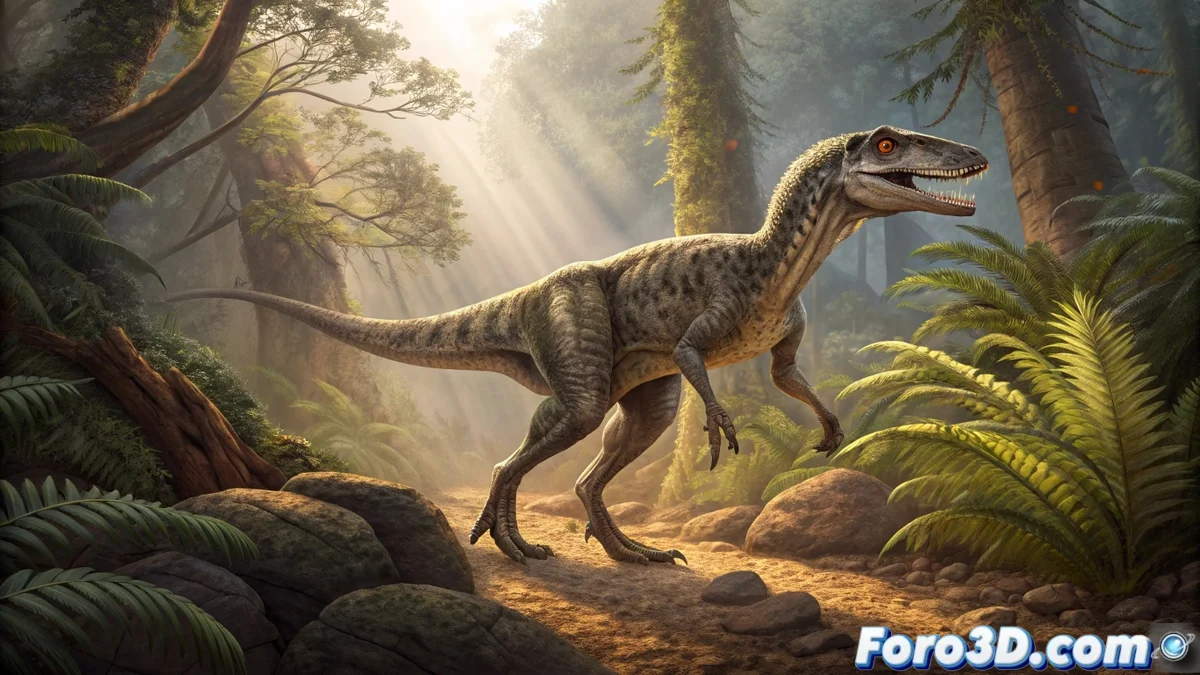
Nanotyrannus: a species distinct from Tyrannosaurus rex
Paleontology is experiencing a significant shift with research that challenges decades of consensus. A detailed analysis of key bone structures has determined that Nanotyrannus was not a juvenile specimen of Tyrannosaurus rex, but rather an adult of a separate species. This discovery reconfigures our map of Late Cretaceous predators 🦖.
The anatomical evidence that changes everything
The core of the study lies in the meticulous examination of the hyoid bones, crucial elements in the neck linked to tongue musculature and feeding. Researchers found fundamental morphological differences between specimens attributed to Nanotyrannus and those of adult T. rex. These disparities, consistent with full development, point to distinct functional adaptations, ruling out the hypothesis of a mere growth phase.
Key findings from the analysis:- Hyoid morphology: The shape and robustness of these bones in Nanotyrannus are incompatible with a juvenile stage of T. rex, indicating its own feeding biomechanics.
- Corroboration of previous studies: This evidence adds to prior research on bone growth patterns and cranial features, forming a solid body of proof.
- Behavioral implications: The anatomical differences suggest that Nanotyrannus may have had different hunting or feeding strategies from its famous relative.
This finding transforms Nanotyrannus from a 'teenage T. rex' into the smaller, more specialized cousin of the family, demonstrating that in prehistory, maturity and identity are not always measured by size.
Repercussions in dinosaur science
The confirmation of Nanotyrannus as a valid genus has far-reaching consequences. It implies that the Late Cretaceous ecosystem hosted a greater diversity of tyrannosaurids than estimated, with more complex ecological niches. This result serves as a call to action for the paleontological community.
Consequences for future research:- Review of classifications: There is a call to reexamine other carnivorous dinosaur fossils that may have been mistakenly cataloged as juveniles of large species.
- Rewritten evolutionary history: The tyrannosaurid family tree needs to be recalibrated to include this distinct and contemporaneous branch with T. rex.
- Refined methodology: It promotes a higher standard in taxonomy, prioritizing detailed osteological analyses over assumptions based solely on size.
A new chapter in paleontology
The resolution of Nanotyrannus's status closes a long debate and opens numerous new questions. It underscores the importance of specific anatomical evidence over preliminary interpretations. This case serves as a powerful reminder that the hidden diversity in the fossil record awaits discovery, continually challenging our established narratives about prehistoric life 🔍.