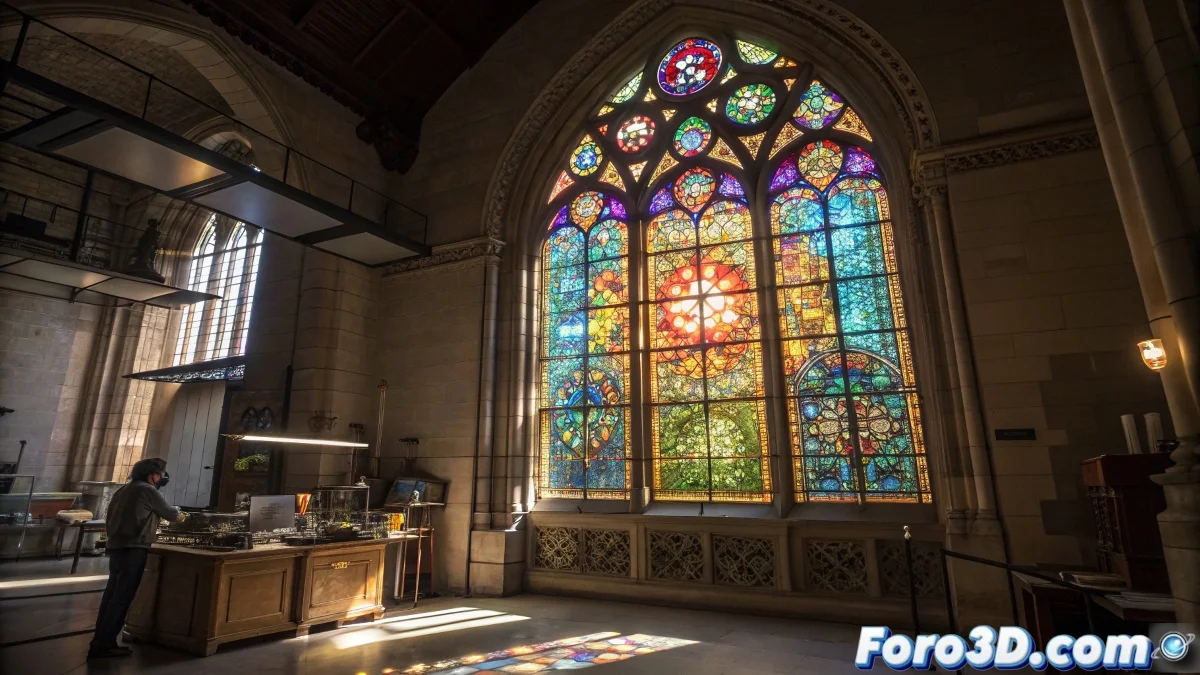
When 3D Printing Plays with Photons
In the SUTD laboratories, they have achieved what seemed impossible: 3D printing glass that manipulates light like a quantum magician 🔮. Using two-photon lithography and special resins, they have created nanostructures that reflect 99% of visible light... making the best conventional mirrors obsolete.
The Science Behind the Almost Invisible Material
This breakthrough is based on three technological pillars:
- Metamaterial Design: Nanometric-scale geometries that interact with specific wavelengths
- Glass-Nano: Photosensitive resin that transforms into pure glass after heat treatment
- Atomic Precision: Layers just 50nm thick deposited with submicrometric accuracy
"We don't modify glass, we reinvent how it is structured at the atomic level" - explains Dr. Zhang, leader of the project that is writing the future of optics with ultra-precise lasers.
From the Lab to the Real World: Disruptive Applications
| Application | Benefit | Timeline |
|---|---|---|
| Coatings for solar panels | +40% efficiency by redirecting lost light | 2027 |
| Lenses for cameras | Total elimination of parasitic reflections | 2026 |
| Holographic displays | Floating images with perfect contrast | 2028+ |
How This Scientific Magic Works
- Computational design of photonic structures using genetic algorithms
- Layer-by-layer printing with femtosecond laser (0.000000000000001s per pulse)
- Heat treatment at 1,200°C to convert the resin into pure glass
- Quality control with scanning electron microscopy
The Paradox of Perfect Glass
While in Blender we continue to struggle with IORs to simulate believable glasses, these scientists are printing materials whose optical properties challenge traditional physical laws. The irony: creating the world's most reflective glass requires first mastering perfect photon absorption... in a machine that costs more than an apartment in Singapore. 💎
So the next time you adjust the roughness of a material in Cycles, remember: in some laboratory, someone is printing the smoothest surface ever created... with a laser that writes atom by atom.
Will We Be Able to Use This in Our Renders?
For now, we'll have to settle for:
- Custom shaders that mimic the effect (with at least 300 samples)
- Ultra-detailed procedural textures
- A good dose of suspension of disbelief
Although who knows... maybe soon we'll have a Blender add-on for designing nanostructures. After all, what is cutting-edge science today will be a YouTube tutorial tomorrow.