Nanomaterial that Repairs DNA with Infrared Light and Its Visualization in Blender
The boundary between science and digital visualization blurs with advances that seem straight out of science fiction 🔬. A collaboration between the Instituto de Tecnología Química (ITQ, CSIC-UPV) and the Instituto de Ciencia Molecular (ICMol, UV) has led to a revolutionary nanomaterial capable of using infrared light to activate chemical reactions that repair DNA damage. This technology opens new therapeutic possibilities against cancer, especially in cases where genetic repair is crucial. To understand and communicate this complex molecular process, Blender becomes an invaluable tool, allowing the visual recreation of how infrared light interacts with nanomaterials to trigger cellular repair mechanisms.
When light heals the invisible and 3D makes the incredible visible.
Modeling Molecular Structures
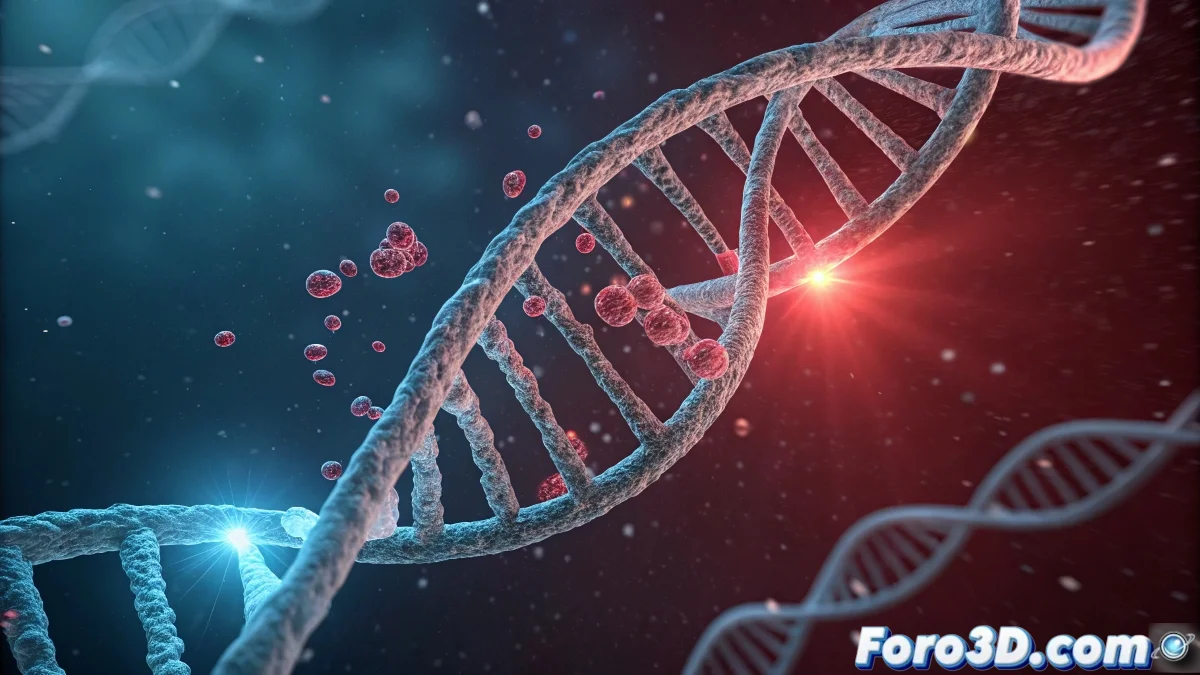
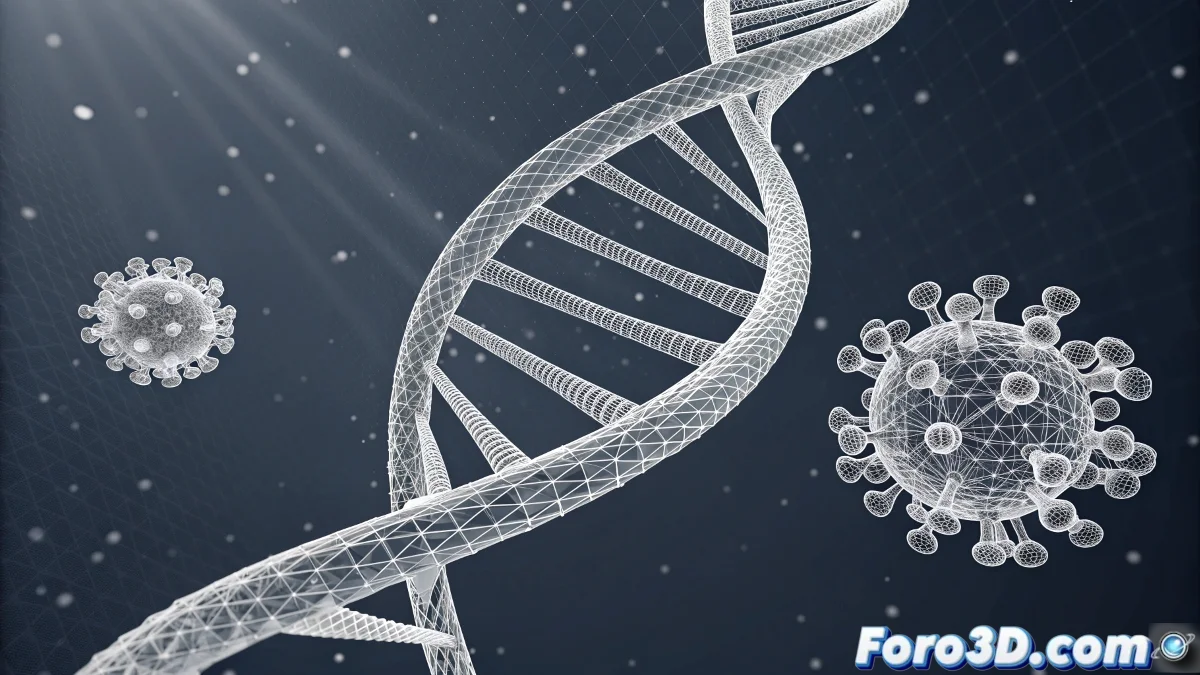
The first step to visualize this process is recreating the DNA double helix using curves in Blender. We convert this shape into a mesh to apply translucent materials that capture the fragility and luminosity characteristic of the genetic structure. The nanomaterial is represented by small crystalline structures or spheres grouped in organized patterns, distributed using particle modifiers to achieve an organic yet technological appearance. The key is to maintain scientifically plausible proportions while leveraging artistic freedom to make the scene visually comprehensible and appealing. 🧬
Shader Systems and Light Emission
Shaders are essential for simulating the interaction between infrared light and the nanomaterial. We use principled BSDF with high transmission and subsurface scattering for the DNA, creating that characteristic gelatinous and translucent effect of biological structures. For the nanomaterial, we apply emission shaders with deep reds and intense violets that simulate the absorption and transformation of light energy. Animating these emission values allows visualizing how the material "comes to life" upon receiving infrared radiation, generating a gradual activation effect that is visually spectacular and scientifically illustrative.
Lighting and Volumetric Effects
Lighting plays a crucial role in conveying the concept of non-invasive light therapy. We set up a main directional light with an intense red tone to represent infrared radiation, accompanied by secondary lights in soft violets and blues that reinforce the idea of cellular repair. We add subtle volumetric effects that simulate the intracellular aqueous medium, using principled volume shaders with low density to create that ethereal and organic environment where molecular processes occur. Precise control of light intensity and color allows clearly differentiating between the incident energy and the nanomaterial's response.
Animation and Particle Systems
To show the repair process, we implement particle systems that simulate chemical reactions. Bright particles emerge from the activated nanomaterial and travel along the DNA double helix, following helical trajectories using curved force fields. We animate the emission value of these particles so they start at maximum intensity and gradually fade, symbolizing energy transfer and the repair process. The result is a dynamic and comprehensible representation of a process that would be invisible to the human eye, bridging the gap between cutting-edge research and public understanding.
Rendering and Scientific Post-Production
We render with Cycles to achieve maximum quality in light effects and transparencies, using adaptive sampling to efficiently handle complex light interactions. In Blender's compositor, we add subtle glow and bloom effects to emphasize light emission, along with color correction to enhance reds and violets without sacrificing scientific realism. The final result is a visualization that can be adapted from didactic representations to artistic animations, demonstrating that Blender not only reproduces visible realities… but also makes the microscopically imperceptible tangible. 😉