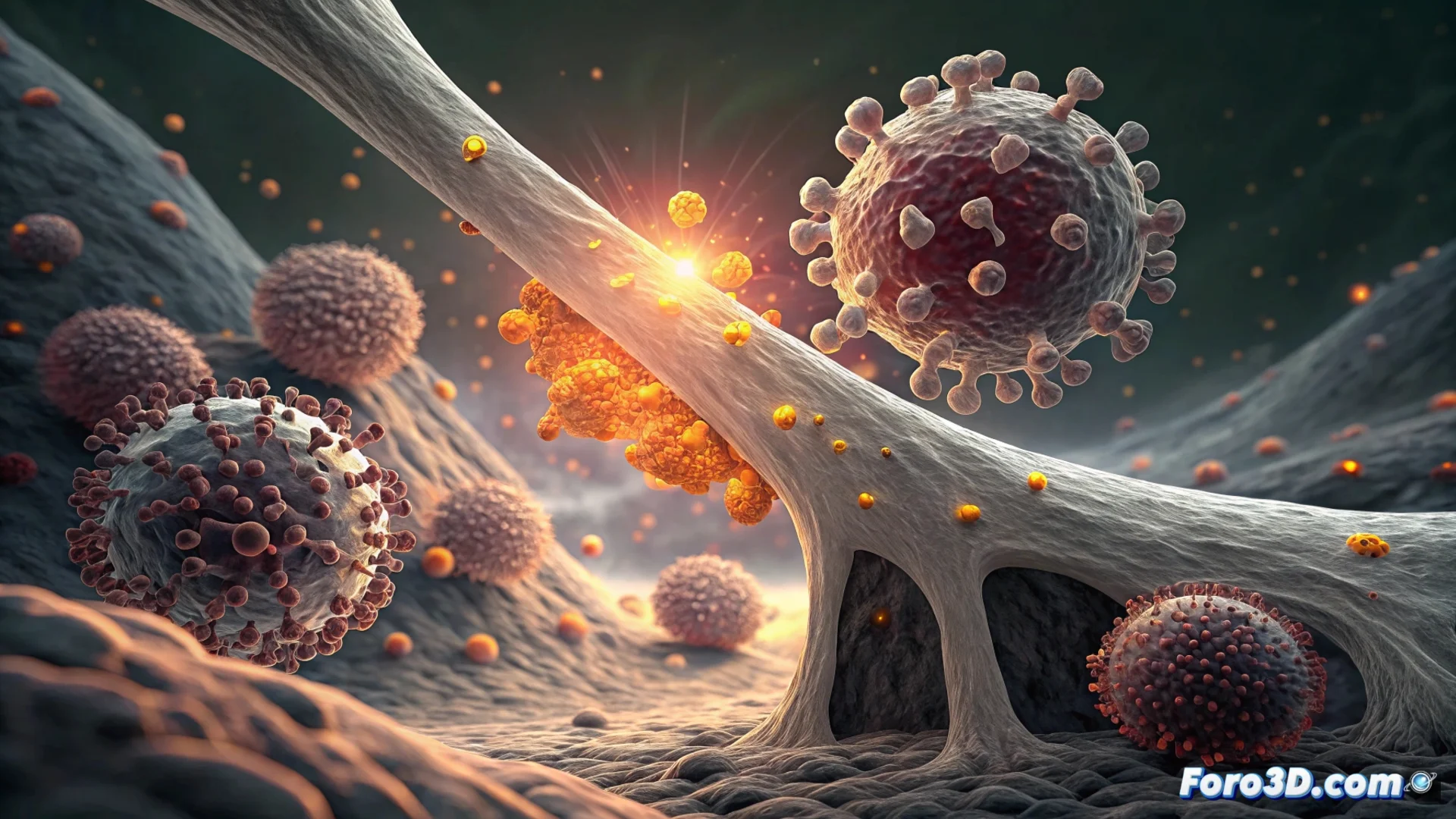
Nanomagnets Attack Osteosarcoma and Regenerate Damaged Bone
An innovative research proposes a method to combat osteosarcoma, an aggressive bone cancer, using magnetic nanoparticles. This approach seeks not only to destroy tumor cells but also to actively repair the healthy bone tissue that the disease deteriorates. The technique fuses two actions into a single platform. 🧲
Mechanism of Action of Magnetic Nanoparticles
Scientists design nanomagnets that specifically target bone cancer cells. When these particles accumulate in the tumor area, they are activated by an external alternating magnetic field. This activation causes the particles to vibrate and generate localized heat in a process called magnetic hyperthermia. The resulting temperature increase selectively eliminates cancer cells, preserving adjacent healthy tissue.
Key Functions of the Nanomagnet System:- Target the Tumor: The nanoparticles are designed to preferentially accumulate in cancerous tissue.
- Generate Local Heat: An external magnetic field makes them vibrate, producing hyperthermia that destroys malignant cells.
- Minimize Collateral Damage: The action is localized, protecting the bone and surrounding healthy tissues.
The future of orthopedics is not just about implanting screws, but about using magnets that literally attract the solution to the problem.
The Dual Innovation: Destroy and Rebuild
The true novelty of this strategy lies in its dual functionality. The same nanoparticles act as a multifunctional delivery system. They are loaded with therapeutic and regenerative agents that are released in a controlled manner at the tumor site.
Components of the Nanoparticles and Their Purpose:- Chemotherapeutic Agent: Released in a controlled manner to attack any residual cancer cells after hyperthermia.
- Bone Growth Factors: Bioactive molecules that stimulate the patient's stem cells to form new bone.
- Magnetic Support: The particle core allows for hyperthermia application and guides the system to the tumor.
Implications for Future Treatment
This method represents a paradigm shift in the approach to osteosarcoma. Instead of just removing the tumor and leaving a bone defect, the therapy attacks the disease and simultaneously initiates the process of bone regeneration. It combines the precision of nanomedicine with the goal of restoring anatomical function, offering a more comprehensive and potent alternative to conventional treatments. The path advances toward therapies that not only combat the disease but also repair its consequences. 🦴