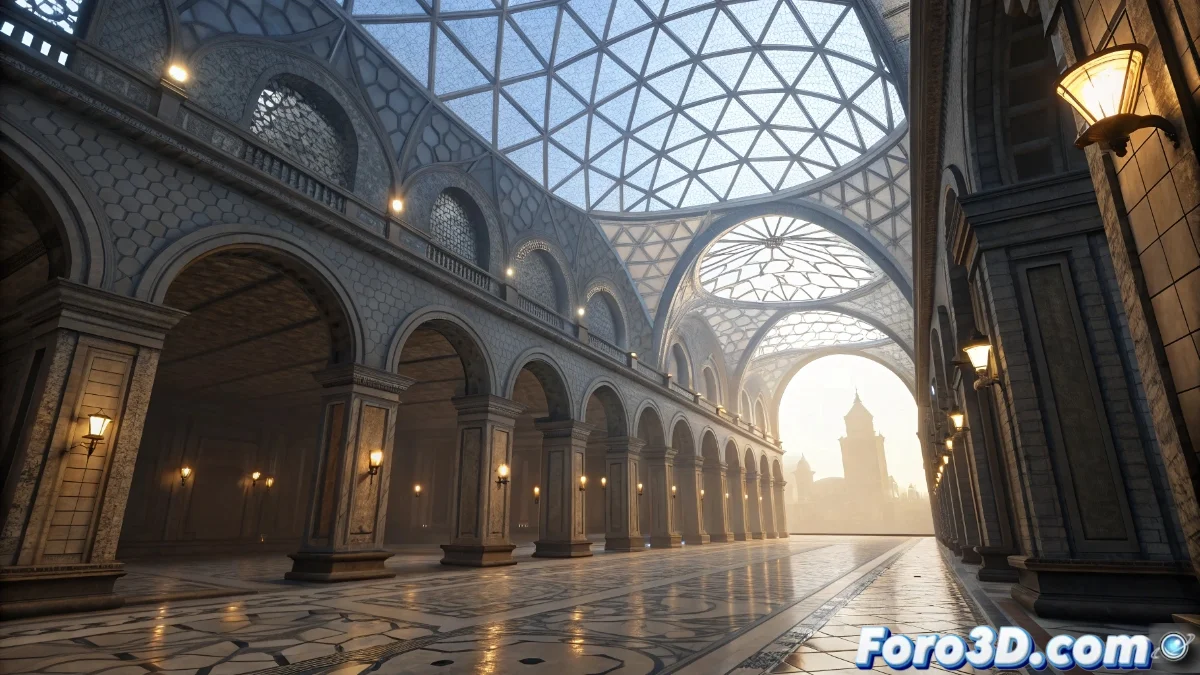
Nanite: The Virtual Geometry System in Unreal Engine 5 and 6
The Nanite technology represents a revolutionary advancement in modern graphics engines, integrated into both Unreal Engine 5 and its successor. This virtualized geometry system completely redefines how complex 3D environments are handled through the intelligent use of micro-polygons 🚀
Intelligent Streaming Architecture
The core of Nanite lies in its ability to process adaptive geometry in real time. Unlike traditional methods that require manual LODs, this system automatically calculates the necessary geometric density based on the camera position, streaming only the required micro-polygons directly from storage to the GPU.
Main streaming features:- Hierarchical data structure that organizes geometry into adaptive clusters
- Real-time calculation of clusters that need higher detail levels
- Selective streaming that keeps only visible geometry in VRAM
Nanite allows artists to create assets with the polygonization they desire, while the engine automatically handles what previously required weeks of manual optimization
Integration with the Unreal Engine Ecosystem
The Nanite implementation is carried out natively within the rendering pipeline of Unreal Engine, working in perfect sync with Lumen for dynamic global illumination and the shadow system. The geometry is processed before the shading stage, delivering to the GPU exclusively the micro-polygons necessary for each specific frame.
Integration advantages:- Elimination of manual optimization processes that consumed production time
- Full compatibility with high-polygon assets without additional preparation
- Automatic management of scenes with billions of polygons on screen
Impact on the Creative Workflow
This technology has radically transformed development methodologies, allowing artists and programmers to focus on creation without traditional technical limitations. Although some professionals still nostalgically remember the era of counting polygons individually, Nanite has unleashed creative potential by automatically handling the geometric complexity that previously represented an insurmountable bottleneck 🎨