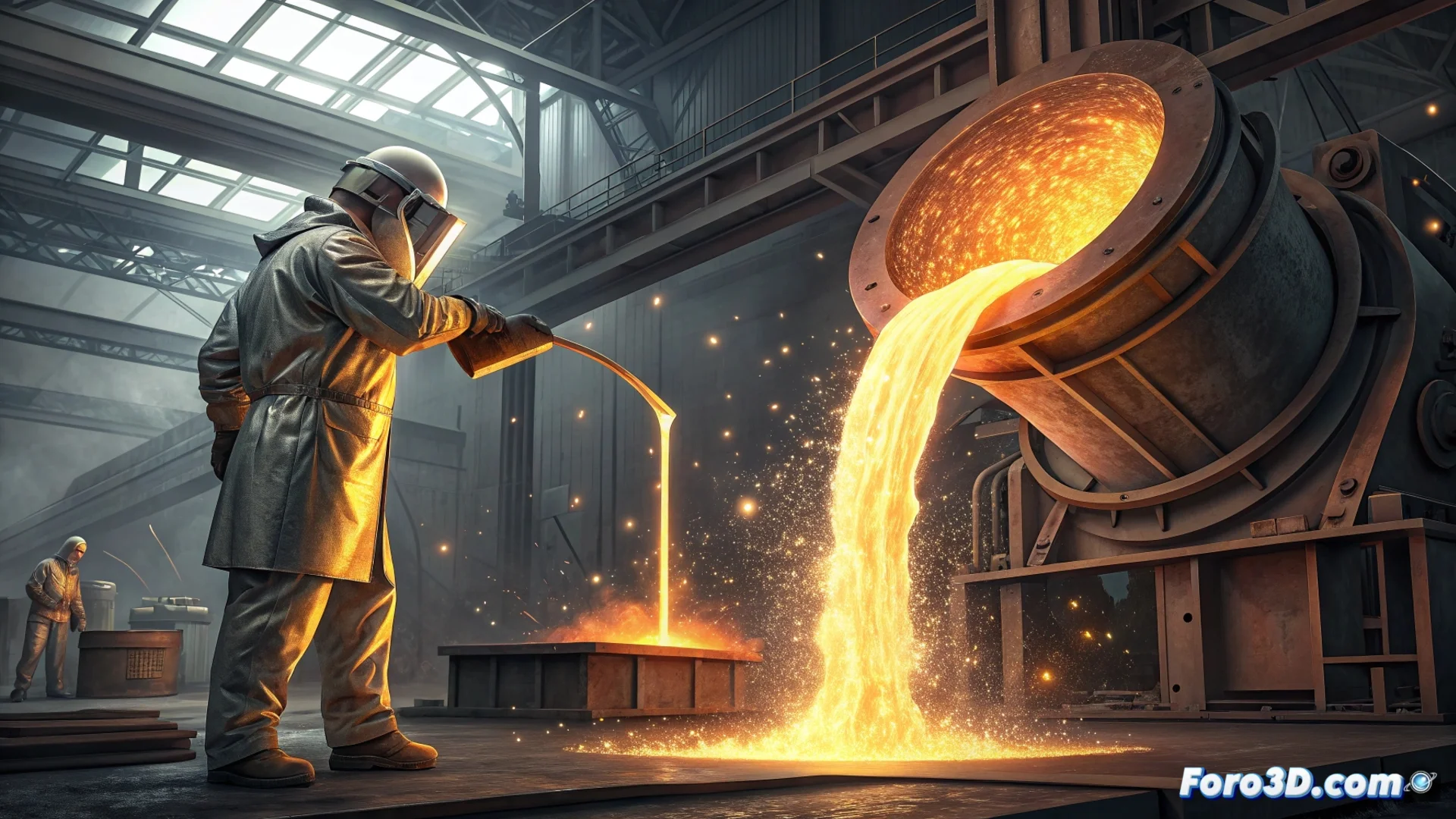
Nagoya University develops recyclable and heat-resistant aluminum alloys
A Japanese scientific team presents an achievement in materials science: an aluminum alloy that not only withstands high-temperature environments but can also be recycled efficiently without degrading its performance. This advance responds to the industrial demand for lighter and more sustainable components for propulsion systems. 🔥
Controlling the microstructure to maintain properties
The secret of the material lies in modifying its microstructure during the solidification process. The researchers focused their method on precisely managing the formation of specific intermetallic phases within the metal. This strategy avoids the traditional problems of recycling advanced alloys.
Keys to the innovative process:- The nucleation of the T5 phase is manipulated, a key intermetallic structure for strength.
- The formation of brittle and unwanted phases is prevented when remelting the material.
- The alloy retains its mechanical integrity after numerous cycles of melting and resolidifying.
Managing nucleation allows us to break the traditional limit between high strength and recyclability in aluminum alloys.
A cross-cutting impact on industry
This development has direct implications for sectors that require weight reduction without compromising performance in extreme conditions. It enables the substitution of heavier metals, such as certain steels, in applications where it was previously not feasible.
Immediate potential applications:- Automotive: Powertrain components and engine parts that operate at high temperatures.
- Aerospace: Structural parts and engine components that benefit from lightness.
- Sustainable manufacturing: Advancing toward a model of circular economy for engineering metals.
A firm step toward industrial sustainability
The true innovation is not just creating a more resistant material, but one that maintains its properties when recycled. This advance represents a significant change, allowing high-performance components to have an extended lifespan through multiple material lives. Finally, the recycling of advanced alloys ceases to be an aspiration and becomes a viable practice. ♻️