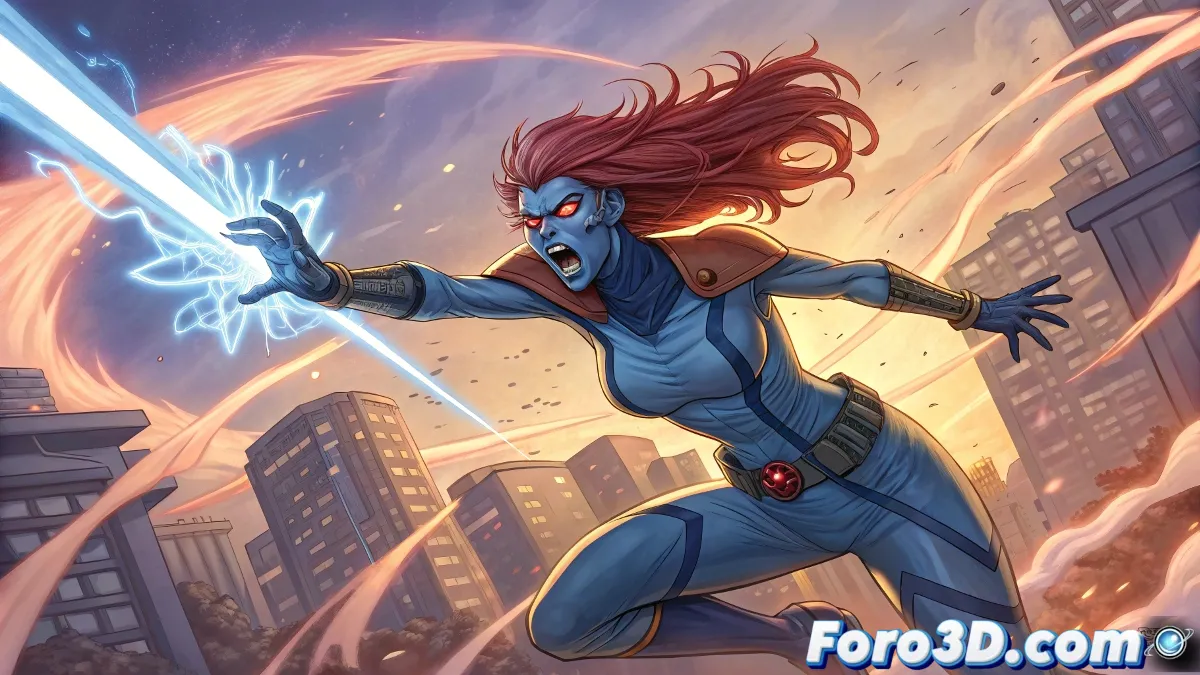
The Lasting Impact of an Unmatched Mutant
In the vast Marvel universe, few characters have demonstrated as much adaptability as Mystique. Created during Chris Claremont's golden era, this figure has become an indispensable element within the mutant world. Her evolution from secondary antagonist to key piece in multiple narratives speaks to her uniqueness in the comic landscape.
A Multifaceted Antagonist
What distinguishes Mystique from other villains is her ability to transcend simple categories. She is not just a recurring enemy of the X-Men, but has played roles as diverse as:
- Strategic leader of mutant organizations
- Spy infiltrated into heroic groups
- Political figure with governmental influence
- Disruptive element in mutant family dynamics
This versatility allows her to appear in contexts as different as an international espionage story or a personal drama among mutants.

Relationships that Define a Legacy
The connection between Mystique and Destiny represents one of the most significant bonds in mutant mythology. Together they form a couple whose influence extends through decades of continuity. As a recent analyst aptly noted:
"The duo formed by these two women has shaped crucial events in mutant history, demonstrating that personal relationships can have cosmic consequences"
Presence in Contemporary Culture
Beyond comics, Mystique has left her mark in other media:
- Cinematic adaptations that reinterpret her essence
- Representation in video games as a playable character
- Recurring figure in analyses on LGBTQ+ representation
Her iconic design and complex personality continue to inspire new generations of creators and fans alike.
The Future of a Mutant Icon
With the resurgence of interest in the X-Men in recent years, Mystique finds herself in a unique position. Her ability to adapt to different narrative tones—from political thriller to family drama—makes her an invaluable asset. What began as a secondary character has grown to become one of the most fascinating figures in the Marvel universe.