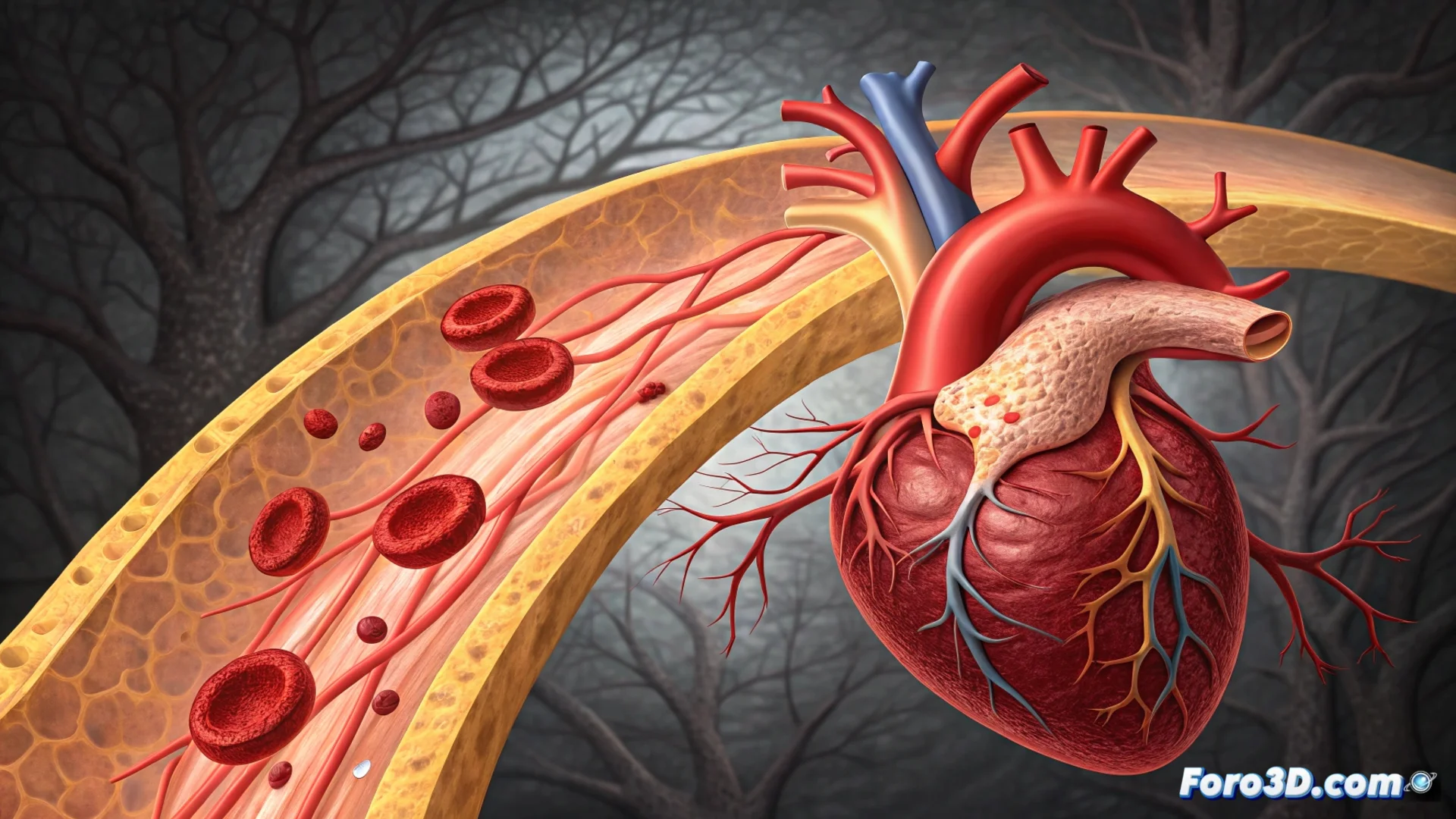
Myocardial Infarction: A Critical Obstruction
A heart attack occurs abruptly when one of the arteries supplying blood to the heart muscle becomes blocked. This blockage, usually by a clot, deprives the muscle cells, the myocytes, of oxygen and vital nutrients. Without this supply, the tissue suffers and, if the interruption persists, the cells die in a process called necrosis. The body then activates a complex inflammatory response to manage the injury. ⚠️
The Cascade of Events After Ischemia
The lack of oxygen forces heart cells to change how they produce energy, generating lactic acid. This metabolic change causes oppressive chest pain (angina), which may extend to the left arm, jaw, or back. Simultaneously, dying cells release specific proteins into the bloodstream, such as troponin and creatine kinase MB. Doctors measure these biomarkers in blood to confirm what happened. An electrocardiogram (ECG) records the heart's electrical activity and shows altered patterns, such as ST-segment elevation, indicating muscle distress. 🫀
Key Methods for Diagnosis:- Blood Analysis: Detects and measures proteins like troponin I and T, released by damaged heart cells.
- Electrocardiogram (ECG): Records the heart's electrical signals and identifies alterations like ST-segment elevation.
- Clinical Evaluation of Symptoms: Analyzes characteristic chest pain and its possible radiation to other areas of the body.
The irony lies in the fact that the organ that drives life depends on pipes, the coronary arteries, which can become clogged with the same lipids the body stores to survive.
Impact on Cardiac Structure and Function
The death of muscle tissue weakens the heart wall. This can compromise its ability to pump blood efficiently, leading to heart failure. If the damaged area is large or affects the system that generates and conducts electrical impulses, severe arrhythmias or even cardiac arrest may occur. The main goal in the acute phase is to reopen the obstructed artery as quickly as possible to save muscle. 💔
Urgent Interventions to Restore Flow:- Angioplasty and Stent: Procedure in which a catheter is inserted to dilate the blocked artery and place a mesh (stent) to keep it open.
- Thrombolytic Drugs: Medications administered to dissolve the clot causing the obstruction.
- Complementary Therapy: Includes oxygen, painkillers, and medications to stabilize heart rhythm and protect the remaining muscle.
The Priority: Time and Medical Action
The prognosis after a myocardial infarction largely depends on the speed of action. Every minute without blood flow means more necrosis and more extensive damage. Early intervention, whether with drugs or mechanical procedures, aims to limit the size of the infarcted area. The final outcome is the replacement of damaged muscle with a scar of fibrous tissue, which does not contract, permanently altering the heart's mechanics and function. 🚨