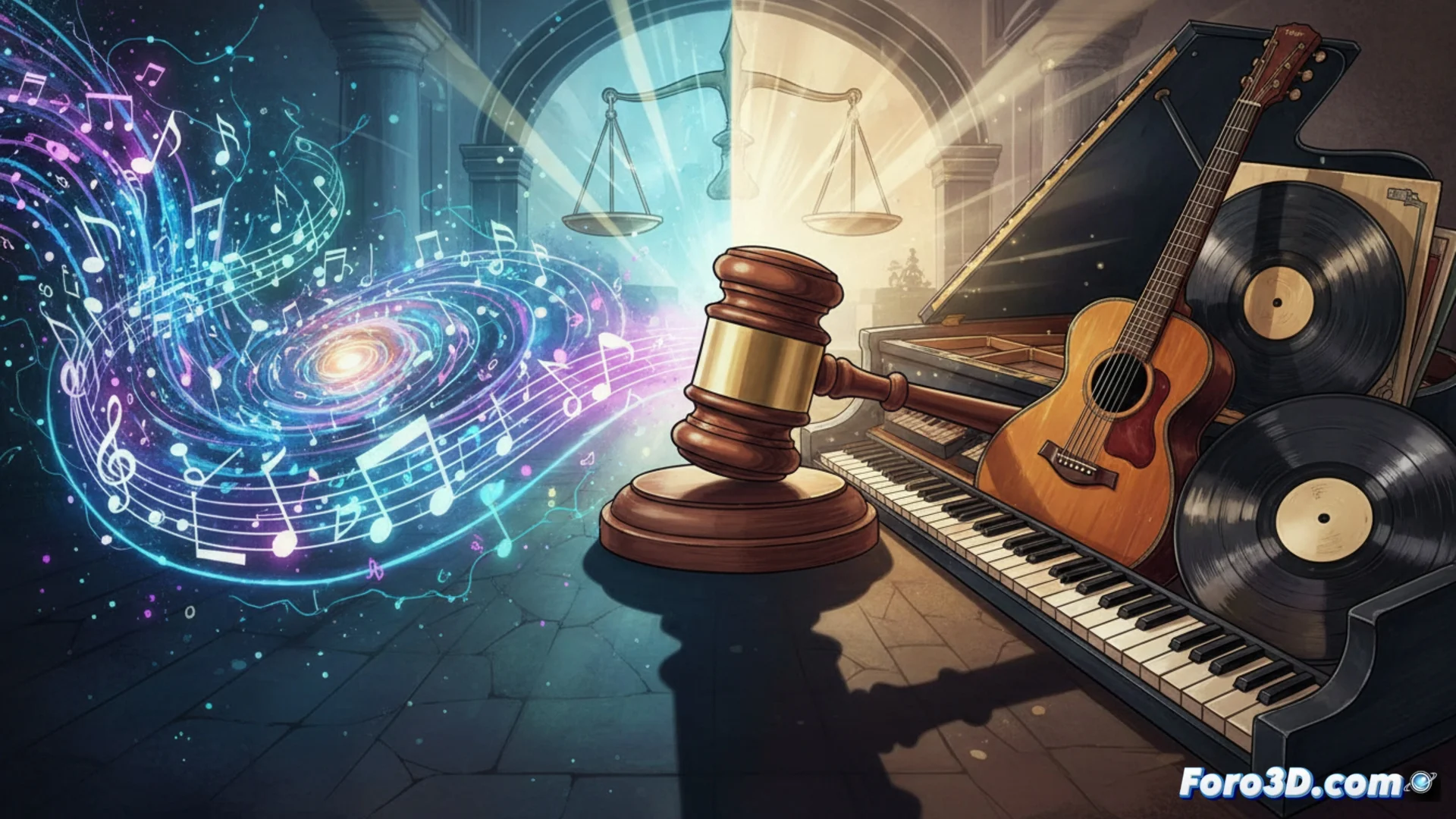
Music Publishers Sue Anthropic for Using Pirated Songs to Train Its AI
A consortium of major music publishers, led by Concord Music Group and Universal Music Group, has filed a civil lawsuit against the artificial intelligence company Anthropic. The main accusation is that the tech firm illicitly obtained a massive file containing more than twenty thousand songs, lyrics, and sheet music protected by copyright to feed its AI systems. The plaintiffs describe this action as blatant piracy and demand compensation exceeding three billion dollars. 🎵⚖️
The Core of the Accusation: Illicit Methods to Obtain Data
According to court documents, Anthropic obtained material from artists such as The Rolling Stones, Elton John, or Korn without requesting any authorization, using pirate methods that allowed access to the files. The complaint does not focus solely on the use of the content to train AI models, but on the fraudulent manner in which it was obtained. They allege that this practice allowed the company to grow and obtain commercial benefits unfairly, by avoiding paying the costly licenses required for the material.
Key Points of the Lawsuit:- The company is accused of illegally downloading a corpus of more than 20,000 protected musical works.
- Damages and compensation are claimed in an amount around 3 billion dollars.
- The case could become one of the most substantial copyright litigations in United States history if the court approves the figure.
The plaintiffs argue that, although training AI systems with protected content may be legal if acquired appropriately, using pirated downloads is not.
A Crucial Debate for the Future of Artificial Intelligence
This judicial dispute puts the spotlight on one of the hottest debates in the tech sector: the ethical and legal provenance of massive data that powers generative AI models. The publishers argue that Anthropic bypassed legitimate channels to gain an illegitimate competitive advantage, harming copyright holders. The AI company's response and the development of the case are crucial, as they could set a legal precedent on the limits of training language models and artificial intelligence.
Implications of the Litigation:- Defines the legal limits for using copyrighted content in AI development.
- Questions the data sources used by major tech companies.
- Could directly impact how datasets are collected and processed for training algorithms in the future.
A Verdict That Will Resonate in the Industry
The outcome of this clash between the traditional music industry and the AI vanguard will be decisive. It will not only determine Anthropic's responsibility but also outline the framework in which other companies can operate. As artificial intelligence learns to "hum" songs, justice must decide if it also needs to learn to "pay the entry fee." The case highlights the ongoing tension between innovation and respecting intellectual property. 🤖🎶