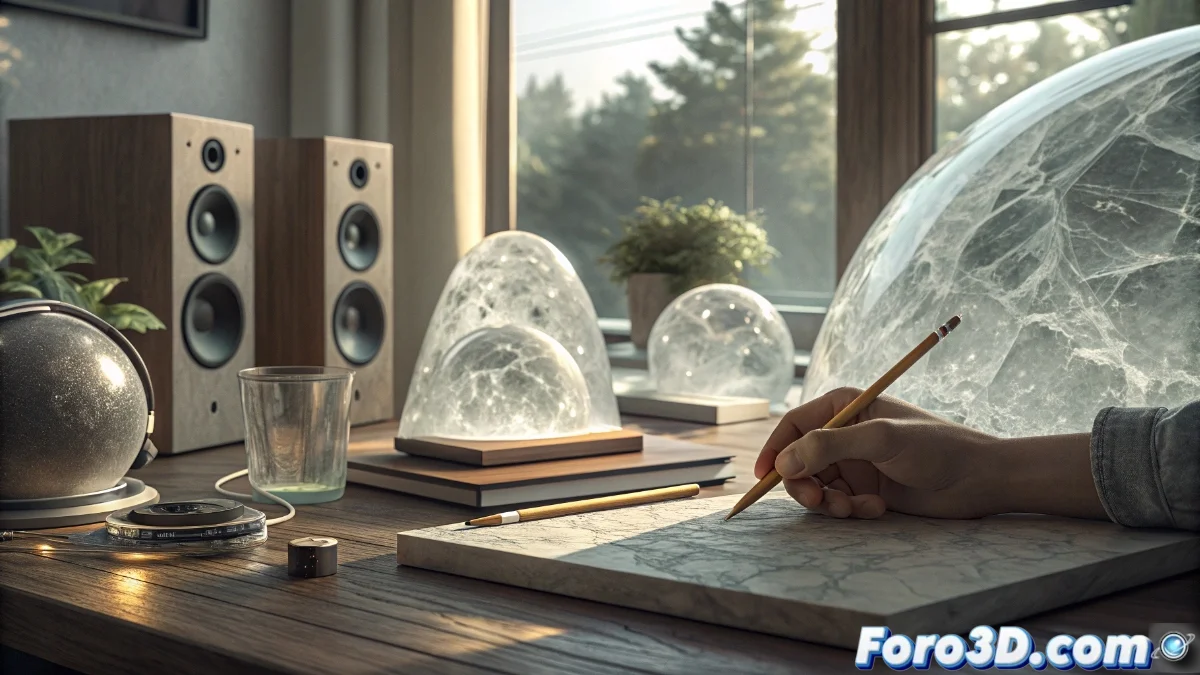
Multisensory Drawing: Connecting Sounds and Textures with Visual Forms
This innovative methodology revolutionizes the way we learn and practice drawing, transforming it into an integral experience that involves multiple senses. By linking auditory and tactile perceptions with visual elements, we create mental maps that greatly enrich our capacity for graphic representation 🎨.
Fundamentals of Sensory Connection
The technique is based on cross-modal associations between different sensory modalities. For example, high-pitched sounds can be translated into angular and jagged lines, while low-pitched ones manifest as soft, organic curves. This applied synesthesia allows for the translation of non-visual stimuli into concrete compositional components.
Practical Examples of Association:- A deep thunderclap inspires expanded and volumetric shapes
- The tinkling of crystal suggests fragmented geometric structures
- Rough textures translate into irregular and dense strokes
Artists who practice this technique discover that their pencil takes on a life of its own, although they occasionally end up creating inexplicable creatures when listening to heavy metal during their creative sessions.
Implementation in the Creative Process
The method begins with the careful selection of specific auditory and tactile stimuli. It is recommended to start with everyday sounds or instrumental music, analyzing their rhythmic and tonal qualities. Simultaneously, physical textures are explored with closed eyes to record the sensations and later transfer them to paper.
Phases of the Creative Process:- Identification of sonic and tactile qualities
- Drawing exercises with simple strokes based on sensations
- Progressive integration of multiple sensory associations
- Development of unified complex compositions
Impact on Artistic Development
This approach stimulates unconventional neural connections, developing both muscle memory and auditory memory applied to drawing. Artists report greater creative fluency and overcoming blocks, having access to an expanded repertoire of inspiration that transcends the purely visual. The methodology is especially valuable for conceptual illustrators and character designers who need to convey abstract qualities like emotions or personalities through visual forms ✨.