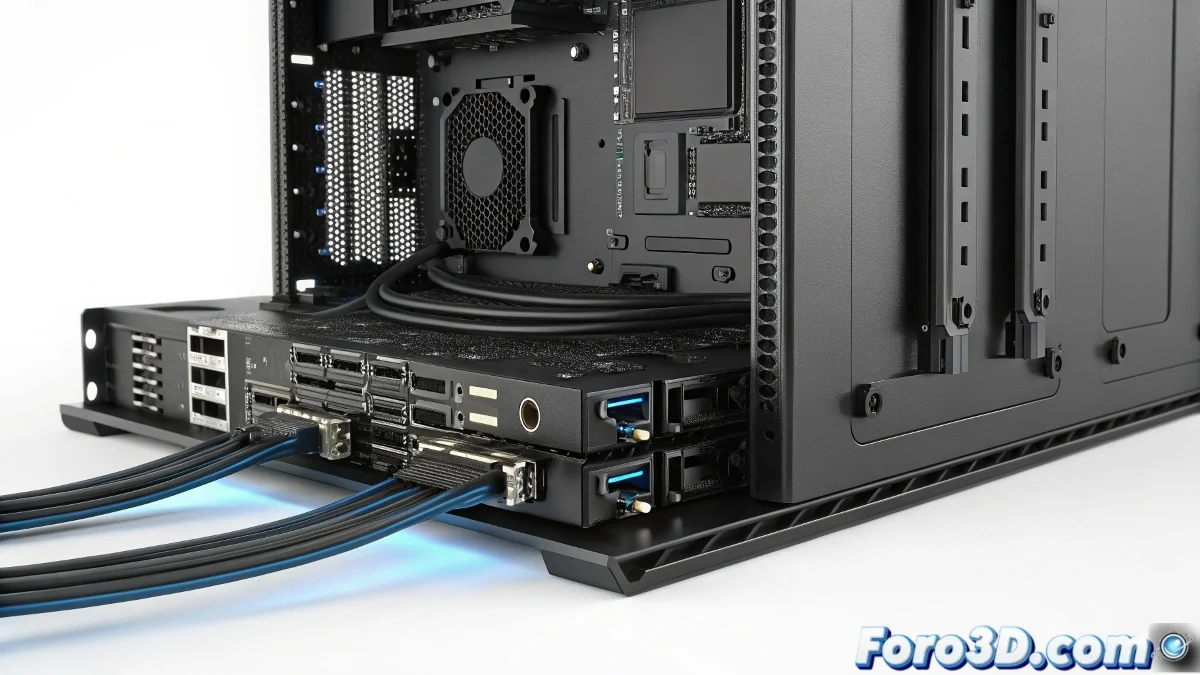
When Connectors Move to a New Neighborhood
MSI is revolutionizing traditional motherboard design with the launch of the MAG X870E TOMAHAWK MAX WIFI PZ, an AM5 model that relocates most power connectors and main ports to the rear of the board. This radical approach to component layout directly addresses one of the biggest headaches for PC builders: cable management. What appears as a simple change on paper represents a fundamental reimagining of how a modern motherboard should be distributed.
The conventional motherboard design has remained essentially unchanged for decades, with CPU and motherboard power connectors scattered across the front surface, creating visual clutter and obstructing airflow. MSI's solution not only dramatically cleans up the appearance of the built system but also allows for more direct routing of cabling from the power supply. Case fans can move air more efficiently without cables crossing their path.
Innovative Features of the Rear Design
- Power connectors 24-pin and CPU located on the rear edge
- SATA and USB ports internally repositioned for more logical access
- Fan and RGB headers strategically placed
- PCIe connector for GPU with optimized cable routing
Ergonomics Applied to PC Assembly
For those who build systems regularly, MSI's design represents a significant ergonomic improvement. No longer will it be necessary to maneuver cables in tight spaces between the CPU cooler and RAM memory, or struggle to connect the 24-pin power supply behind the installed GPU. Every connector is now accessible from the board's perimeter, making the building process more intuitive and less prone to errors. This approach could particularly benefit builders of custom water cooling systems where every millimeter of space counts.
The best designs are those that solve problems you didn't even know you had
The MAG X870E TOMAHAWK MAX WIFI PZ retains all the expected features of a mid-to-high-end AM5 motherboard, including support for Ryzen 7000 processors and future generations, PCIe 5.0 for GPU and NVMe, and WiFi 7 connectivity. What changes is how these features are physically implemented. The PCB has been redesigned to route signals and power to the new rear connection points without compromising signal integrity or electrical performance.
Practical Benefits for Different Users
- Novice builders: more intuitive installation with less frustration
- Enthusiasts: better airflow and clean aesthetics in windowed builds
- Professionals: faster maintenance and simplified upgrades
- Case manufacturers: new interior design opportunities
This move by MSI could mark the start of a broader trend in the industry toward more user-friendly designs. If successful, we might see other manufacturers adopting similar approaches, finally modernizing an aspect of PC hardware that has remained remarkably static despite all other technological advances. For users, it represents the promise that the experience of building and maintaining a computer can become as advanced as the components themselves.
Those who have struggled with cables in impossible spaces for years will likely see this design as the answer to prayers they didn't even know they were making 🔌
You can learn more about it: here