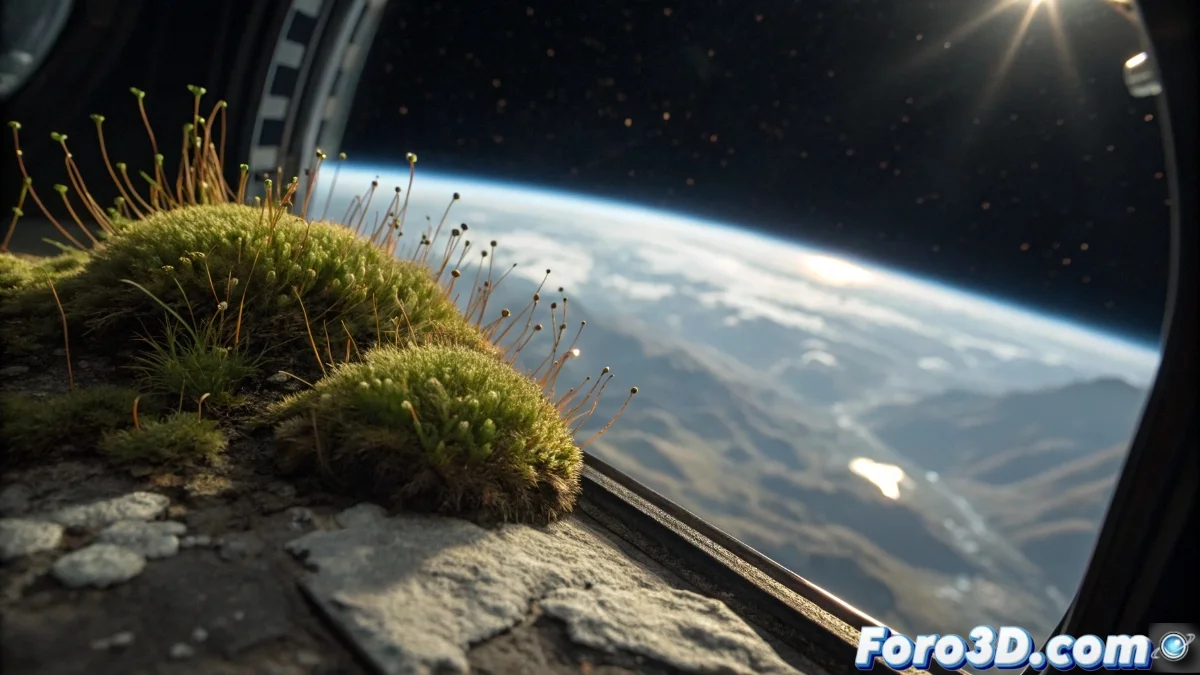
Moss Spores Survive Nine Months in Outer Space
A revolutionary experiment conducted on the International Space Station has revealed astonishing data about the survival capacity of terrestrial organisms in the cosmic vacuum. The spores of the moss Physcomitrium patens demonstrated extraordinary resilience by remaining viable after prolonged exposure to the most hostile conditions of space 🌱.
Biological Mechanisms for Space Protection
The key to this scientific feat lies in the protective structure of the sporophyte, which acts as a multidirectional biological shield. This natural covering not only blocks intense ultraviolet radiation, but also provides thermal insulation against extreme fluctuations that can vary by hundreds of degrees in minutes. Post-analysis confirmed that cellular integrity remained virtually intact throughout the experimental period.
Critical Survival Factors:- Physical barrier against lethal UV radiation and cosmic particles
- Thermoregulatory protection against sudden temperature changes
- Effective insulation from space vacuum and microgravity
Nature teaches us that life finds a way even in the most hostile environments we can imagine
Implications for Interplanetary Colonization
This discovery transforms our understanding of biological viability in extraterrestrial environments. The ability of these spores to maintain their germination potential suggests that certain forms of terrestrial life could be successfully introduced into artificial ecosystems on the Moon or Mars. Although questions persist about possible long-term genetic mutations, the results open unsuspected prospects for planetary terraforming.
Future Applications in Space Exploration:- Development of life support systems based on resilient organisms
- Creation of space germplasm banks for long-duration missions
- Stabilization of controlled atmospheres in extraterrestrial habitats
Lessons in Biological Resilience
The extraordinary tenacity demonstrated by these tiny spores surpasses even the resistance of technological equipment specifically designed for space conditions. This finding not only expands the known limits of biological survival, but also redefines our strategies for future interplanetary colonization missions. Nature, once again, proves to possess elegant solutions where human technology faces its greatest challenges 🚀.