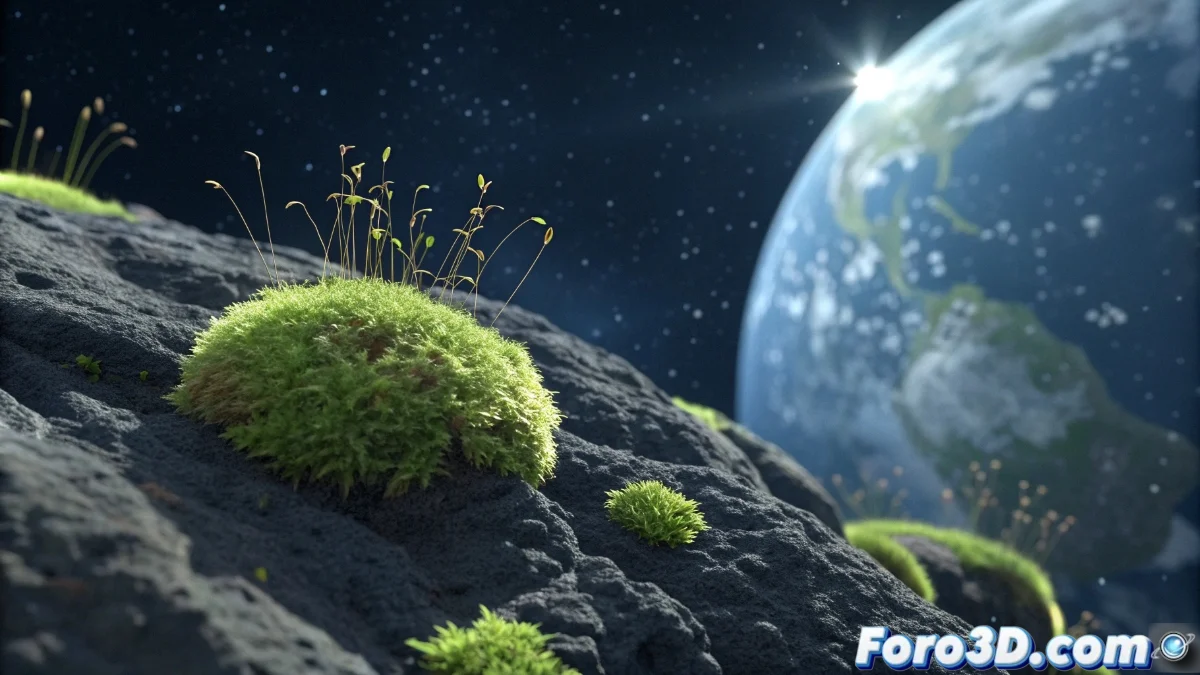
Moss Spores Survive 283 Days in Outer Space
A revolutionary experiment conducted on the International Space Station has confirmed that moss spores can remain viable for almost a full year in the most hostile conditions of cosmic vacuum 🌌.
Implications for Interplanetary Exploration
This discovery transforms our understanding of how life could spread between planets through natural processes. The spores demonstrated the ability to withstand intense cosmic radiation, extreme thermal variations, and absence of gravity, opening new perspectives for modern astrobiology.
Key Findings from the Research:- Survival confirmed for 283 days in direct exposure to space vacuum
- Intact germination capacity after returning to Earth conditions
- Demonstrated resistance to multiple simultaneous stress factors
Mosses have shown better preparation for space travel than many professional astronauts, evidencing that the simplest forms of life can be the most adaptable
Practical Applications in Various Fields
The practical implications of this discovery extend far beyond basic research. The cellular repair mechanisms identified could revolutionize both space exploration and terrestrial applications.
Potential Areas of Application:- Development of life support systems for lunar and Martian bases
- Creation of agricultural crops with greater resistance to adverse conditions
- Advances in biological conservation techniques and seed banks
Future of Space Biological Research
Scientists continue to investigate the molecular mechanisms that enable this extraordinary survival. This knowledge could be applied in long-duration missions, where plants could generate oxygen and form part of self-regulating ecosystems 🚀.