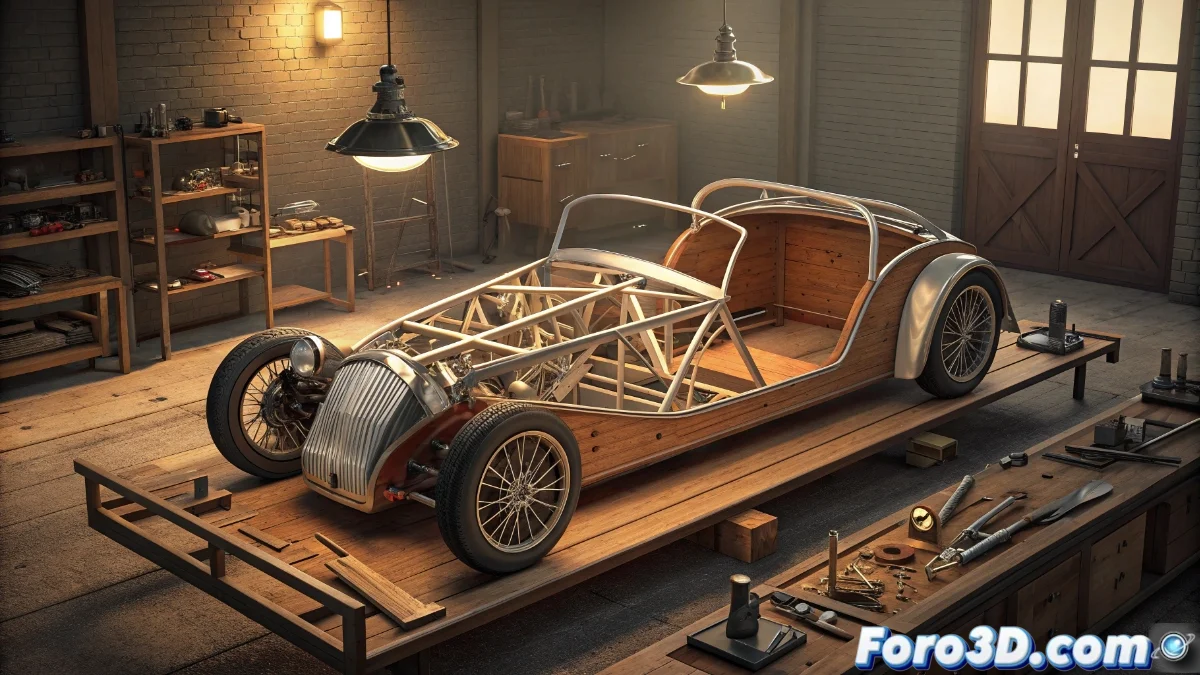
Morgan Motor Company Implements Additive Manufacturing in Its Production
The legendary British firm Morgan Motor Company is quietly incorporating additive manufacturing technologies into its traditional manufacturing processes. While preserving its unmistakable classic design and artisanal techniques inherited through generations, it now employs 3D printing to develop specialized parts that serve as a nexus between the conventional wooden and aluminum structure and the car's contemporary systems. 🚗
Technology at the Service of Craftsmanship
Morgan specifically uses three-dimensional printing to produce wiring supports, switch housings, and various interior elements that demand extreme precision. These components manufactured through additive technology act as transitional elements that seamlessly connect the traditional architecture with modern electronic systems, including those linked to vehicle safety. The result is an imperceptible integration where technological innovation remains hidden behind the vintage appearance that defines Morgans.
Specific Applications of 3D Printing:- Wiring supports that fit perfectly into the wooden structure
- Housings for switches with millimeter precision
- Internal components requiring precise integration with electronic systems
"3D printing becomes an invisible bridge between two automotive eras, demonstrating that tradition and innovation can coexist harmoniously"
Perfect Balance Between Heritage and Modernity
This hybrid manufacturing strategy allows Morgan to preserve its artisanal essence while meeting current technical and safety requirements. Customers continue to experience the authenticity of a Morgan, with its characteristic hand-worked aluminum body and ash wood frame, without forgoing the conveniences and protection systems expected in a modern vehicle.
Benefits of This Approach:- Preservation of traditional artisanal methods
- Compliance with contemporary safety regulations
- Invisible integration of modern technology
The Future of Artisanal Manufacturing
Even automotive purists have acknowledged that sometimes it is more practical to 3D print than to carve wood, especially when it comes to hiding those cables that affect the vintage aesthetics. This innovative approach demonstrates how contemporary technology can perfectly complement traditional processes, creating products that honor the past while embracing the future. 🔧