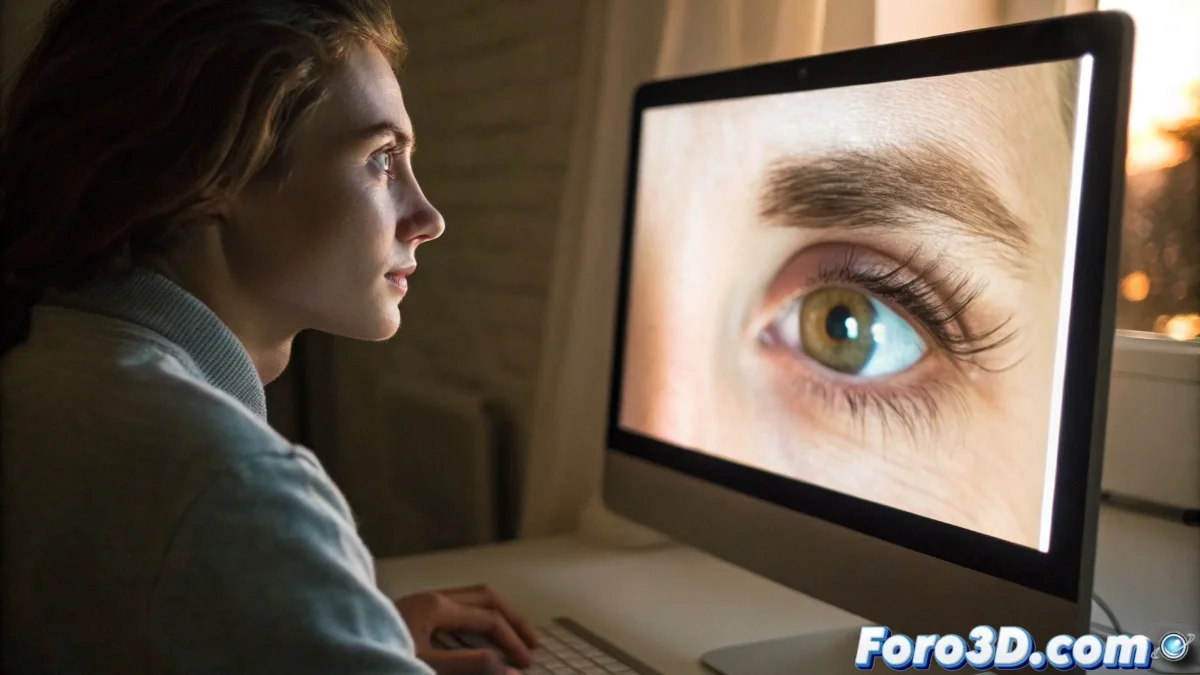
Monitors for Light Sensitivity: Key Technologies for Visual Comfort
The choice of monitor becomes a fundamental aspect for those who experience visual discomfort due to light sensitivity. Current devices incorporate advanced technological solutions that combine specialized hardware and intelligent settings, achieving eye protection without compromising image quality. These features work together to provide a more pleasant and adaptable visual environment. 👁️🗨️
Essential Technologies for Visual Well-being
Flicker-free backlighting forms the basis of prolonged comfort, eliminating flicker that causes eye fatigue in an imperceptible but constant manner. Complementarily, the blue light filter reduces the emission of the most energetic wavelengths, while the anti-reflective coating disperses environmental reflections. These three features form a technical barrier against the main factors of visual stress. 🛡️
Key Components for Eye Protection:- Flicker-free backlighting: Prevents visual fatigue caused by constant flicker
- Blue light filter: Reduces the intensity of the most powerful wavelengths
- Anti-reflective coating: Minimizes glare and environmental reflections
The technological irony: we need advancements to protect ourselves from the effects of technology itself, as if monitors had to apologize for existing while helping us tolerate them better.
Intelligent Luminance Adaptability
Automatic brightness adjustment systems represent the evolution toward devices aware of their environment. These monitors can modulate their light intensity according to ambient lighting, either through integrated sensors or precise manual settings. The result is a viewing experience where the screen always maintains an appropriate brightness, avoiding abrupt brightness changes that particularly affect photosensitive users. 💡
Technical Recommendations for Photophobia:- Automatic brightness adjustment: Intelligent adaptation to different lighting conditions
- Precise manual control: Allows customizing light intensity according to specific needs
- Ambient adaptation technology: Ensures the screen is never excessively bright
Practical Solution: Balance Between Technology and Comfort
For cases of photophobia, scientific recommendations point toward monitors that integrate flicker-free backlighting, blue light filter, anti-reflective coating, and automatic or manual brightness adjustment systems. Models like the BenQ GW2491 exemplify this approach, combining visual protection technologies with optimal performance. The key lies in finding the perfect balance between technological functionality and lasting visual well-being. ⚖️