Monastery of San Juan de la Peña: where the rock sings
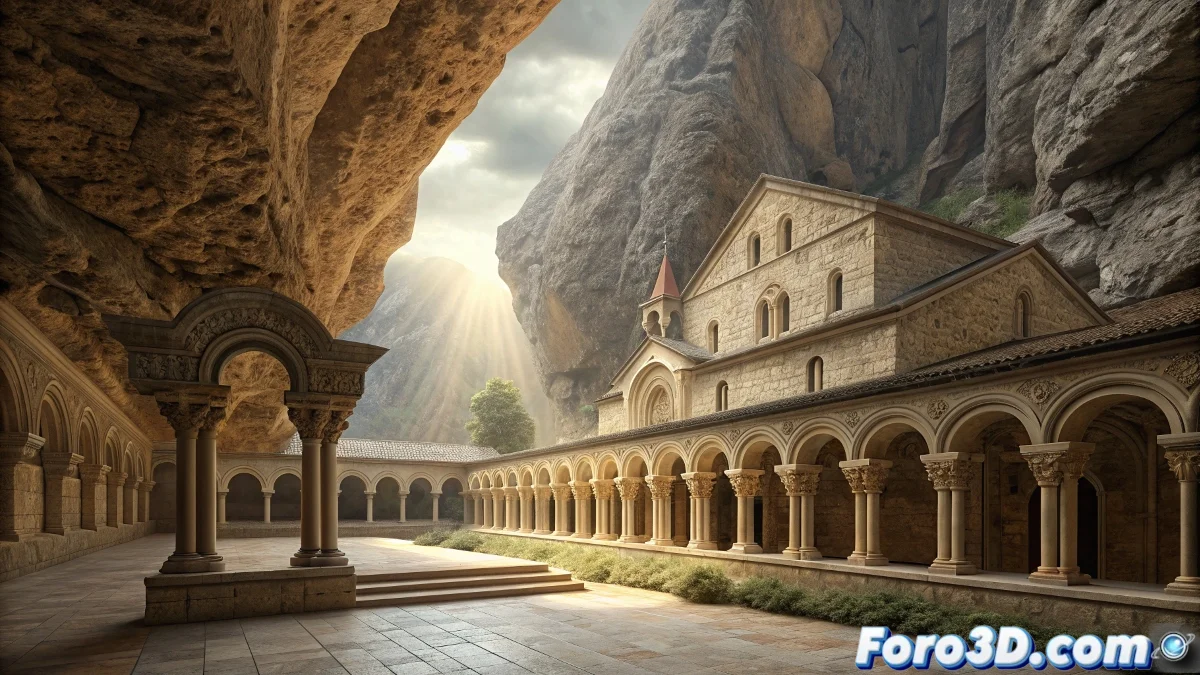
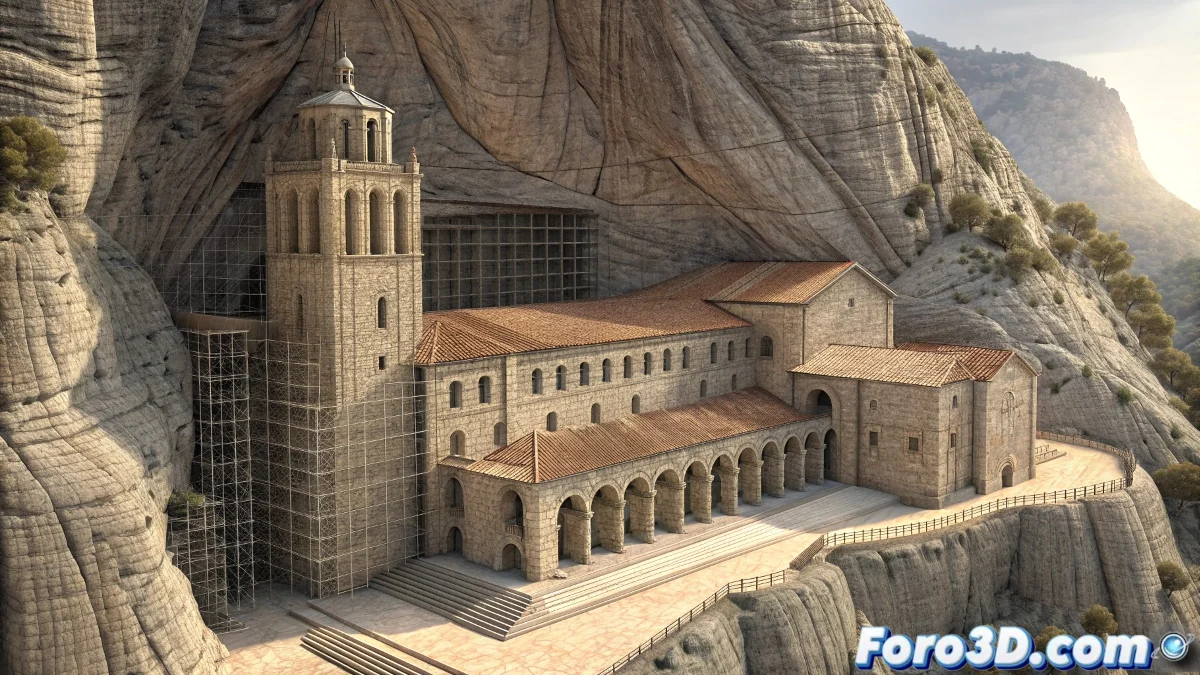
Under a huge slab of sandstone in the province of Huesca lies the Monastery of San Juan de la Peña, a cenobium that seems to emerge directly from the mountain. According to tradition, this place was the custodian of the Holy Grail for centuries, protecting the relic from Muslim invasions. Visitors and monks have reported for generations the echo of Gregorian chants emerging from the rocky walls, as if medieval masses still resonate through time. This combination of history, legend, and unique architecture makes it a perfect setting for cinematic animation. ⛪
Architecture that defies gravity
What makes San Juan de la Peña extraordinary is its absolute integration with the natural environment. The monastery is not built on the rock, but under it, with the mountain forming the natural ceiling of several rooms. The Romanesque cloister, partially carved into the living stone, features capitals that narrate biblical scenes with a mastery that has defied the centuries. This unique layout creates a play of lights and shadows that changes throughout the day, ideal for capture using dynamic lighting techniques in animation.
Animating the legend in Motion Builder
Bringing this historical space to life requires an approach that combines character animation, cinematic camera management, and subtle special effects. Motion Builder offers the ideal toolset to create an immersive narrative sequence.
Scene and character preparation
Import the monastery model prepared previously in Maya or 3ds Max. Set up the base skeleton for medieval monk characters using Motion Builder's character template system. Establish appropriate proportions for the era, with average heights shorter than today. Prepare at least three main characters: an abbot, a copyist monk, and a novice, each with variations in their clothing and accessories.
Key scene elements:- Romanesque cloister with arcades
- Mozarabic church carved into the rock
- scriptorium with tables and parchments
- angular passageways under the rock
Animation of liturgical sequences
Use motion capture from actors performing authentic liturgical movements: slow walks, genuflections, and the characteristic swaying while praying. For the Gregorian chant sequence, animate lip and facial movements using the facial animation editor synchronized with real medieval chant audio. Create animation cycles for the monks in prayer that can be reused and blended to add variety to the scene.
In Motion Builder, the magic is in how you blend and adjust motion captures, not in creating them from scratch.
Camera direction and visual narrative
Design a camera path that begins with an aerial shot showing the monastery under the rock, then transitions to a smooth tracking shot through the cloister. Use the camera switcher system to alternate between wide shots and close-ups of architectural details and the monks' faces. For the mystical moment of the ghostly chants, program a slow camera movement that seems to float, as if from a spirit's point of view.
Cinematic techniques:- lateral tracking shot to show depth
- steadycam for organic movements
- crane shot for dramatic reveals
- dutch angle for moments of tension
Supernatural effects and lighting
For the ghostly chants, use the particle system to create subtle air vibrations near the rock walls. Add layers of ambient sound with processed echoes that seem to emerge from different points in the monastery. The lighting should change subtly when paranormal phenomena occur: slightly increase the candle intensity and add an ethereal glow when replicating the Holy Grail. Use light linking to control which objects are affected by each light source. ✨
Effects for the mystery:- particle systems for sound vibrations
- volumetric light for celestial rays
- glow effects on sacred objects
- subtle camera shake for intense moments
Once finished, you'll have an animation that not only shows a monastery, but makes you feel why visitors still swear they hear echoes from the past, even if your renders also make your computer sing. 📿