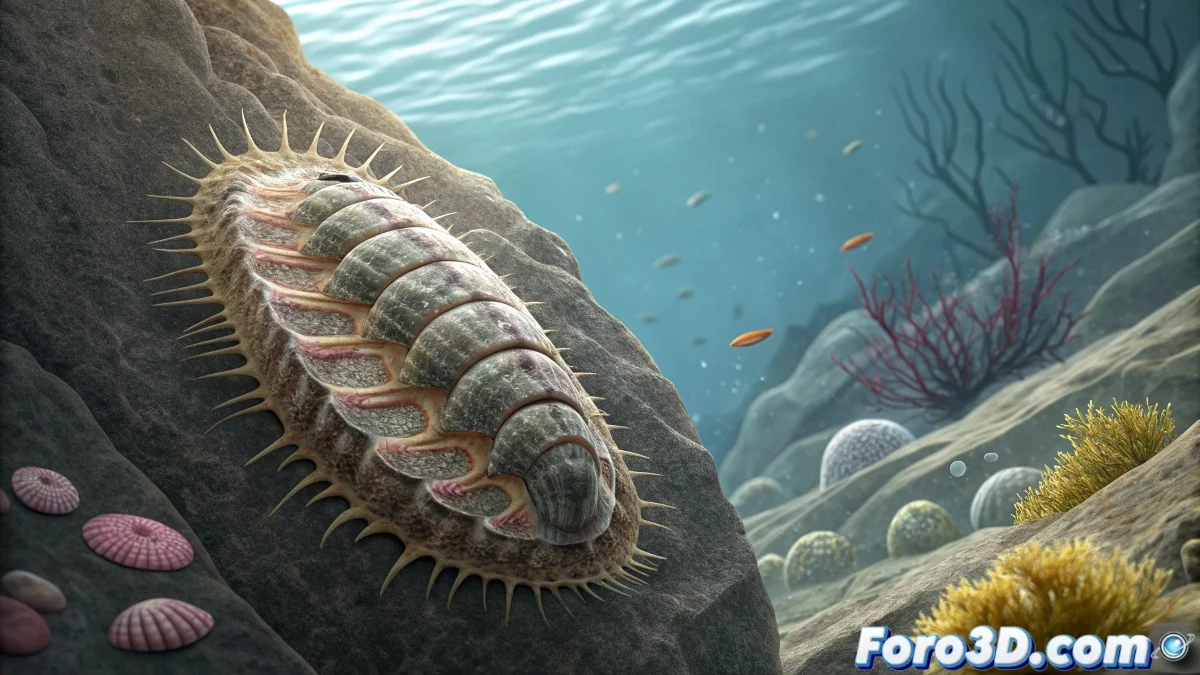
When Nature Teaches Printing: Lessons from a Mollusk
A humble marine mollusk might hold the key to the next revolution in 3D printing 🐚🔧. Scientists are studying chiton teeth, considered among the hardest biological structures on the planet, to develop materials that would make stainless steel cry with envy (if steel had feelings, of course).
The Ocean's Best-Kept Secret
These small marine architects build their teeth with mineral magnetite, organized at a microscopic level in a way that combines extreme hardness with flexibility. While we struggle with filaments that break if you look at them wrong, chitons have been perfecting their secret formula for millions of years 🦷💎.
It is the perfect composite material: self-assembled, self-repairing, and with properties that challenge our best artificial composites — explains a researcher, probably with an envious look toward the mollusk.
Why This Matters for 3D Printing
- Extreme Resistance: Ideal for parts subjected to high friction
- Material Efficiency: Structures optimized by evolution
- Biocompatibility: Promising applications in medical implants
- Sustainability: Processes that mimic nature consume less energy
The challenge now is to replicate this natural design in filaments and resins for 3D printers. When we achieve it, we could print everything from aerospace components to dental prostheses with the same efficiency as a mollusk builds its teeth... though probably without its natural elegance 🌊.
So the next time you step on a rock at the beach: you might be walking on the future of advanced materials for 3D printing. Nature has the advantage - and it doesn't accept returns! 🐚✨