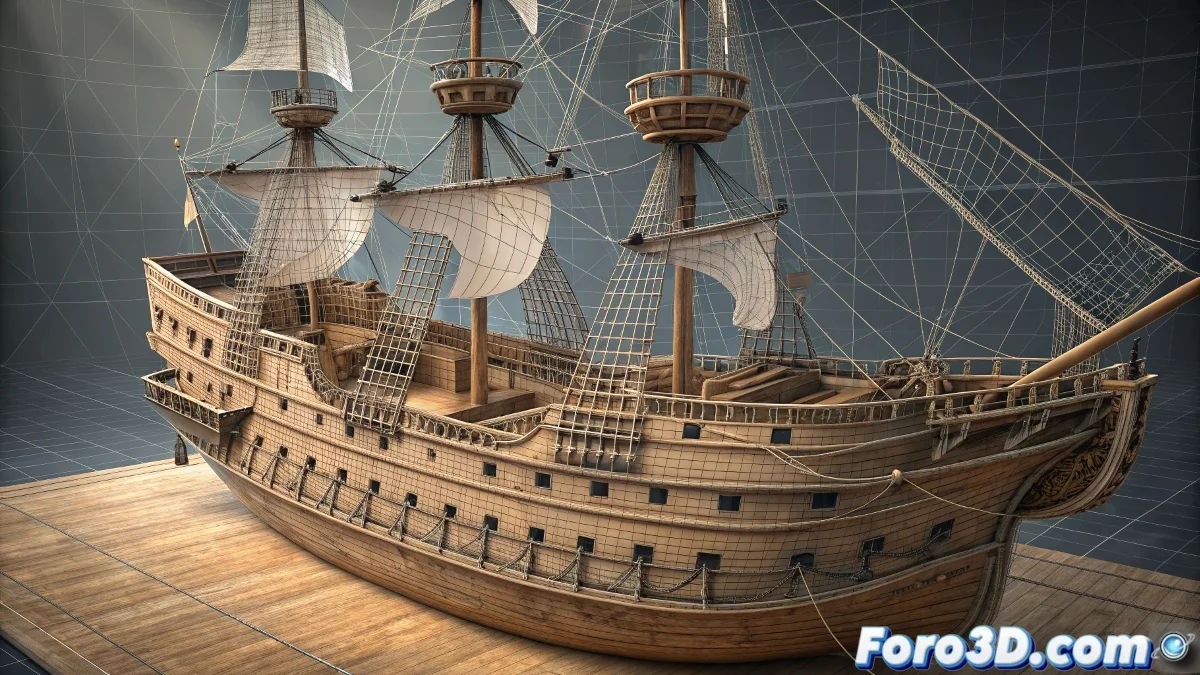
Modeling the Mary Rose in VariCAD: The Mystery of Henry VIII's Sinking
The Mary Rose represents one of the most fascinating naval mysteries in English history, a warship from Henry VIII's Navy that sank inexplicably on July 19, 1545 during a naval battle against the French in the Solent strait, off Portsmouth. What makes this case particularly intriguing is that the ship, which had served successfully for 34 years, sank with extraordinary rapidity and a devastating loss of approximately 500 lives, including almost its entire crew. The historical mystery persists regarding the exact cause of its rapid sinking, with theories ranging from a crew error during a maneuver to possible structural design flaws derived from modifications that increased its artillery. Its recovery in 1982 revealed a perfectly preserved time capsule of the Tudor era. ⚓
Initial Project Setup in VariCAD
Begin by establishing the historically accurate parameters of the Mary Rose in VariCAD. This mechanical CAD software is ideal for recreating the complex naval structure of the ship, allowing technical analysis of possible design flaws. The Mary Rose measured approximately 45 meters in length and 12 meters in beam, with an estimated displacement of 500 tons.
Workspace Preparation:- Set units to feet and inches to match Tudor historical measurements
- Establish reference planes for the waterline and structural axes
- Create organized layers for different ship components (hull, decks, artillery)
"The Mary Rose was not just a warship; it was a statement of Tudor England's naval power, and its sinking changed warship design forever" - Naval historian specialized in the Tudor period
Modeling the Hull and Main Structure
Use VariCAD's solid modeling tools to recreate the characteristic hull shape of the Mary Rose, which combined traditional carrack design with caravel innovations. The ship featured a rounded bow and elevated sterncastle typical of 16th-century warships.
Hull Modeling Techniques:- Use extrusions and revolutions to create the basic hull shape
- Apply chamfers and fillets for the characteristic curvatures of the underwater hull
- Create cross-sections to analyze stability and potential weak points
Deck Design and Artillery System
The Mary Rose was one of the first ships to carry heavy cannons on lower decks. Model the multi-deck system and artillery arrangement that may have contributed to its instability. The ship carried approximately 90 cannons of different calibers distributed across several decks.
Critical Structural Elements:- Recreate gun ports on lower decks using boolean operations
- Model structural reinforcements around heavy artillery areas
- Analyze the center of gravity and potential stability issues
Analysis of Possible Design Flaws
Use VariCAD's analysis capabilities to investigate theories about the sinking. The modifications to increase artillery may have created stability problems and structural stress that, combined with a possible sudden maneuver or water ingress, caused the rapid sinking.
Structural Analysis Points:- Study the hull height-to-width ratio after modifications
- Analyze weight distribution with additional artillery
- Evaluate potential weak points at the hull-castle junctions
Historical Reconstruction and Authentic Details
Incorporate historically accurate details based on wreck archaeological findings. From heraldic motifs to steering systems, each element helps better understand this iconic ship and the mystery surrounding its tragic end.
Documented Historical Elements:- Recreate the elaborate stern carving with Tudor heraldic symbols
- Model the characteristic side rudder of ships of the era
- Include onboard life details based on recovered artifacts
Technical Documentation and Model Conclusions
Generate technical drawings and complete documentation of the model in VariCAD, including section views and dimensional analyses that allow evaluation of different sinking theories. The final model not only visually represents the ship but serves as a historical research tool to understand one of the great naval mysteries of British history. 🏴☠️