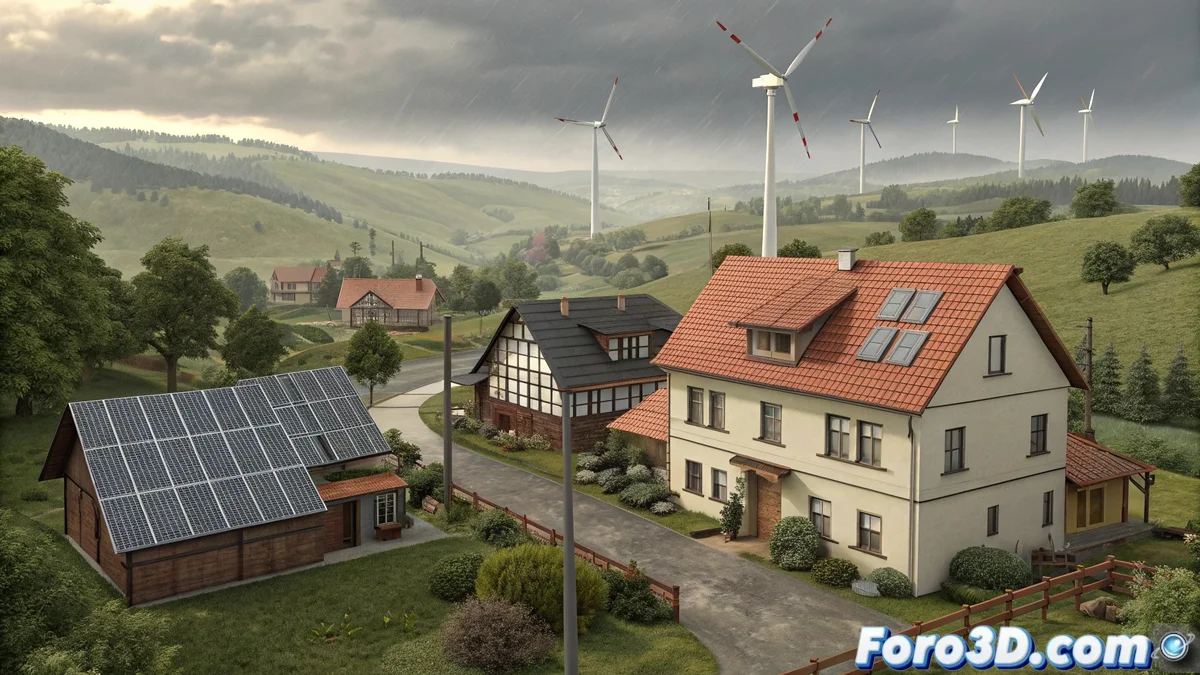
Germany's Energy Revolution Comes to Life in 3D
Germany continues its ambitious Energiewende, massively expanding solar and wind energy while facing efficiency and local acceptance challenges. 🌞💨 In SketchUp, we can visualize this complex landscape, modeling how renewables integrate into the German terrain—from solar panels on urban rooftops to wind turbines in rural fields. This representation helps understand the balances between energy progress and community considerations.
Initial Model Setup
Upon opening SketchUp, the model is configured with units in meters for precision in energy infrastructure dimensions. Layer organization is key: Terrain, Solar_Panels, Wind_Turbines, Buildings, and Vegetation keep the work orderly. Saving as energiewende_germany.skp preserves this structure… because in the energy transition, as in 3D modeling, planning is everything.
Creating the German Landscape
The terrain is modeled using the sandbox tool to create gentle hills typical of the German landscape, with plains for urban development. 🏞️ Urban areas are represented with medium-height buildings and characteristic sloped roofs, optimized for solar installation. Rural zones maintain open spaces for wind farms, respecting symbolic distances to residential cores—reflecting the local acceptance challenge.
Visualizing energy infrastructure in 3D does not just show technology; it reveals how renewables transform physical and social landscapes, creating new balances between progress and preservation.
Modeling Renewable Infrastructure
Solar panels are created as reusable components, applying semi-reflective dark blue materials. ☀️ They are installed facing south at a 30-35 degree angle to maximize solar capture—representing the pursuit of efficiency. Wind turbines are modeled with cylindrical towers and aerodynamic blades, grouped in formations that minimize wake interference. Both systems are scaled to real size to visually communicate their landscape impact.
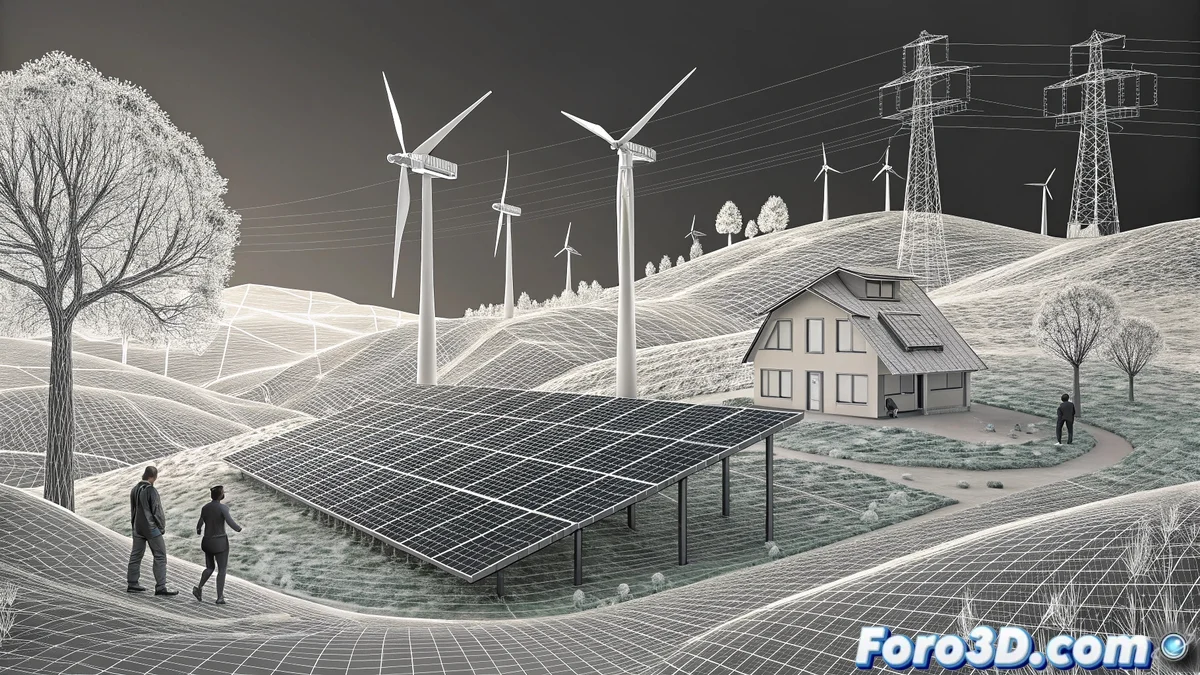
Visualization Techniques and Context
- Dynamic Lighting: The shadows tool is configured to show different conditions—sunny days to highlight solar and cloudy skies for wind context.
- Meaningful Materials: Tile textures are used for roofs, grass green for fields, and metallic grays for infrastructure, creating a coherent palette with the German landscape.
- Scale Elements: Abstract human figures and vehicles are added to give a sense of proportion to the energy installations.
Rendering and Presentation
Strategic views are exported: panoramas showing the coexistence of urban and rural systems, and close-ups highlighting technical details. 🖼️ The technical visualization style with soft edges maintains clarity without sacrificing realism. These images effectively communicate how the Energiewende materializes in the territory—not as abstract policy but as tangible physical transformation.
Beyond Visualization
This model serves as a base for discussing trade-offs: where to locate wind farms to minimize visual impact, how to optimize solar orientation, or how to integrate renewables into historic urban settings. 🏛️ SketchUp's flexibility allows easily adjusting these parameters and visualizing alternatives.
Thus, while Germany debates locations and efficiencies, we can test infinite scenarios in 3D… without facing a single neighbor complaint or bureaucratic restriction. Because in SketchUp, the only wind resistance is to our creativity. 😉