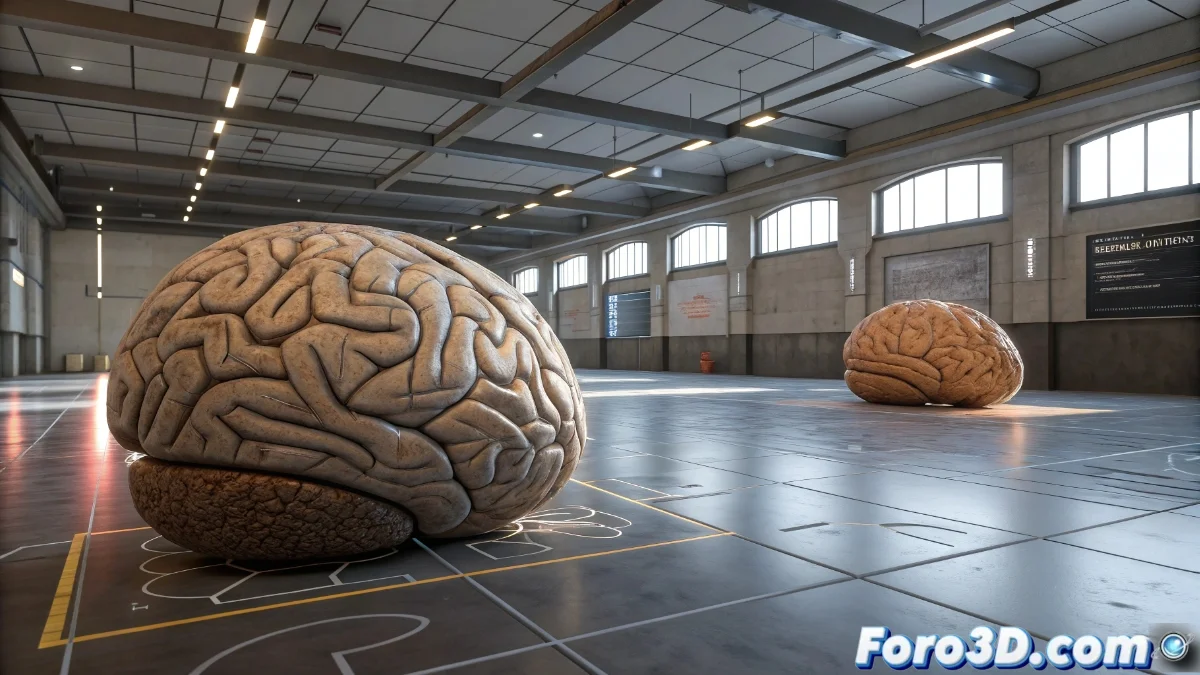
Mixture of Experts Vision Transformer in Rendering Pipelines
The integration of Mixture of Experts Vision Transformer models is revolutionizing texture processing in advanced rendering environments. These systems employ specialized architectures capable of examining complete sets of PBR maps, identifying discrepancies between different channels that escape the human eye 👁️.
Automatic Detection of Inconsistencies
The capability of simultaneous multichannel processing allows discovering issues like roughness that does not correlate correctly with normal map information. This automated detection far surpasses traditional manual reviews 🚀.
Key advantages of intelligent analysis:- Identification of inter-channel inconsistencies that affect the final render quality
- Simultaneous processing of multiple texture types with high precision
- Detection of issues that would normally go unnoticed in conventional workflows
The MoE-ViT architecture represents a paradigm shift in how we approach visual asset optimization
Adaptive Map Selection
The system implements a specialized experts mechanism that automatically determines which combination of maps is most relevant for each specific application. This intelligent selection eliminates redundancies, significantly improving performance without compromising quality 🎯.
Specific applications by context:- For denoisers: prioritizes normal and roughness map information
- In material classification: focuses on albedo and metallic channels
- Adaptive optimization according to the requirements of each pipeline
Intelligent Material Compression
The analysis of correlations between maps allows identifying and preserving only visually significant information. The model can compress complex materials by eliminating redundant data between channels while keeping the final appearance intact 💾.
Benefits in constrained environments:- Significant reduction in memory usage without perceptible quality loss
- Optimization of bandwidth in distributed rendering
- Preservation of visual integrity while eliminating superfluous data
Reflection on Workflow Evolution
It is particularly interesting how, after years of trying to manually optimize textures, now an artificial intelligence model can tell us that we have been including maps that don't even affect the final result. This approach leads us to reconsider that, in many cases, less really is more, especially when it translates into significantly reduced render times ⏱️.