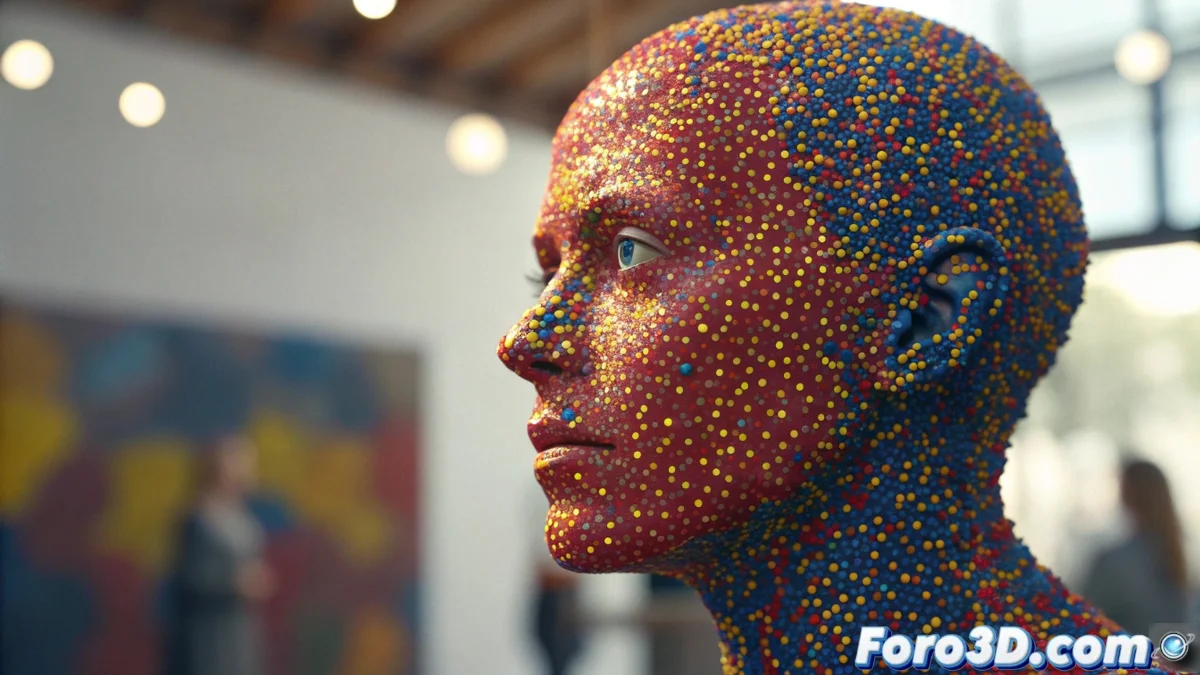
Optical Mixing: From Pointillism to Digital Art
Optical mixing constitutes a fascinating link between traditional artistic practices and modern digital expressions, where tiny elements of pure color are strategically organized so that our visual system completes the composition. This methodology, directly influenced by post-impressionist pointillism, finds in digital resources an ideal partner to explore new chromatic and textural facets that surpass classical pigment blending approaches 🎨.
Perceptual Bases of Color in Optical Mixing
When employing optical mixing, the essential concept lies in understanding how our visual apparatus processes chromatic data at various distances. Dots or strokes of primary and secondary colors, remaining separated but in close proximity, activate different receptors in the retina that the brain decodes as more vibrant and luminous intermediate shades. This effect is enhanced by using complementary colors in the dot distribution, generating visual oscillations that provide an energy difficult to achieve with direct physical mixes.
Key Aspects of Visual Perception:- Cerebral processing of dispersed chromatic stimuli that fuse into unified tones
- Differential activation of retinal receptors according to the proximity of color elements
- Increase in luminosity and tonal richness through the strategic arrangement of complements
The real challenge arises when you try to explain that you're intensely working on a project while appearing to place dots randomly like a nervous tic, until the observer steps back and everything magically makes sense.
Application in Contemporary Digital Environments
In the digital context, the technique adapts exceptionally well thanks to the meticulous control provided by tools such as custom brushes, textured patterns, and dispersion algorithms. It is feasible to design brushes that automate dot placement according to varying densities, or use layers with specialized blending modes that intensify the optical vibration phenomenon. Vector illustration, digital painting, and photo editing software facilitate experimenting with this method at various scales and with a virtually infinite color palette, expanding creative opportunities that post-impressionist artists barely glimpsed.
Digital Tools for Optical Mixing:- Configurable brushes that automatically distribute dots according to density and size parameters
- Layers with blending modes like Multiply or Overlay to enhance chromatic vibration effects
- Dispersion algorithms that allow generating complex patterns with primary and secondary colors
Integration of Tradition and Digital Innovation
Optical mixing symbolizes a perfect union between historical pictorial legacy and current technological innovations. By transferring the principles of pointillism to the digital realm, creators can exploit an unlimited range of colors and textures, achieving works that challenge the limitations of physical pigments. This technique not only enriches contemporary visual language but also pays homage to post-impressionist masters, demonstrating that the essence of art endures through technological transformations ✨.