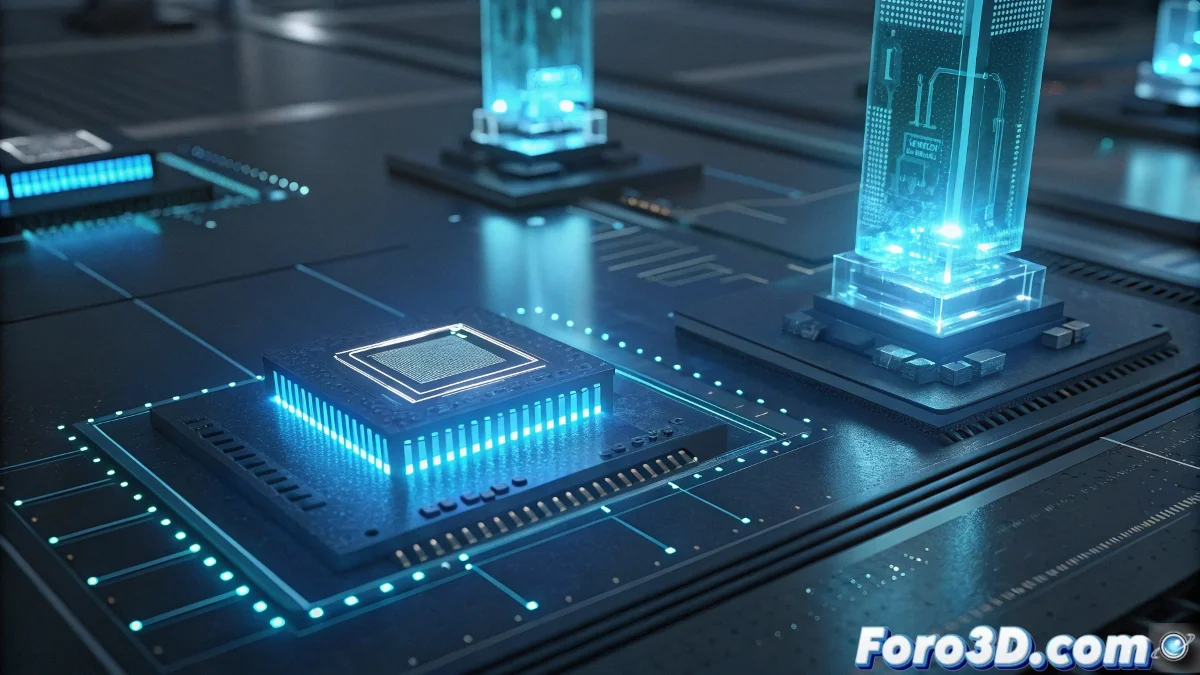
MIT Develops the First 3D Printer Chip: Revolution Without Moving Parts
MIT engineers have achieved the impossible: integrating a complete 3D printer into a chip, eliminating motors, axes, and all traditional moving parts. This revolutionary system uses photonic antennas that control light patterns to solidify resin, opening a new chapter in digital manufacturing. 💡🔬
"When your printer needs bearing maintenance and the MIT one only requires a software update... maybe it's time to rethink 3D technology"
How This Technological Wonder Works
The system is based on:
- Integrated optical antennas that emit precise light patterns
- Specialized photosensitive resins
- Complete electronic control without mechanics
- Scalable architecture for true 3D printing
Radical Advantages Over Traditional Systems
This technology solves multiple limitations:
- Zero mechanical wear (no motors or bearings)
- Nanometric precision potential
- Ultrahigh speeds (light has no inertia)
- Possibility of true volumetric printing
Applications That Seem Like Science Fiction
This breakthrough could transform:
- Biomedicine: Custom implants printed inside the body
- Microelectronics: 3D circuits integrated directly into chips
- Pharmacology: Microscopic controlled-release systems
- Research: Rapid prototyping at nanometric scale
While you adjust the belt tension on your printer, the MIT team is writing the future with light in a space smaller than a fingernail. ✨
The Path to True Volumetric Printing
Although it currently generates 2D patterns, the system is designed to:
- Control multiple light planes simultaneously
- Create complete 3D structures in a single step
- Reduce printing time from hours to seconds
Why This Is a Before and After
This technology represents:
- Extreme democratization of 3D manufacturing
- Possibility of printers in any device
- A paradigm shift in printer design
So the next time you struggle with leveling your hot bed, imagine a future where "leveling" means calibrating light interference patterns. Though let's admit it, that probably requires a PhD in quantum optics. 😅
The MIT printer chip is not just a scientific curiosity - it is the first step toward an era where 3D manufacturing could be integrated into any electronic device, bringing digital production to scales and speeds that seem impossible today.